
COLIFORM BACTERIA

Bisleri cites independent lab tests to dispute FSSAI findings in Bengal case
Bisleri International has disputed regulatory findings by FSSAI regarding its water sample quality from West Bengal. While FSSAI found coliform bacteria and sanctioned prosecution, independent tests showed compliance with safety standards. The company recalled the affected batch but urged FSSAI to investigate discrepancies between findings. This case comes after a similar issue in Goa involving bromate levels. FSSAI has intensified surveillance of packaged drinking water manufacturers across the country.

FSSAI finds second Bisleri water sample unsafe, asks firm to stop batch sale: Report
Indian authorities have identified unsafe levels of coliform bacteria in a batch of Bisleri water. Following this finding, Bisleri has recalled the affected batch per government instructions. The company claims independent tests show their water meets safety standards. The Food Safety and Standards Authority of India plans further testing on bottled water companies. Bisleri continues to work with regulators to clarify the discrepancies in test results.

Bisleri in fresh trouble after FSSAI finds bacteria in West Bengal sample
Food regulator FSSAI has taken legal action against Bisleri International for unsafe drinking water samples collected from its plants. The West Bengal facility tested positive for coliform bacteria, which can contaminate water supplies. This marks the second prosecution instance this week as an earlier Goa sample was also deemed unsafe. FSSAI is intensifying scrutiny of packaged drinking water across the country to ensure compliance with safety standards.

Contaminated water in Indore's Bhagirathpura result of decades of systemic failure: Probe commission
The water contamination that resulted in multiple deaths in Bhagirathpura was reviewed by a commission. The commission revealed that systemic failures and negligence led to the incident. Various government officials were implicated for their roles in the contamination. It recommended a compensation of Rs 10 lakh for deceased victims' families. Additionally, the formation of a State Urban Water Supply Authority was suggested to improve the water supply system.
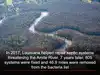
In 2017, Louisiana helped repair septic systems threatening the Amite River. 7 years later, 805 systems were fixed and 46.9 miles were removed from the bacteria list
Significant strides in water quality have stemmed from proactive home septic system inspections and educational initiatives. The Amite River now aligns with primary contact recreation standards, a remarkable turnaround following years of pollution. Capital RC&D has carried out extensive inspections and repairs, resulting in reduced bacteria levels and the delisting of a river segment. Regular inspections are set to uphold these improvements in the watershed for the future.

In 2006, Virginia flagged the Rapidan River for failing swimming standards. 18 years later, DEQ removed it from the impaired list after BMPs restored water quality
Rapidan River water quality in Virginia has finally turned a corner after nearly two decades of concern. A section once flagged for failing swimming standards is now off the state’s impaired-waters list. Virginia DEQ made the change after monitoring showed bacteria levels had improved. Years of best management practices helped reduce pollution entering the river. The result offers a rare example of long-term water restoration working.

Railway passengers take note: If you drink water from station coolers, CAG has found E coli in samples from 8 locations
A CAG report found E coli in drinking water at several railway stations. Hundreds of stations also lacked essential passenger facilities, according to the audit. Water coolers at eight stations tested positive for E coli bacteria. Drinking water from taps at many stations showed coliform bacteria presence. Railways plans a new "Tank to Tap" filtration system to address these issues.

Is your milk safe? Know about coliform bacteria that is allegedly being linked to packaged milk?
Is your milk safety under the scanner? Recently, milk pouches were found to have coliform levels 98 times higher than FSSAI’s prescribed limits after lab tests, thus raising concerns about milk safety in many Indian households. Coliform bacteria's presence in milk there may have been problems in the efficiency of heat treatment or re-contamination after heat treatment.

1,700 pounds of butter recalled over possible faecal contamination in US; here’s all you need to know
Cabot Creamery's parent company, Agri-Mark Inc, has issued a recall for 1,700 pounds of butter after elevated levels of coliform bacteria was found in tests. The affected food item is being removed from the stores in New York, Pennsylvania, Vermont, Maine, Arkansas, Connecticut and New Hampshire.

Water of Ganga river unfit for bathing at several places in Bihar: Economic Survey
The water quality of the Ganga river in Bihar is unfit for bathing due to high bacteriological contamination from untreated sewage. The Bihar State Pollution Control Board is monitoring the situation and urging timely completion of sewage treatment plants to mitigate the issue.

'Religion is important, but': Doctor warns after patient develops severe lung infection from Mahakumbh dip
High faecal bacteria in Ganga at Prayagraj raises health concerns during Mahakumbh. A woman developed a severe lung infection after taking a dip. Faecal coliform levels in the river exceed safe bathing levels. Report suggests contamination by sewage and animal waste, heightening risks of waterborne diseases. Similar concerns exist for the Yamuna river.

Faecal bacteria levels surpass safe limits at Maha Kumbh, says CPCB; Doctors warn of health risks
Water quality in Prayagraj during the Maha Kumbh fails to meet bathing standards due to high faecal coliform levels, indicating sewage contamination. The National Green Tribunal highlighted non-compliance with water quality standards. Health issues such as gastroenteritis and respiratory infections are reported among visitors. Authorities are urged to address water quality concerns to ensure safety.

6,061 habitations affected by arsenic, 4,592 by fluoride in India: Govt
In a written reply to a question in the Lok Sabha, Jal Shakti Minister Gajendra Singh Shekhawat said of the 6,061 arsenic-affected habitations, more than half or 3,115 are in West Bengal, followed by 2,291 in Assam, 385 in Bihar and 222 in Uttar Pradesh.

Jal Shakti Ministry launches framework for water quality testing, monitoring
The guidelines specify work to be done in terms of surveillance and monitoring at the state, district, block/tehsil and village levels.
NGT forms Central Monitoring Committee to prepare national plan for polluted rivers
The NGT directed the Central Monitoring Committee to give its report by July 31.
Water quality of Ganga has worsened in 3 years, says study
Prime Minister Narendra Modi had set an ambitious 2019 deadline to achieve results on nirmalta (cleanliness) of Ganga when he launched the project in May 2015.

Ganga mission fights to stay afloat
CAG highlighted its findings which show that the river water quality in eight out of 10 cities/towns (except Rishikesh and Haridwar) along Ganga does not meet even the outdoor bathing standards.
Only 37% sewage treatment capacity in urban areas: Government
Sewage treatment capacity in urban areas is only 37 per cent of the total amount generated, the government said today.

Your toothbrush may be contaminated with faeces
If you are using a shared washroom there is a 60 per cent chance your toothbrush is covered in fecal matter from someone else, a new study suggests.
Load More


