
COKING COAL IMPORTS
India's steel ambitions need a stronger raw material backbone, industry leaders warn
India's steel industry has called for stronger raw material security through expanded iron ore mining, greater domestic coking coal production, scrap recycling and overseas sourcing partnerships. The demands come as the country targets 604 million tonnes of steel capacity by 2047, up from around 220 million tonnes currently.

India's steel ambitions run into a coking coal import dependence
India meets more than 90% of its coking coal requirement for steelmaking through imports. Despite abundant natural resources, the country also struggles to produce enough usable coking coal for its steel industry. What will it take for the world’s second-largest crude steel producer to address these challenges as it expands steel production?

Will rising steel prices lift steel stocks? Key growth drivers and input cost risks investors should watch
Strong demand and policy support boost steelmakers, but rising input costs pose risks. Recent reports from Aditya Birla Capital, Motilal Oswal Financial Services (MOFSL), JP Morgan, CRISIL, and MCX are upbeat about the steel industry. They expect healthy demand growth, a few new steel plants coming online worldwide, firmer steel prices, and a growing focus on specialised, higher-priced grades of steel.

Renewables helped India save over $100 billion in fuel imports since 2011: IEA
India's expansion of renewable energy capacity has helped the country avoid more than USD 100 billion in coal and natural gas import costs between 2011 and 2025, highlighting the economic and energy security benefits of generating more electricity domestically, according to a report by the International Energy Agency (IEA).

India's renewable energy expansion averts $100 bn in fuel imports, savings seen at $240 bn by 2030
The findings underline the growing economic and energy-security dividends of India's renewable energy transition, with increased domestic electricity generation reducing exposure to imported fossil fuels and volatility in international energy markets.

These large-caps have ‘strong buy’ & ‘buy’ recos and an upside potential of over 25%
The FPIs that were selling in the Indian market all these months mostly owned large-cap stocks. And as they sold them, it was that segment which bore the brunt of the selling. The same logic will operate in reverse as they start buying, focusing once again on the safer and more liquid large-cap stocks.
- Go To Page 1

Sebi approves 6 IPOs including Mahanadi Coalfields, Veritas Finance and Sagar Defence. Check details
Sebi has granted approval for initial public offerings from six companies across various sectors. Companies like Mahanadi Coalfields and Sagar Defence Engineering are set to enter the stock market soon. The IPOs include both offers for sale and fresh issue components to raise significant funds. These approvals come amid increasing investor interest in diverse industries such as defence and pharmaceuticals.

When wars and AI cast a shadow, India has pressed a power reset
India’s renewable energy expansion is reshaping its energy security, cutting dependence on imported coal and natural gas as wars, oil supply disruptions and AI-driven electricity demand put pressure on power markets. An International Energy Agency report says clean energy saved India over $100 billion in fuel imports between 2011 and 2025, with cumulative savings potentially reaching $240 billion by 2030.

Largecaps over SMIDs: Ambit’s Nitin Bhasin and Bharat Arora share their Samvat 2083 strategy
As we step into the new Samvat, investors are advised to take a more cautious stance with their portfolios. The focus should be on large-cap stocks and the banking sector due to their better earnings prospects and attractive valuations. Meanwhile, although mid- and small-cap sectors may face hurdles, the cement industry might see unexpected margin improvements.

Renewable energy could save India $240 billion in coal, gas imports by 2030: IEA
The savings are expected to increase as solar and wind power displace imported fossil fuels, with annual savings projected to reach around USD 35 billion by 2030, exceeding India's actual non-coking coal and natural gas import bill in the financial year 2024-25.

Strong balance sheet, domestic focus, and a moat matter more: 5 large-cap stocks with upside potential of up to 24%
The big event the market was waiting for has come and gone. So, is there greater clarity about where the crisis in the Gulf is headed? Not really. While US President Trump acknowledged the war was one of the reasons his Republican party received a drubbing at the hands of the Democrats, he said he would do it again. Which suggests it is unlikely that the uncertainty and volatility in the markets will go away anytime soon.

South Eastern Coalfields files DRHP with SEBI for IPO; Coal India to offload 66.8 crore shares
Coal India subsidiary South Eastern Coalfields has filed its draft papers with SEBI for an IPO comprising an offer for sale of up to 66.81 crore shares. One of India’s largest coal producers, SECL reported higher revenue and profit and plans to list on the BSE and NSE.

India’s steel future depends on breaking its costly coal habit
India plans to significantly increase its steelmaking capacity to support its development goals by 2047. The National Steel Policy proposes a shift from coal dependence to green hydrogen for production processes. This transition aims to reduce the vulnerability of steelmakers to volatile coking coal prices and enhance cost predictability. Moreover, the government is expected to promote long-term contracts for green steel to secure investments.

Trump looks to rein in fuel prices ahead of midterms; waives threat of 100% tariffs on India over Russian oil
US President Donald Trump has waived fresh sanctions and duties on Russian energy exports under a new law, citing national interest and easing concerns over potential tariffs of up to 100% on major buyers, including India. The move comes as India continues to rely on Russian crude and explores long-term LNG supplies, while New Delhi and Moscow seek to expand cooperation across oil, gas, mining and steel.

India-US trade deal enters fine-tuning stage as most talks conclude, says Piyush Goyal
India and the US are refining their bilateral trade agreement after concluding most discussions on the deal. Commerce Minister Piyush Goyal indicated significant progress has been made towards finalizing the agreement. Recent talks have involved high-level meetings between officials from both nations, focusing on tariff reductions and trade frameworks. Goyal is currently leading a significant delegation to the Netherlands and Germany to promote bilateral business ties.

Diversification plan: NMDC scouts for mining assets across four continents
NMDC is actively seeking mining assets worldwide, including critical minerals to support various industries. The company aims to earn 20 percent of revenues from minerals other than iron ore. This expansion aligns with government initiatives to secure raw material supplies and decrease import dependency. NMDC's strategy is expected to enhance its role in India's manufacturing sectors. Industries such as automotive, renewable energy, and electronics will benefit from these efforts.

India eyes a $20 billion pot of gold in New Zealand as its trade pact goes live
The free trade agreement between India and New Zealand promises to promote trade and enhance professional movement. While some goods may enjoy duty-free status, a significant rise in merchandise exports might take time. However, New Zealand's engagement in several service sectors holds potential benefits for Indian companies. The agreement also opens up new job opportunities for Indian students and creates pathways for skilled professionals.
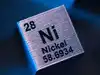
NMDC puts nickel foray on hold on global oversupply concerns, sources say
State-run NMDC has paused its planned entry into nickel, citing oversupply concerns in Indonesia, which accounts for more than 60% of global production. The decision comes as the global market is expected to remain in surplus through 2026. NMDC had also explored Russian nickel assets and supply arrangements with Nornickel.

Why India's steel demand is defying global weakness
India’s steel prices are rising despite weak global markets, supported by infrastructure spending, manufacturing growth and higher input costs. While Chinese oversupply pressures international prices, robust domestic consumption and capacity utilisation underpin India’s outlook, with cheaper imports remaining a key risk.
India targets 604 MT steel capacity by 2047, plans to cut carbon intensity: Report
India's government has introduced a draft steel policy for public consultation, targeting a steel capacity of 604 million tons by 2047. The policy aims to reduce the carbon-emission intensity for crude steel production from 2.54 tons to 1.54 tons. It also plans to secure access to high-grade iron ore reserves through joint ventures and foreign assets. Coking coal demand is expected to reach 236 million tons, necessitating diversifying sourcing strategies.
India steel ministry unlikely to seek new curbs on cheap imports, government source says
India's steel ministry has decided against new measures to restrict cheap steel imports for now. The country is dealing with increased imports, primarily from China, which have surged significantly. Domestic steelmakers are facing challenges despite existing safeguard duties and high steel prices. Demand has been rising in the automobile and infrastructure sectors after the monsoon season. Yet, the rising imports remain a considerable risk to the margins of steel producers.
Backward integration, captive power seen aiding profitability of secondary steel players
Secondary steelmakers in India are improving profitability by investing in captive power and backward integration, helping offset volatile raw material and energy costs, according to CRISIL. Operating margins are expected to rise to 6.6% this fiscal, with integrated players earning Rs 1,500-2,000 more EBITDA per tonne than non-integrated peers.

Steel Ministry asks SAIL, NMDC to scout overseas mineral assets for raw material security
The Steel Ministry has instructed state-run steelmakers SAIL and NMDC to explore overseas mineral assets. This effort aims to secure long-term raw material supplies necessary for steel production. Indian steelmakers currently rely heavily on imports for coking coal and limestone, which increases their costs. Diversifying mineral portfolios could also benefit NMDC as it seeks to enhance its revenue streams.

SAIL flies in Mongolian coking coal as it seeks new supplies, sources say
Steel Authority of India has airlifted a 1-metric-ton sample of coking coal from Mongolia for testing. This trial was initiated as part of India's effort to reduce reliance on Australian coal imports. Transporting coal from Mongolia poses significant logistical challenges, especially due to India's strained relations with China.

Essar-backed Mesabi Metallics to set up $15-billion steel plant in US
Mesabi Metallics will use iron ore for the Iowa plant from its mine in Minnesota, which was recently operationalised. The company has invested nearly $3 billion in this iron ore mine at Nashwauk in the state, which is the first new mine in Minnesota in five decades. This combined $18 billion investment is the largest single-location investment for steel in the country.
India to soon release new steel policy, eyes 600 million tons capacity by 2047, secy says
India's government will soon unveil a new national steel policy aimed at boosting steel production. The production capacity is expected to reach 600 million metric tons by 2047. This policy will emphasize premium products and reducing imports to strengthen the domestic market. A separate policy on steel scrapping is also being discussed among various ministries.

Commerce minister Piyush Goyal to visit US for trade talks, G20 ministers’ meeting
Commerce and Industry Minister Piyush Goyal will visit the US from September 29 to October 5 for the G20 Trade Ministers’ meeting and talks with US Trade Representative Jamieson Greer on the India-US bilateral trade agreement.

Behind bigger price tags hides a fault line in India’s growth story
India’s consumer durables face a third price hike in 2026 as copper, steel, aluminium, resin, logistics and energy costs surge. LG, Daikin, Voltas, Samsung and Godrej are raising appliance prices ahead of Diwali. The pressure exposes India’s dependence on imported components and highlights why deeper localisation, domestic manufacturing and stronger supply chains are critical to containing global cost shocks.

The most uncertain sector also pays the most to wait. Watchlist for patient investors: 5 stocks with upside potential of up to 25%
There are some interesting contrarian bets in the market. But going contrarian, or buying what everyone else is running away from, is not to be done casually. Done wrong, it is just recklessness. It becomes a sensible move only when there is a solid, logical reason behind it. So, the real question is not whether some companies are beaten down. The question is whether there is a good reason to buy them anyway.
Load More

