
CLIMATE LINKED INSURANCE

56% of global business leaders expect disruptions to severely hit operations: KPMG
A recent KPMG International report indicates that 56 percent of global business leaders anticipate severe disruptions affecting operations. The report highlights increasing risk exposure, with 70 percent of leaders noting escalated risks in recent years. Technology disruption and geopolitical tensions are identified as primary concerns for the near future. Companies are prioritizing AI and predictive analytics to enhance supply chain resilience and managing risks.

70% of global business leaders report rising risk exposure amid AI, geopolitical disruptions: KPMG
According to the report, 56% of respondents said external disruptions involving geopolitical, energy, cyber, trade or climate-related factors would cause severe operational disruptions or significantly affect their organisations' costs and performance over the next three to five years.

Nirmala Sitharaman reaffirms govt's fiscal discipline push, puts public debt target at 50% of GDP by 2030
FM Sitharaman linked the government's broader economic priorities -- fiscal consolidation, inflation management and currency stability -- with the need to expand employment and enterprise opportunities, particularly for women, through education, skill development and industry participation.

In 2019, AXA launched a $175 million climate and biodiversity fund. Within a year, $41.5 million had been allocated to projects targeting measurable environmental outcomes
In July 2019, AXA Group launched a $175 million private equity vehicle with a mandate that traditional financiers usually leave to non-profit foundations. The fund set out to test whether commercial capital could generate market-rate returns while restoring ecosystems, managing water basins, and protecting threatened species. Structured as a 12-year private equity pool, the fund marked a deliberate departure from standard corporate philanthropy by treating natural capital as a core financial asset rather than an operational expense.

BRICS adopts New Delhi Declaration: Inside the 140-point document on Global South's ambitions
BRICS leaders adopted the New Delhi Declaration at the 18th summit, reaffirming their commitment to cooperation, multilateralism and a more representative global order. The document outlines India's 2026 chairship priorities, recognises partner countries' contributions and calls for greater participation of Emerging Markets, Developing Countries and Least Developed Countries in global governance.

- Go To Page 1
India knows where extreme weather is coming. It doesn’t know what it will cost
India’s climate risks are increasingly becoming macroeconomic shocks, affecting food prices, infrastructure, power demand, productivity and public finances. Yet the country lacks systems to quantify what is exposed, estimate economic losses and price risk effectively. The op-ed argues for asset-level exposure registers, audited loss data and forward-looking disaster financing.
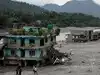
Global warming: From Nepal to Assam to Kerala, nature’s fury is colliding with unchecked development
The Himalayan region is facing increasingly frequent and unpredictable extreme weather, with glacier collapses, flash floods and landslides becoming more dangerous. Climate change is a key driver, but rapid and poorly planned development is worsening the risks by putting more people and infrastructure in fragile, flood- and landslide-prone areas.

Chennai’s rain gets a market price: NCDEX launches RAINCHNNAI weather derivatives futures contract
NCDEX launched RAINCHNNAI, a futures contract allowing market participants to hedge Chennai’s Northeast Monsoon risks. Utilizing a Cumulative Deviation Rainfall model, it complements the RAINMUMBAI contract, providing a complete monsoon risk management cycle from June through December.

As Europe bakes, momentum grows for climate-resilient farming
Extreme weather is pushing farmers toward climate-resilient practices for better yields. Regenerative farming methods improve soil health and water retention significantly. Major companies and financial institutions are funding this agricultural transition. These collaborations aim to mitigate risks from climate change and ensure supply chains. Farmers adopting these techniques are outperforming conventional holdings during droughts.

Climate damage: The next hit to Europe's public finances
Europe's public finances face growing strain from uninsured climate damage, with recent extreme weather events having caused significant economic losses across the continent. Governments are exploring adaptation and risk-sharing strategies to manage future impacts. Insurance coverage for climate-linked catastrophes remains low in many European nations.

Europe's heatwaves expose insurance gap as business losses mount
European businesses face significant losses from extreme heatwaves. Traditional insurance often fails to cover these indirect operational disruptions. Many companies report substantial turnover declines during prolonged hot weather. Parametric insurance offers a potential solution for automatic payouts. Businesses must also adapt operations to withstand increasing heat impacts.

Global Markets: Hotter Europe isn't cooling investor fervor for stocks
The heatwaves pummelling Europe this summer will have costly impacts on industries ranging from agriculture to tourism -- but that hasn't stopped stock markets from hitting all-time highs. The Paris, Frankfurt, Madrid and Milan exchanges all hit records in August, in line with recent all-time highs for Wall Street's key indexes.

Catch 'em before they fall: India's new climate safety net
Indian cities face a dual threat of extreme heat and torrential monsoons, severely impacting informal workers. Traditional insurance and government aid are insufficient, leaving millions unprotected. Parametric insurance, triggered by verifiable weather data, offers a swift solution. Pioneered by SEWA and now adopted by initiatives covering construction and other workers, it provides immediate financial relief, bolstering operational resilience for businesses and safeguarding livelihoods.

Darjeeling tea industry seeks Centre's support amid deepening financial stress
Darjeeling's famed tea industry is facing severe financial strain due to aging bushes, climate woes, and labor shortages, leading to a significant production drop and falling prices. Industry leaders are urging the government for targeted interventions, including a sustainable pricing framework with a Minimum Sustainable Price, and the extension of agricultural and welfare schemes to bolster the sector's long-term viability and resilience.

India's GIC Re plans to reduce share of overseas property risk as climate losses rise
Indian reinsurer GIC Re is strategically shifting its overseas business focus. Amidst escalating climate-related losses globally, the company plans to reduce its exposure to property and catastrophe risks abroad. Instead, GIC Re aims to bolster its presence in casualty and specialty insurance lines, seeking a more balanced international portfolio over the next three to five years.

"We cannot wait for political change": Hillary Clinton hails India as innovation hub at Mumbai Climate Week
Clinton pointed to successful grassroots innovations as proof of scalable impact, citing an insurance product that has reached 500,000 women policyholders who previously had no coverage.

Go Digit paid India’s first insurance claim using parametric product for agriculture, it said
Go Digit General Insurance has disbursed payouts to around 500 farmers in Rajasthan. This marks a significant step in climate-linked insurance for agriculture. The policy covered soil moisture imbalance during the rabi season. This parametric solution offers immediate liquidity using objective data. It helps bridge the gap between climate shock and recovery for farmers.
Climate risk is now economic risk and India must insure against it
October storms over the Bay of Bengal and the Arabian Sea highlight the increasing erratic nature of weather. Hurricane Melissa's impact and India's monsoon season, marked by heavy rainfall and significant losses, underscore the growing threat of climate change.

Kshema General Insurance raises $20 mn from Green Climate Fund
Kshema General Insurance secured $20 million from the Green Climate Fund for its 'Harnessing Insurance for Climate Resilience in Indian Agriculture' project. This initiative aims to expand microinsurance coverage for smallholder farmers facing climate-induced losses and enhance the company's underwriting capacity. The investment will also bolster Kshema's proprietary technology platform for customized insurance solutions and advisory services.

India considers introducing nationwide climate-linked insurance scheme
India's government is in early talks with local insurers to design a nationwide climate-linked insurance program. This parametric model would provide quick, pre-determined payouts for extreme weather events like heatwaves and floods, helping the government manage disaster costs. India, highly vulnerable to climate change, aims to be a pioneer in this approach, building on successful state-level pilots.

Bringing climate technology revolution for Global South
As the G20 Presidency, India can bring climate technology to forefront of policy making. Climate technology has immense potential to address adaptation and mitigation. However, leveraging technology for climate action requires investment. With India’s growing voice on the global stage, it can turn the spotlight on challenges of climate technology in the developing world and guide the conversation to finding solutions.

Insurance industry joins push to decarbonise global shipping
Decarbonisation is the need of the hour and can be achieved by using alternative fuels or focusing on renewable energy sources.

Life insurers may see short-term pressure on profitability due to pandemic: ICICI Pru Life
In FY21, the life insurance industry reported a modest 3 per cent growth in new business premium, said the report, adding the industry continues to get a higher share of household savings because of the increased attractiveness of life insurance savings products, the unique proposition of protection and annuity products among others.

Irdai asks insurers to diversify risks to avoid repeat of IL&FS-type fiascoes
The regulator also said insurers need to diversify their investment strategies so the risks faced by them are multi-dimensional.

Agri schemes not disjointed but linked at various stages: Agri Min
The price of agriculture produce is usually low immediately after its harvest due to increased supply in the market, which gradually picks up thereafter.

Farmers still unaware of details of PMFBY: Survey
The PMFBY, launched in 2016, is the most important tool today to insure agriculture against climate and other risks.

BNP Paribas launches first equity index linked green bond
BNP Paribas Cardif purchased the first green bond - a Euro 50 million note with a 10-year maturity - issued by the World Bank.
'Global warming & natural disasters not wrongly linked'
IPCC has presented a robust defence of its claim that the world had "suffered rapidly rising costs due to extreme weather related events since the 1970s" partly on account of global warming.
Load More

