
CLIMATE CHANGE WARNING

Scientists compared flies from cool California forests with those from hot Southwestern deserts; a 2025 study found their brains responded differently to heat
Two fly species, Drosophila persimilis and Drosophila mojavensis, showcase fascinating adaptations to their environments, revealing their opposing responses to heat. While forest-dwelling flies evade warmth, their desert counterparts thrive in it. These contrasting behaviors highlight significant neural changes that not only reflect physical adaptations but also altered sensory processing. This research is pivotal in predicting how species may cope with the challenges of climate change.
World leaders urge stronger and faster action at UN climate talks over inadequate response
World leaders gathered in Turkey for COP31 to discuss effective strategies to combat climate change. Notably absent are leaders from major polluting nations, including the United States, China, and India. U.N. Secretary-General Antonio Guterres urged immediate action in his opening speech and suggested a framework for cooperation. Brazil's President Luiz Inacio Lula da Silva emphasized the need for global leadership on environmental issues.
Disaster warning systems race to keep pace with galloping climate risks
Twice a day during the rainy season, Raquel Izarra climbs to the roof of her home in the eastern Lima suburb of Santa Ines Bajo and measures how much rain has fallen using a homemade gauge, before

Global climate talks open with big questions, smaller goals
Climate negotiators from nearly 200 countries are attending COP31 in Antalya, Turkey, to address rising global temperatures and emissions. The summit will focus on achieving existing commitments rather than making ambitious new goals amidst geopolitical tensions and financial constraints.

India’s emissions to rise 4.4% despite global dip: Study
Renewable energy capacity growth and electric vehicle adoption are projected to reduce fossil fuel emissions by 0.4%. Major economies like China, the US, and the EU are expected to decrease emissions this year. However, India's emissions are predicted to increase at a higher rate than previous years. The ongoing energy crisis due to geopolitical events is influencing these changes in emissions.
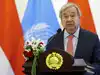
World entering 'age of climate extremes': UN chief Guterres
The world is entering a new reality where climate extremes are the norm, the United Nations chief Antonio Guterres warned Monday, urging leaders at the COP31 climate conference in Turkey to "get serious". "We have entered a new age of climate extremes."

COP31 a 'moment of truth': UN chief Guterres urges world leaders to act now on climate change
António Guterres has urged global leaders to take immediate action against climate change ahead of the COP31 summit. He emphasizes that responsibility should not be shifted and that everyone must commit to change now. Guterres highlights the worsening impact of climate disasters and the interplay between climate change and other global challenges. Additionally, he believes that fossil fuel companies should contribute by being taxed on their profits.

Environmental groups embrace AI, even as they warn of data center impacts
Environmental organisations are increasingly leveraging artificial intelligence to enhance conservation efforts and analyze ecological data. Many express concerns about the environmental impact caused by data centers that support AI technologies. The energy and water consumption of these centers is projected to double by 2030, raising emissions concerns.

Investors in other markets would be envious of India multiples: Rich Handler, chief executive of Jefferies
Jefferies CEO Rich Handler believes Indian equities remain reasonably valued despite the market correction and says easing long-term capital gains taxes could attract foreign investors. He sees opportunities in India's AI and data centre sectors, argues that global capital outflows reflect external pressures, and believes concerns about an AI bubble warrant a healthy pause rather than alarm.

El Nino could add to US inflation pressures in 2027, San Francisco Fed paper warns
A San Francisco Fed study warns the current strong El Niño could drive US inflation up by 1 percentage point in 2027, despite temporarily boosting jobs. With inflation already above the 2% target, the climate shock adds further pressure on the Fed to raise interest rates.

US midterm elections 2026: Inside the $11.6 billion money war for Senate control as battleground races heat up
Campaign spending for the US Senate elections in 2026 is expected to surpass $11.6 billion. Both Democrats and Republicans are strategically investing in key battleground states to influence outcomes. The races in Texas and several Republican-held states are drawing significant financial resources from political action committees and wealthy donors. While increased spending can enhance visibility, it does not guarantee voter support or electoral success.

Daylight Savings Time 2026: Could this year be the last year Americans change their clocks twice a year?
Millions of Americans will change their clocks on November 1, 2026, marking the end of daylight saving time. Lawmakers are considering abandoning this twice-yearly clock adjustment, with a proposal approved by the House. However, the Senate expresses concerns about implications for winter mornings and public safety. Disagreements surfaced between Republican Senator Tom Cotton and the president over permanent daylight saving time.

'Lord Shiva's locks on river Ganga are loosening': Rainfall could get heavier as Himalayan permafrost melts, mountain rocks holding water are losing ground, warns expert
Climate author and entrepreneur Mridula Ramesh has warned that rising temperatures are melting Himalayan permafrost, weakening mountain slopes and increasing the risks of landslides and floods. Comparing the changes to Lord Shiva's loosening locks, she also explained how earlier snowmelt could leave less water for summer.

Mumbai, India's financial hub is losing its coastal edge as pollution surges
Mumbai has faced unusually poor air quality throughout October as the average air quality index has sharply increased. According to data, this month has seen significant concentrations of PM2.5 particles that pose health risks. The ongoing El Niño effect is causing slower coastal winds that usually help disperse pollution. Factors such as construction activity and urban development further contribute to the deteriorating air quality.

AI is part of solution for climate change, COP31 pledge says
Turkey is set to introduce a pledge at the upcoming COP31 climate summit in Antalya. This pledge suggests that artificial intelligence can help in combating climate change effectively. However, data centers are reportedly increasing fossil fuel emissions significantly, raising environmental concerns.

No storm outside, so why is your plane shaking? How climate change could make your next flight bumpier
You experience turbulence sometimes in your flight even if the weather is clear outside, but why do those sudden bumpy jolts happen. Here's a complete analysis on what goes on.

UNEP's 1.5°C warning: The world may cool down again. What happens when the heat retreats but the damage stays?
According to a report by the United Nations Environment Programme long-term global warming is expected to cross 1.5°C above pre-industrial levels within the next few years before coming down. So the question is: Will the colling down really help?

Europe needs to better prepare for warmer temperatures: European Union
The European Union on Tuesday warned of the need to better prepare for a feared 3C rise in global warming as it unveiled new rules to force member states to act. The EU remains committed to limit global warming to 1.5C, but European climate chief Wopke Hoekstra warned "it would be unwise not to prepare for the scenarios" during a press conference.

Gangetic West Bengal. parts of northeast India have moved out of tropical climate zone over seven decades, IMD study finds
Gangetic West Bengal has transitioned to a temperate climate zone, influencing the rainfall and agricultural patterns. The recent study indicates a notable decline in annual rainfall over the region from 1981 to 2020. This change has been linked to ocean temperature patterns, which also affect long-term agricultural planning.
Load More


