
CLIMATE CHANGE EMISSIONS REDUCTION

COP31: Nearly 200 countries fail to agree on climate declaration
At Antalya, countries were unable to agree on a cover decision. They were, however, able to reach conclusions on most of the 160 items on the agenda. Some of the tracks had inconclusive outcomes while others had procedural ones, but that is not unusual. Progress made on negotiations depends a great deal on the work that COP presidencies make to create momentum and push for progress. Success at a COP hinges a great deal on the diplomatic capacity of the country holding the presidency.
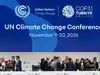
India flags equity concerns at COP31, says climate pact dilutes developed nations' responsibility
India emphasized the insufficient representation of equity and responsibilities for developed nations during COP31 discussions. Amandeep Garg expressed disappointment at the failure to connect historical emissions with current climate threats. Many countries criticized the final text for not addressing urgent climate issues effectively. The conference concluded without an agreement due to disagreements over fossil fuel terminology. UN Secretary-General Antonio Guterres expressed disappointment regarding the lack of consensus at the summit.

Confusion at climate talks as final deal offered doesn't mention fossil fuels
Several nations, including the European Union and Panama, express strong objections to the draft climate agreement. The draft fails to mention fossil fuels, which are a major contributor to global warming. Delegates voiced concerns that the agreement does not adequately address climate change impacts or financial aid for vulnerable countries. Activists are urging negotiators to reject the draft due to its shortcomings.

IPCC at COP 31: UN climate science in geopolitical crossfire
The climate conference in Antalya is currently addressing crucial issues related to the IPCC's report publication. Disputes over the timeline for these reports and the budget for 2027 remain unresolved. Developed nations advocate for early publication before the 2028 global stocktake, while developing countries oppose this. The differing priorities of emission reductions and adaptation to climate impacts have created tension among member countries.

Meta says 'reevaluating' 2030 net zero target amid AI buildout
Meta said Thursday it was reconsidering its 2030 deadline for net zero emissions because of the artificial intelligence boom, the latest in a broad retreat by corporations on global warming targets. The reality has been far more complex," the executives wrote, adding that delivering on Meta's vision "requires building the infrastructure that powers AI." In 2020, Meta set a goal of net zero emissions across its entire value chain by the year 2030, in order to align with the Paris Agreement, which seeks to hold long-term warming to 1.5C to avert climate catastrophes.

Backsliding? COP31 draft omits fossil fuels
Observers and experts said the presidency's explanation wasn't borne out by the text. The draft "welcomes efforts that contribute to urgently and rapidly scaling up the development, dissemination and deployment of Carbon Capture Utilization and Storage and Carbon Dioxide Removal technologies". The Intergovernmental Panel on Climate Change (IPCC) does recognise that carbon dioxide removal has a role in achieving the long-term temperature goal.
- Go To Page 1

COP31 draft climate deal removes mention of fossil fuels
Australia has unveiled a new draft agreement for COP31, which omits references to fossil fuels entirely. The negotiations have faced challenges as countries push for stronger commitments regarding climate action and energy transitions. Rich nations continue to resist increased support for developing countries seeking climate adaptation, citing budget limitations. Meanwhile, Panama threatens to block any agreement that fails to address its demands on oil production.

Low-profile India is still a behind-the-scenes force at climate talks
India stands out at the UN climate talks in Turkey with a leaner official delegation compared to many nations. Despite stepping back from hosting future discussions, India remains a pivotal participant, championing the rights of developing nations in terms of climate funding while pushing for stronger commitments from industrialized countries.

India says developing nations must not choose between climate action and development
India's Union environment minister Bhupender Yadav highlighted the importance of balancing climate action with development priorities. He called for developed countries to meet their climate finance commitments honestly and quickly. Yadav underscored that developing nations should not bear the burden of developed countries' past greenhouse gas emissions. He acknowledged the ongoing discussions surrounding the science presented by the Intergovernmental Panel on Climate Change.

COP31 summit: Nepal highlights need for climate justice, pushes for billions to help disaster survivors
In Nuwakot, Nepal, villagers are struggling to recover from floods that destroyed homes and livelihoods. Survivors rely on aid for basic necessities like water and food as they await help. Globally, climate leaders at COP31 stress the urgency of addressing climate change and its impacts on vulnerable nations. The established loss and damage fund falls significantly short of the required financial support for affected countries.

Why the electrification push at global climate talks is stalling
During COP31 in Turkey, a bold proposal was made to boost electricity's share in global energy demand to 35% by the year 2035. This ambitious plan aims to improve energy efficiency across major sectors, including transportation, buildings, and industries to mitigate emissions.

Study estimates magnitude of US data center pollution as climate talks unveil clean AI pledge
The pledge also calls for focusing the power of artificial intelligence on solving the so-far intractable problem of climate change and reflects burgeoning concerns about AI's ever-expanding environmental footprint. The political backlash has played out in U.S. elections and major local objections for new sites.

COP31 puts climate finance in focus as countries face question of who pays for climate action
"This conversation at this COP is about implementation and electrification and about how the pot of money is being divided, or who needs to contribute what," said Wopke Hoekstra, European Commissioner for Climate, Net-Zero and Clean Growth.

Carbon cuts, cost gains: New business logic of going green
Jacinda Ardern recently emphasized the importance of science in climate initiatives during her speech in Mumbai. She called for private sector involvement despite fluctuating climate policies worldwide. Earthshot Prize leaders highlighted ongoing solutions and initiatives in India focusing on sustainability and climate action. Financial coordination remains a significant challenge for businesses looking to contribute to climate initiatives effectively.

US data centers' carbon footprint rivals small European countries
A recent study indicates that hyperscale data centers in the United States consume about two percent of total electricity. The research highlights an increasing carbon footprint similar to that of a small European country. Researchers identified a significant reliance on fossil fuels powering these centers despite advancements in renewable energy. Experts emphasize the need for stricter reporting requirements and responsible planning for future expansions.

India's climate stance in focus as Yadav set to steer mitigation talks
Bhupendra Yadav will play a significant role in guiding emissions reduction discussions at COP31. He has been tasked with balancing India's position on fossil fuel use with global climate goals. Many countries are concerned about the implications of overshooting the 1.5°C temperature limit. Yadav's experience from previous COPs will be critical in fostering equitable mitigation strategies. India's commitment to renewable energy is pivotal in these climate negotiations.

COP31 talks enter political phase as ministers step in
COP31 president Murat Kurum said work in the second week would progress on four levels - ministerial engagement, consultations by the presidency, ministerial consultations on outstanding political issues, and technical negotiations that might require political inputs.

Wars, energy security reshape global climate debate at COP31
COP31’s Leaders’ Summit highlighted a shift in how climate action is being viewed, with governments increasingly linking it to economic and energy security amid geopolitical tensions, wars and rising energy costs. Leaders warned that weaker international cooperation and competing priorities around tariffs and security could undermine efforts to curb emissions, while UN officials stressed that climate action can help ease inflationary and fiscal pressures. With nearly 70 heads of state and government attending, the summit also underscored the growing importance of climate finance and international cooperation.

For a greener future, bring back coal cess
Electricity demand is expected to grow 6.4% annually till 2030, making a rapid coal exit near-impossible. A coal cess will signal India is pricing its carbon dependence. It could also reduce carbon costs exporters face at the border. Britain has recognised India's Carbon Credit Trading Scheme (CCTS) for carbon-price relief under its CBAM. The EU is yet to do so. A cess could strengthen India's case for similar relief, while retaining more carbon revenue at home to fund the energy transition.
World leaders urge stronger and faster action at UN climate talks over inadequate response
World leaders gathered in Turkey for COP31 to discuss effective strategies to combat climate change. Notably absent are leaders from major polluting nations, including the United States, China, and India. U.N. Secretary-General Antonio Guterres urged immediate action in his opening speech and suggested a framework for cooperation. Brazil's President Luiz Inacio Lula da Silva emphasized the need for global leadership on environmental issues.

Acceleration in clean technology needed to ensure decline in world's emissions: Study
Adopting clean energy solutions such as solar, wind, and electric vehicles can play a pivotal role in lowering carbon emissions. The Global Carbon Project highlights a concerning forecast of rising emissions in India that may exceed earlier predictions. While many nations are successfully decreasing fossil fuel emissions, a rapid shift to cleaner energy sources is critical, as our carbon budget is narrowing, demanding immediate action to meet 2028 emission goals.

World leaders begin talks as COP31 faces pressure to turn climate promises into action amid rising global warming
World leaders are gathering in Turkey for the UN climate conference COP31 amid mounting pressure to translate climate commitments into concrete action. The summit comes after a year of deadly climate-related disasters, stalled progress on fossil fuel reductions and growing concerns that global warming will exceed the 1.5°C threshold set under the Paris Agreement. Rising energy prices linked to the Iran war and the absence of the US delegation add to the challenges facing negotiations.
Pakistan farmers in long fight to make German firms pay for flood damage
Farmers from Pakistan's Sindh province are pursuing legal action against German firms RWE and Heidelberg Materials. They claim these companies' emissions contributed to severe flooding that devastated their livelihoods in 2022. This case marks a significant attempt to hold major polluters accountable for climate change impacts.

Heat-trapping carbon pollution drops, but scientists cite the Iran war rather than energy progress
This year, global carbon emissions fell by 0.4%, driven by oil supply disruptions from the conflict in Iran. While oil and natural gas emissions experienced notable declines, there was a small uptick in coal emissions. Experts caution that these improvements may not be guaranteed, attributing them primarily to external influences.

Global climate talks open with big questions, smaller goals
Climate negotiators from nearly 200 countries are attending COP31 in Antalya, Turkey, to address rising global temperatures and emissions. The summit will focus on achieving existing commitments rather than making ambitious new goals amidst geopolitical tensions and financial constraints.

Fossil fuel emissions fall due to Iran war and renewables, finds research
Emissions from the burning of oil, gas and coal -- the main drivers of climate change -- rose by 0.9 percent per year on average in the past decade, hitting a record high in 2025, according to the Global Carbon Budget report.

ET Graphics: As Earth heats up, will Antalya deliver?
Negotiators from across the world are gathering in Antalya, Türkiye, for COP31, the UN climate summit being held from November 9 to 20. India achieved its 2030 target of sourcing 50% of installed electricity capacity from non-fossil fuels five years early, reaching 55% by September 2026. However, climate risks remain significant, with heat-related threats projected to affect 4.2% of GDP. Despite its clean energy progress, India's emissions are expected to rise by 1,254 million tonnes by 2035.

India’s emissions to rise 4.4% despite global dip: Study
Renewable energy capacity growth and electric vehicle adoption are projected to reduce fossil fuel emissions by 0.4%. Major economies like China, the US, and the EU are expected to decrease emissions this year. However, India's emissions are predicted to increase at a higher rate than previous years. The ongoing energy crisis due to geopolitical events is influencing these changes in emissions.

Geopolitical tensions, climate finance and 1.5°C breach cloud COP31 negotiations
Kicking off in Antalya, the UN climate conference COP31 will tackle significant climate action issues. With around 160 matters on the agenda, delegates will discuss emission cuts and strategies for global adaptation. Political strains and economic challenges pose obstacles, but Turkiye and Australia are at the helm, advocating for actionable solutions and financial commitments for developing nations, striving for a unified decision on essential climate concerns.
Load More

