
CLIMATE ADAPTATION

COP31: Nearly 200 countries fail to agree on climate declaration
At Antalya, countries were unable to agree on a cover decision. They were, however, able to reach conclusions on most of the 160 items on the agenda. Some of the tracks had inconclusive outcomes while others had procedural ones, but that is not unusual. Progress made on negotiations depends a great deal on the work that COP presidencies make to create momentum and push for progress. Success at a COP hinges a great deal on the diplomatic capacity of the country holding the presidency.

Confusion at climate talks as final deal offered doesn't mention fossil fuels
Several nations, including the European Union and Panama, express strong objections to the draft climate agreement. The draft fails to mention fossil fuels, which are a major contributor to global warming. Delegates voiced concerns that the agreement does not adequately address climate change impacts or financial aid for vulnerable countries. Activists are urging negotiators to reject the draft due to its shortcomings.

IPCC at COP 31: UN climate science in geopolitical crossfire
The climate conference in Antalya is currently addressing crucial issues related to the IPCC's report publication. Disputes over the timeline for these reports and the budget for 2027 remain unresolved. Developed nations advocate for early publication before the 2028 global stocktake, while developing countries oppose this. The differing priorities of emission reductions and adaptation to climate impacts have created tension among member countries.

COP31 talks stretch into overtime as countries remain divided on key climate issues
COP31 in Antalya is ongoing as negotiations extend beyond the scheduled time for closure. Countries are divided on key issues such as fossil fuel references and adaptation finance. The Turkish-Australian leadership is working to bridge gaps between developed and developing countries. Saudi Arabia insists on including carbon capture technology in the final text to secure its support.

Countries race to secure COP31 deal after fossil fuel row
During the COP31 climate talks in Turkey, nearly 200 nations encountered significant divisions over fossil fuel discussions. As negotiations extended into Saturday, countries voiced concerns over energy, science, and financial obligations. The removal of mentions of fossil fuels from the draft text created urgency among delegates to secure an agreement.
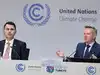
COP31 climate talks drag on as Australia, Turkiye struggle to forge consensus
The Australian minister stressed that the UN climate talks is a consensus party-driven process. "We're guiding the parties towards consensus, and we'll continue to do that," he said. "Be very clear, because this is worth working for and fighting for. The world is wondering whether multilateralism can deliver. Well, I think it can. I think you can deliver a very strong message that overshooting 1.5 is not acceptable, and the world will not let it happen."

COP31 draft climate deal removes mention of fossil fuels
Australia has unveiled a new draft agreement for COP31, which omits references to fossil fuels entirely. The negotiations have faced challenges as countries push for stronger commitments regarding climate action and energy transitions. Rich nations continue to resist increased support for developing countries seeking climate adaptation, citing budget limitations. Meanwhile, Panama threatens to block any agreement that fails to address its demands on oil production.
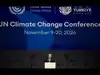
COP31 leaders urge negotiators to bridge gaps as talks enter final stretch
Negotiators at COP31 in Antalya are encouraged to enhance efforts to finalize agreements on outstanding climate issues. Key topics include finance, just transitions, and adaptation goals which still face challenges. The Turkish-Australian presidency emphasizes the necessity of urgency and political engagement to achieve consensus. An informal discussion among ministers has been arranged to address these challenges.
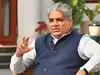
Environmental protection, development must advance together: Bhupender Yadav at COP31
At COP31 in Turkiye, India's Union Environment Minister Bhupender Yadav detailed the nation's strategy for climate resilience. He stressed the significance of collaborating with Small Island Developing States on coastal risk management and ecosystem conservation. Yadav outlined four priority focus areas for strengthening partnerships, such as technology exchange and capacity enhancement.

COP31 draft declaration lists clashing climate priorities
The draft text spans issues raised by countries over the last week including overshoot of 1.5C, mountains and climate, deployment of carbon dioxide removal technologies, falling public finance contribution by developed countries and electrification goal of 35 by 35. It also includes various options to an issue. For instance, the demand made by developing countries to triple funding for adaptation is addressed in three separate paragraphs, each expressing a different approach to increasing finance for adaptation.

Carbon cuts, cost gains: New business logic of going green
Jacinda Ardern recently emphasized the importance of science in climate initiatives during her speech in Mumbai. She called for private sector involvement despite fluctuating climate policies worldwide. Earthshot Prize leaders highlighted ongoing solutions and initiatives in India focusing on sustainability and climate action. Financial coordination remains a significant challenge for businesses looking to contribute to climate initiatives effectively.
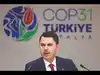
COP31 talks enter political phase as ministers step in
COP31 president Murat Kurum said work in the second week would progress on four levels - ministerial engagement, consultations by the presidency, ministerial consultations on outstanding political issues, and technical negotiations that might require political inputs.

COP31: Experts flag extreme heat risks to pregnant women, call for targeted adaptation
Experts at COP31 are highlighting the risks of extreme heat on pregnant women and newborns. They emphasize the need for health systems to develop guidelines specifically for pregnant women's needs. Limited financial support for health adaptation measures has been identified as a significant challenge by the UNFCCC. Increased recognition of these health impacts requires urgent action to protect vulnerable groups.

"Very salient": UN climate chief backs PM Modi's remarks on clean energy cushioning India against oil price shock
UN climate chief Simon Stiell has endorsed Prime Minister Narendra Modi's remarks that clean energy investments helped India withstand the oil price shock, calling them "very salient". Stiell also welcomed India's Green Energy Corridor, emphasising the role of renewable energy, stronger electricity grids and battery storage in protecting economies.

Scientists compared flies from cool California forests with those from hot Southwestern deserts; a 2025 study found their brains responded differently to heat
Two fly species, Drosophila persimilis and Drosophila mojavensis, showcase fascinating adaptations to their environments, revealing their opposing responses to heat. While forest-dwelling flies evade warmth, their desert counterparts thrive in it. These contrasting behaviors highlight significant neural changes that not only reflect physical adaptations but also altered sensory processing. This research is pivotal in predicting how species may cope with the challenges of climate change.

310 of India's 651 agricultural districts highly vulnerable to climate change, says PM's principal secretary PK Mishra
PK Mishra, principal secretary to the Prime Minister, said 310 of India's 651 agricultural districts are highly or very highly vulnerable to climate change, highlighting the need for region-specific adaptation measures.
COP31: UN Chief Antonio Guterres warns climate crisis outpacing action
Antonio Guterres addressed world leaders at the climate talks in Antalya and highlighted urgent climate action needs. He stressed that emissions must be reduced, emphasizing the role of developed countries in supporting developing nations. Guterres outlined four essential pillars of a Climate Justice Compact during his keynote speech. He urged nations to transition from fossil fuels to renewable energy sources for sustainability.

No one should be left behind in efforts to tackle climate change: India at COP31
At the ongoing COP31 climate conference in Turkiye, India highlighted the urgent need for equity in climate action. The country reaffirmed its commitment to addressing adaptation needs, especially for the Global South. India called attention to the critical role of public finance from developed nations in supporting developing countries. Additionally, India's statement emphasized the importance of Article 9.1 of the Paris Agreement for financing.

Climate finance remains key friction point as COP31 opens in Turkiye's Antalya
COP31 commenced in Antalya, where climate finance was added to the agenda after negotiations. Developed countries opposed the proposal for a dedicated discussion on adaptation finance. Concerns were raised regarding the weakening trust among nations over the inclusion process. The African Group's suggestion for increased adaptation finance was notably rejected. As COP31 emphasizes implementation, delegates stressed that financial support is essential for achieving climate goals.
Load More


