
CHIP WAR

Tech firms claw back some losses after midterms rout, eyes on Nvidia
Tech firms rose Monday to claw back some of last week's painful losses fuelled by AI regulation worries, though traders were keeping a wary eye on a probe into Nvidia boss Jensen Huang amid claims of an affair with a Chinese spy. The executive, Alice Huang -- also known as Huang Le, and no relation to 63-year-old Taiwanese-born Jensen -- developed a close relationship with the Nvidia boss, the Times said.

AI slump revives Asia’s forgotten trades from China to India
Global investors are rethinking their Asia bets as the AI trade loses momentum following the US midterm elections. India and China are emerging as potential beneficiaries of the shift, with funds rotating towards undervalued stocks, domestic growth, healthcare, consumer companies and financials. India's limited AI exposure, easing oil prices and renewed foreign inflows are strengthening its appeal.

Jay Rockefeller dies at 89: What was the cause of death of West Virginia governor and former US Senator
John D. "Jay" Rockefeller IV, who dedicated his life to public service, has passed away at the age of 89 in Washington. A prominent figure in West Virginia politics, he served as governor and U.S. senator for 30 years. His advocacy for healthcare and poverty alleviation led to significant achievements, including the creation of the Children's Health Insurance Program before retiring from the Senate in 2015.

Global Market Today: Asian stocks join US selloff as AI slump deepens
South Korea’s tech-heavy Kospi Index slid 8.8% in early trading, triggering a circuit breaker, with chipmakers Samsung Electronics Co. and SK Hynix Inc. both plunging more than 9%. Japan’s benchmark Nikkei 225 Stock Average lost 6.2%, while the MSCI Asia Pacific Index declined 2.9%. Futures pointed to losses in Taiwan, Hong Kong and China.

US yields fall in choppy session as oil rises and equities sink
As geopolitical tensions change the landscape, US Treasuries are witnessing a spike in demand while equity markets take a hit and oil prices show volatility. Investors are reassessing their outlook on the US-Iran relations following new election results. The labor market remains resilient with dropping unemployment claims and heightened productivity levels, pointing towards ongoing inflation risk.
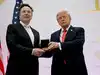
Elon Musk gambled $445 million to boost Republicans in midterms and came up short
Nobody may have suffered bigger losses Tuesday than President Donald Trump. But few others had more on the line than Musk, who gambled big and came up holding the midterm's worst return on investment. Democrats in Congress were already queuing to get their shot at Musk, with possible subpoenas and investigations.
- Go To Page 1

Elon Musk gambled $445 million to boost Republicans in midterms and came up short
Elon Musk's hefty USD 445 million investment in Republican candidates did not yield the desired electoral success, as Republicans faced significant losses, ceding control of Congress. This setback has prompted Democrats to contemplate investigating Musk's business operations. Critics have denounced his financial influence in politics, highlighting the risks of affluent individuals shaping policy. Anticipated changes in Texas's Democratic leadership suggest intensified scrutiny of Musk's ties to the state.

'Gold’s rally is not just about wars, it’s fundamentally linked to $40 tn US debt': WGC India CEO Sachin Jain
World Gold Council India CEO Sachin Jain said gold’s rally is driven by rising US debt, de-dollarisation and central bank purchases, rather than geopolitics alone. He expects strong Indian demand during Diwali and recommends allocating 10-15% of financial assets to gold. Over the next five years, technology, tokenisation and blockchain could make gold more accessible, transparent and easier to trade.

'Stunning': Top House Democrat Hakeem Jeffries hails midterm rout
Appearing on "Morning Joe" on the liberal MS Now network, the House minority leader, who is poised to become the first Black person to lead the House when the new Congress convenes in January, called the result a repudiation of President Donald Trump and his Make America Great Again (MAGA) movement.
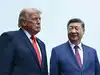
Donald Trump's political humbling after US midterms signals short-term gain, long-term pain for China
Donald Trump's US midterm election defeat could strengthen China's hand in upcoming US-China trade negotiations, giving Beijing leverage to push for tariff reductions and other concessions. However, Beijing remains wary of a potentially more hawkish US administration after Trump. China's concerns include Taiwan arms sales, a possible Iran war escalation, energy security and the future of its fragile trade truce with Washington.

KOSPI crashes 4% as US midterm shock rattles Asian markets
Oil prices and stock markets reacted significantly to the recent midterm election victories by Democrats in the United States. Asian chip stocks declined alongside the dollar, indicating market volatility following the elections. Lower oil prices have resulted in a bond rally, subsequently reducing yield rates. Anticipation of increased support for renewables is driving optimism in solar supply chain stocks.

What the midterms elections mean for US-China ties
A recent victory for Democrats in the US midterm elections may reshape relationships with China in several ways. Control of Congress allows them to limit President Donald Trump's tariffs on Chinese products, which may influence ongoing trade negotiations. Taiwan could become a critical issue, especially if Democrats push for arms sales to support the island. Beijing might perceive Trump’s weakened political status as an opportunity to apply pressure on him.

Global Market Today: Asian stocks rise as oil slides after US midterm elections
Benchmark indexes rose in Japan and Australia, pushing the MSCI Asia Pacific Index up by 0.3%. That was after the S&P 500 Index jumped 1.6%, its biggest gain in three months, and the tech-heavy Nasdaq 100 climbed 0.9%. South Korea was the outlier, with the Kospi Index dropping 2.7%, reflecting investor concerns over the future of data-center development and losses in US chip stocks.

Donald Trump's midterm drubbing demonstrates the power of data center opponents
Democrat victories in recent midterm elections signal a shift in public sentiment regarding data centers and AI technology. Key races in Texas and Georgia brought significant wins for candidates opposing data center development. Analysts estimate that nearly half of planned US data center capacity could face new regulations and moratoriums. Concerns have emerged over potential slowdown effects on the AI and technology sectors as stocks decline.

US Democratic win unlikely to ease firms' cost, tariff woes in near term, executives say
Global businesses expect limited immediate changes following Democrats' takeover of the US Congress, as high energy and raw material costs, inflation and strained consumer spending continue to weigh on operations. While some executives welcomed prospects of political stability, companies remain uncertain about tariffs, AI regulation and trade policies, amid fears of Washington gridlock.

From Iran to trade, how the US midterms impact the rest of the world
US Democrats' recent midterm election victories could influence global relations, especially concerning Iran and Israel. The potential for a peace deal with Iran seems viable as US voters oppose prolonged conflicts. In Ukraine, Democrats may propose increased financial and military aid, which could face delays. Additionally, Asian countries may reconsider investment pledges to avoid tariffs in light of these outcomes.

2026 Midterm Election Results: Democrats win House majority in blow to Trump, setting up new fight over his agenda
In the 2026 US midterm elections, Democrats are anticipated to secure around 248 seats. This gain will empower them to challenge President Donald Trump's policies, especially amid growing voter dissatisfaction with issues like the Iran war and immigration. With this majority, they can effectively scrutinize the administration's decisions, and Hakeem Jeffries is poised to make history as the first black Speaker of the House.

Ahead of Market: 10 things that will decide stock market action on Wednesday
Indian equities rallied nearly 2%, with Sensex gaining 1,225 points and Nifty rising 370 points. Falling crude prices, renewed FII buying, resilient earnings and expectations of LTCG tax changes boosted sentiment, adding nearly Rs 4 lakh crore to market capitalisation.

Apple drops with most of Wall Street, but gains for other Big Tech stocks cushion the blow
The stock market has been shaky recently as technology and artificial-intelligence stocks have swung on worries their prices shot too high in the frenzy around AI. Several of the most influential AI-related stocks held firmer Tuesday, which supported the market, after flipping from gains in the morning to losses in the afternoon a day earlier.

US stock futures mixed as Apple falls on margin warning, midterm results awaited
U.S. stock index futures reflect a mixed response as crude oil prices trend upwards ahead of midterm election outcomes. Apple's shares took a hit following its announcement regarding rising costs and potential holiday-quarter margin impacts. Despite Palantir Technologies exceeding revenue estimates, its stock plummeted post-results. Analysts are warning of heightened market volatility depending on elections and government expenditure.

Asian companies to ramp up investments in US amid supply-chain shifts
Citi expects investments by South Korean, Japanese and Taiwanese companies in the US to rise as global supply chains shift. The bank also sees growing cross-border business flows involving India and China, creating opportunities in transaction banking and financial services.

South Korean shares slide nearly 3% as tech selloff deepens; won strengthens
South Korean shares fell sharply as a global technology selloff dragged chipmakers and other heavyweight stocks lower. A stronger won and plunging oil prices offered little support as foreign investors continued to sell equities.

Global Market Today: Asian stocks slide as US chip selloff deepens
The MSCI Asia Pacific gauge dropped 0.4% with South Korea’s Kospi Index sliding almost 3%. In the US, a gauge of chipmakers extended a three-day rout to 12% and the Nasdaq 100 sank 10% from its peak, entering a technical correction. In a sign some investors are looking to buy on dips, US stock futures gained. Japan is closed for a holiday.

US Stock Market today: Why are S&P 500, Nasdaq down ahead of November 3 Election Day? Apple, Palantir to Alphabet, Nvidia -- check top, worst performing Wall Street stocks
Wall Street invetsors on Monday were driven by several factors including Tuesday's Election Day for US Midterm elections.

US manufacturing strengthens in October, input prices stay high
US manufacturing activity accelerated in October, with the ISM manufacturing PMI rising to 55.5 from 54.5 in September, beating Reuters-polled economists' expectations. Strong consumer and AI-related business spending supported growth, but factory input prices remained elevated at 75.2, reinforcing concerns that US inflation could stay above the Federal Reserve's 2% target.

Charting the global economy: Central banks hold rates steady
Global central banks have opted to keep interest rates unchanged amidst growing inflation worries stemming from energy costs. While the Federal Reserve and the European Central Bank signaled potential hikes during their December meetings, the US economy displays robust growth from business investments and consumer activity.

Global Market: European blue-chips set for strongest earnings in four years
European blue-chip companies are projected to report a substantial earnings growth this quarter due to energy sector profitability. Energy companies are expected to post a striking increase in profits linked to higher oil prices. Overall, companies within the STOXX 600 index will likely show a positive earnings performance across various sectors. However, some sectors like real estate and consumer cyclicals may face declining earnings.

'2026 resembles 1991': CEA Nageswaran says India is at a critical economic inflection point
Chief Economic Advisor V Anantha Nageswaran emphasized that 2025-26 could be a significant inflection point for India's economy. He mentioned the challenges posed by global shocks and supply-side disruptions in recent years. The reliance on imported crude oil adds to India's vulnerability to fluctuating international energy prices. Strengthening resilience to external disruptions is crucial for managing such risks effectively.

India's deeptech dream remains import dependent for critical components
The founder of a spacetech startup developing rockets said geopolitical tensions, including the Russia-Ukraine war, disrupted the supply of critical components. “Parts that were earlier available within weeks are now taking months to arrive, making it harder for startups to plan development and testing schedules,” the founder said, requesting anonymity.
Load More

