
CHIP MARKET

Fallout from the Nvidia scandal may dampen the exuberance around the AI boom
Nvidia CEO Jensen Huang resigned following reports of personal scandals, including extramarital affairs. His departure raised uncertainty in the AI sector and prompted rivals to consider increased competition. Competitors like Advanced Micro Devices and Broadcom saw share price gains on the news.

Nvidia faced pressure to boost its AI backstop before Jensen Huang's exit
Nvidia's ambitious $500 billion AI financing partnership with six major Wall Street firms is facing hurdles, with customers and financial partners seeking a larger financing backstop than the chipmaker's proposed 25%. No deals have emerged so far, and Jensen Huang's exit as CEO adds uncertainty, potentially delaying the first transaction until January.
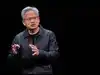
Post-Gen Jensen Nvidia: A smooth leadership transition needed
The scale of Huang’s indiscretions outweighs anything reported so far in corporate history. Nvidia is the world’s 2nd most-valuable company, and reached $5.6 tn peak value — before the scandal broke. Investors have lost $600 bn this week. This matters, because of the weight Nvidia and fellow technology stocks have in the US500. The effects are rippling through AI and technology stocks to the broader market and risk throttling investment. An AI slowdown will squeeze US growth and intensify fiscal stress.
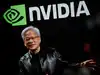
What comes next for Nvidia and AI industry after spy scandal
The scandal, which deepened after reports of a second affair emerged, has sent shares in the multi-trillion-dollar company plunging and raised questions about the future of Nvidia and the wider AI industry.

Chinese AI firms rush to secure Nvidia chip capacity as spy scandal stirs fear of US curbs
Chinese artificial intelligence companies are actively seeking to rent Nvidia-powered computing capacity from overseas data centres. They are motivated by fears of stricter US export controls and political controversies surrounding Nvidia's CEO. Major cloud providers and smaller AI labs are exploring international options to maintain access to advanced processors.

Who's next CEO at Nvidia? Top engineer and CFO favored as candidates
Nvidia's CEO Jensen Huang faces potential ousting from the board due to reported extramarital affairs. If removed, Colette Kress could serve as interim CEO due to her experience and familiarity. Meanwhile, Ian Buck, a key engineer at Nvidia, is seen as a strong long-term candidate for the position. Speculation also includes external candidates like Arm CEO Rene Haas. Nvidia's governance and direction are under scrutiny as these developments unfold.

Why is Nvidia so powerful in the AI world, and what could Jensen Huang's scandal really cost?
Nvidia's CEO Jensen Huang has recently admitted to an extramarital affair, and the woman involved, Alice Huang, has been accused of being a Chinese spy. The company's share price tumbled after the affair was revealed and is reportedly under criminal investigation. The industry is known for its circular financing schemes, with investors already fretting over whether AI investments can ever return profits.
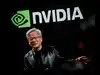
Who could potentially replace Jensen Huang if Nvidia ousts him?
Nvidia's board is reportedly discussing the future of CEO Jensen Huang due to recent controversies surrounding him. Huang has been linked to extramarital affairs, including a connection to an accused Chinese spy. Speculation about potential successors includes internal candidates and family members, highlighting the absence of a clear succession plan. External candidates from other tech firms are also being considered as replacements for Huang.

China’s army-linked university was served Nvidia chips despite US sanctions
A Chinese university with close links to the country's military has purchased two of Nvidia's powerful H200 AI chips despite being on the US export blacklist, according to procurement records reviewed by Reuters. The findings raise fresh concerns over gaps in Washington's export restrictions and China's access to advanced American technology through domestic suppliers. Other Chinese universities and research institutions have also reportedly obtained restricted Nvidia chips or rented computing capacity powered by them.
Baird downgrades Nvidia on China curbs, AI demand worries
Nvidia's shares closed at $168.9 on Tuesday and are on track for their biggest weekly drop since March 2025, with uncertainty over top leadership weighing on the stock
Baird downgrades Nvidia on China curbs, AI demand worries
Baird downgraded Nvidia's stock and cut its price target significantly due to various market risks. Concerns over US restrictions on chip sales to China have emerged, affecting Nvidia's revenue outlook. Demand for Nvidia's chips is showing signs of softening amid supply constraints and market uncertainties. Additionally, multiple brokerages have removed Nvidia from their top picks due to recent stock declines.

Global markets broadly rise on AI chip demand despite Wall Street's retreat on inflation data
Global equity markets witnessed an upward trend after unexpected US inflation data for October was released. Taiwan's markets surged notably, fueled by a strong demand for AI chips as noted by TSMC. Japan’s stock index and South Korea's Kospi also rose, despite challenges for SoftBank. However, inflationary pressures continue to spark concerns about impending interest rate hikes from the Federal Reserve this December.

Nvidia faces deepening scrutiny over China chip ties, CEO affair
The market value of Nvidia has plummeted following troubling accusations against CEO Jensen Huang, linked to his association with Alice Huang, who faces espionage allegations. The FBI is currently investigating whether foreign intelligence agencies have targeted Huang due to this connection. In response, Nvidia's board has begun an internal review to mitigate potential threats, highlighting vital concerns about the company's security measures and governance structure.
Nvidia stock crashes another 7%, down 32% in 24 trading days and wiping out $1.8 trillion: Is the Jensen Huang controversy creating a buying opportunity, or is Wall Street overlooking a bigger risk?
Nvidia stock crash: Can NVDA recover after losing $1.8 trillion? Since the Chinese spy controversy began, Nvidia shares have come under fresh pressure, falling another 7% and extending their 24-session decline to 32%. The sell-off has wiped out $1.8 trillion in market value. Concerns over Jensen Huang's leadership and a possible compromise of sensitive Nvidia technology are adding to investor worries, although both risks are considered unlikely.
Nvidia scandal rocks tech world Web Summit
Allegations of Chinese spying on Nvidia dominated a top world tech conference on Tuesday, with some executives seeing potential opportunities in the turmoil at the US artificial intelligence chip giant. Chinese technology executives attending the summit highlighted emerging alternatives to Nvidia.
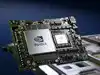
How China gets the Nvidia chips it needs to develop AI
Nvidia's dominance in the global AI chip market has come under scrutiny as US export restrictions fail to fully prevent China from accessing advanced processors. Chinese firms are reportedly obtaining Nvidia chips through smuggling and overseas data centres, while domestic players such as Huawei race to develop competitive alternatives.

Chinese chipmakers Denglin and Xinde make mixed Hong Kong market debuts
Chinese chipmakers Suzhou Denglin Technology and Jiangsu Xinde Semiconductor Technology made contrasting Hong Kong market debuts after raising a combined HK$2.36 billion through their IPOs. Denglin opened 0.9% below its offer price, while Xinde gained 20.5%. Both companies plan to use most of the proceeds to expand their semiconductor businesses.
French Ardian raises over $1 billion to invest in semiconductor makers
Chips are central to AI advances, with governments increasingly backing homegrown companies to secure sovereign technology. The platform, named Ardian Semiconductor, will invest in companies across the whole chain of making computer chips.

AI boom turns chip packaging into the next battleground for semiconductors
Billions of dollars are being invested in advanced chip packaging due to the demand for AI chips. This growing need is pushing companies to expand their production capacities significantly. Taiwan's TSMC is at the forefront of packaging technology, yet limitations have spurred alternatives.
Load More


