CHIP IMPORT BAN

Anthropic’s historic IPO; Relief for bike taxis in Karnataka
Anthropic on Thursday made a strong market debut that vaulted the AI lab into the ranks of the most valuable listed US companies. This and more in today’s ETtech Top 5.
Supply chain, costs, alternatives: Why Trump can't simply stop Asian countries from doing business with China's technology companies
Asian nations are increasingly reliant on Chinese technology, complicating Trump's efforts to impose restrictions. The intertwined economies of the region mean that removing Chinese suppliers would potentially disrupt production. Regional leaders are hesitant to choose sides between the US and China due to practical economic concerns. Although Washington has tools to limit access to Chinese technology, the process will be gradual.

China, Hong Kong stocks fall as US-China tech tensions weigh on AI shares
Chinese and Hong Kong stocks decline as concerns over tighter US technology restrictions weigh on AI hardware exporters and technology giants. The CSI300 and Shanghai Composite fall around 0.4%, while Hong Kong's Hang Seng Tech Index drops 1.5%. Mainland semiconductor stocks gain as investors bet on domestic chipmakers.

Trump's China data center curb advances despite Amazon, Google, Meta lobbying
Reuters reported in August that the Federal Communications Commission was seeking to ban US imports of new models of Chinese optical transceivers, which allow data to travel over fiber-optic cables at the speed of light within data centers, over national security concerns.

Think ease of engagement before ease of business
Policy wonks in New Delhi have historically fussed too much about foreign capital buying domestic assets. But being perennially paranoid about the colour of money has only diminished our market appeal. India is too difficult relative to other opportunities where rules are clear, tax treatment is predictable, enforcement is credible and returns compensate for risk. Options around the world are plenty, India should think of ways to make global capital fall in love with her.

Trump backed Jensen Huang until the end, urged Nvidia chief to fight for his job before exit: Report
Donald Trump called Nvidia CEO Jensen Huang to urge him to maintain his position amid an espionage scandal. Trump remained a prominent supporter of Huang despite warnings about his alleged relationship with a Chinese citizen. The president viewed Nvidia as essential to the US economy and feared the impact of Huang's removal. Huang's influence shaped Trump's approach to semiconductor exports to China.
- Go To Page 1

Two weeks after the US restricted Nvidia’s China chips, a four-month-old Shanghai firm became a ‘preferred partner’ - here’s why the timing matters
A Shanghai company secured Nvidia's Preferred Cloud Partner status just four months after its founding and two weeks after the US expanded chip export restrictions on China. An investigation by The Information has since linked its ownership to Alice Huang's family and examined its place in a wider network handling billions of dollars in Nvidia GPUs.

China’s army-linked university was served Nvidia chips despite US sanctions
A Chinese university with close links to the country's military has purchased two of Nvidia's powerful H200 AI chips despite being on the US export blacklist, according to procurement records reviewed by Reuters. The findings raise fresh concerns over gaps in Washington's export restrictions and China's access to advanced American technology through domestic suppliers. Other Chinese universities and research institutions have also reportedly obtained restricted Nvidia chips or rented computing capacity powered by them.

Huang in suspense, chips may crack
Huang is a hands-on boss at Nvidia. Although he owns a small amount of the company's stock, replacing him will be difficult. In the new political dispensation, Washington may be forced to take a harder look at its export control regime and make it more watertight. 'Jensanity' offers a good trigger.
How China gets the Nvidia chips it needs to develop AI
Nvidia's dominance in the global AI chip market has come under scrutiny as US export restrictions fail to fully prevent China from accessing advanced processors. Chinese firms are reportedly obtaining Nvidia chips through smuggling and overseas data centres, while domestic players such as Huawei race to develop competitive alternatives.
Microsoft presses Trump to scuttle expected ban on Chinese data center technology: Report
Microsoft is lobbying against a proposed ban on Chinese optical transceivers essential for artificial intelligence data centers. The Trump administration's decision could significantly impact the speed of data center development in the US. Industry groups have expressed concerns about potential supply chain disruptions and competitive disadvantages. The Federal Communications Commission is currently deliberating on the implications of this ban.

Microsoft presses President Trump to scuttle expected ban on Chinese data centre technology
Reuters reported in August that the Trump administration wants to ban US imports of new models of Chinese optical transceivers, which allow data to travel over fiber-optic cables at the speed of light within data centers. The concern is that they could be used by Beijing to steal data, install malware or disrupt service at US data centers.

Big Tech wants to build more AI data centres across America. Why local communities are pushing back against the costs of the AI revolution
Cities across America are imposing temporary moratoriums on data centre approvals to address infrastructural concerns. Local governments are assessing the impacts of these projects on electricity, water, and public resources. Environmental lawsuits are complicating the development of AI infrastructure further, leading to delays and increased costs. Some technology companies are moving towards greater transparency with local communities for better engagement.

‘Our life won’t stop if we don’t eat vada pav’: Tukaram Mundhe’s reply to schoolboy seeking its return to canteens goes viral
A video of Maharashtra FDA Commissioner Tukaram Mundhe responding to a schoolboy’s request to bring back vada pav in school canteens has gone viral on Instagram. Mundhe encouraged children to prioritise nutritious food and also cautioned against certain Chinese street food preparations. The exchange comes amid Maharashtra’s restrictions on foods high in fat, sugar and salt in school canteens and within 50 metres of school campuses.

Netlist seeks US import ban on Micron chips used in Google, Nvidia AI computing
The company asked the tribunal to bar imports of Micron dynamic random access memory (DRAM) devices and Google, Nvidia and Broadcom graphics processing units, servers and other products that incorporate Micron's infringing technology.

Beijing widens travel curbs to kin of top chip, AI talent
Government agencies have recently begun to share the wider restrictions with affected people, which include prominent startup founders as well as the heads of strategically important companies in AI-related fields, people familiar with the matter said. Direct relatives such as spouses and children of certain AI and chip executives, whose work is considered paramount to state security, are now required to obtain approval from Beijing before going abroad even for short trips, the people said.

India’s international trade in times of AI
The Age of AI needs trade governance that deploys natural intelligence in conjunction with artificial intelligence for a quantum jump in speed and quality of decision making.
Trump and Xi see tensions flare over AI, trade and Iran but still seek stability
Trump and Xi are set to meet in Washington as the US-China relationship remains marked by intense competition over AI, trade and technology. The leaders are expected to seek stability rather than a major breakthrough, with Iran, Taiwan and tariffs also on the agenda.
Key issues for this week's Trump-Xi summit in Washington
President Trump welcomes Chinese leader Xi Jinping for crucial talks this week. They seek stability in a relationship strained by trade and global issues. Key discussions will focus on trade tariffs and potential agricultural deals. Taiwan's status and China's role in Iran's economy are also on the agenda. Artificial intelligence cooperation and competition will be another significant topic.

After fallout with Chinese parent, chipmaker Nexperia partners with India's Tata
Dutch chipmaker Nexperia said on Thursday it will partner with Tata Electronics, a subsidiary of the Tata Group, to produce and package chips in India.

China steps up customs crackdown on Nvidia AI chips: Financial Times
China is increasing its enforcement of chip import restrictions, aiming to move its tech firms away from relying on US products. According to the Financial Times, this includes reducing dependence on Nvidia’s AI chips, as Beijing pushes for more control over the country’s access to foreign technology.

China to ban Nvidia over H20 chips safety risks? Here are latest updates
Trump administration in April blocked the sales of H20 chips, which Nvidia developed to specifically comply with U.S. restrictions for exports of AI chips to China.
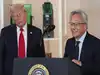
Nvidia's Jensen Huang has done something that no other CEO or leader has done before - ease US-China tensions
Nvidia’s $4 trillion move is making headlines after CEO Jensen Huang pulled off a major turnaround by resuming H20 chip sales to China. Just days after meeting President Donald Trump, Huang landed in Beijing, met Chinese trade officials, and announced the big win—without causing friction on either side. While U.S.-China tensions remain high, Huang’s strategy shows how quiet diplomacy and smart timing can unlock billion-dollar markets. By staying neutral and culturally fluent, Nvidia isn’t just selling chips—it’s selling the future of AI infrastructure. This story isn’t just about tech; it’s about leadership in a divided world.

Has Jensen Huang lost his mojo? His company Nvidia has lost over $330 billion since January 6; what could be the reason?
Nvidia CEO Jensen Huang could be in deep trouble as his company, Nvidia's stock prices have been in a free fall since January 6, with nearly $330 billion of its value getting obliterated from the US stock market. Here's what we think could be going on

US stares at billions in losses as China bans exports of these rare minerals. All you need to know
The United States is staring at billions in losses after China recently announced it has banned the exports of three rare minerals- gallium, germanium, and antimony- and other items to America. The move by China is also seen as a new way of countering President-elect Donald Trump, who will take office on January 20. This could be a tipping point in trade conflict between the two biggest economies. China's move came after President Joe Biden’s administration prohibited certain types of chips and machinery and added more than 100 Chinese companies to a restricted-trade list.

China's military and government acquire Nvidia chips despite US ban
Chinese military bodies, state-run artificial intelligence research institutes, and elite universities in China have been purchasing Nvidia semiconductors that are banned from export to China by the U.S.

China's Micron ban highlights chipmakers' dilemma as Sino-US tensions grow
China's move against Micron, the biggest US memory chipmaker, was widely seen as retaliation for Washington's efforts to restrict Beijing's access to key technology.

Covid-19: Parts shortage may pull the plug on ventilator-making
The ban on international flights has made worse the issue, with manufacturers struggling to lift sensors, chips and controllers from suppliers in China. India is a big importer of electronics due to the absence of a homegrown industry. Efforts to build local semiconductor fabrication facilities over the last two decades have been lacklustre due to high costs and a lack of stable policy.
Load More