
CHIP ARCHITECTURE

Think ease of engagement before ease of business
Policy wonks in New Delhi have historically fussed too much about foreign capital buying domestic assets. But being perennially paranoid about the colour of money has only diminished our market appeal. India is too difficult relative to other opportunities where rules are clear, tax treatment is predictable, enforcement is credible and returns compensate for risk. Options around the world are plenty, India should think of ways to make global capital fall in love with her.

‘I’m a piece of sh--’: Jensen Huang’s last hours as Nvidia CEO
For the decades he spent building Nvidia into a multitrillion-dollar AI chip behemoth, Huang was famous for his attention to the tiniest of details, from chip architecture to the compensation packages of even the most junior employees at the company. Now, in the eyes of the people in the room, he had given up.

Jensen Huang resigns: Where are Nvidia's other two co-founders? One could have been world's 2nd richest person after Elon Musk had he not sold his shares that could be worth $600 billion today
Nvidia's co-founder Jensen Huang has stepped down as CEO, temporarily succeeded by Chief Financial Officer Colette Kress. Chris Malachowsky remains with the company as a member of the executive staff and has made significant contributions. In contrast, Curtis Priem sold all his Nvidia shares in 2006 and focuses on philanthropy, having donated over $275 million to Rensselaer Polytechnic Institute.
Post-Gen Jensen Nvidia: A smooth leadership transition needed
The scale of Huang’s indiscretions outweighs anything reported so far in corporate history. Nvidia is the world’s 2nd most-valuable company, and reached $5.6 tn peak value — before the scandal broke. Investors have lost $600 bn this week. This matters, because of the weight Nvidia and fellow technology stocks have in the US500. The effects are rippling through AI and technology stocks to the broader market and risk throttling investment. An AI slowdown will squeeze US growth and intensify fiscal stress.

The man in the leather jacket is gone, but new risk haunts AI firms
Jensen Huang abruptly resigned as Nvidia CEO after 33 years following reports of extramarital affairs, including one with a suspected Chinese intelligence asset. CFO Colette Kress is interim CEO. Huang’s exit exposes severe "key person risk" and geopolitical vulnerabilities across the AI industry, highlighting the dangers of concentrating sensitive technological knowledge, political influence, and leadership in single founders.
Colette Kress for now, but who next? Inside the race to become only the second CEO in Nvidia’s history
As Jensen Huang steps down as Nvidia CEO following two controversies involving his reported relationships with two women, the question is, "who will lead the AI chipmaker next?" Nvidia has named CFO Colette Kress as interim CEO, but who could get the job permanently? From Ian Buck to Rene Haas, several names are now in the succession discussion. Here is the story behind the new race to become only the second CEO in Nvidia’s history.
- Go To Page 1
Nvidia CEO crisis: Who is Jay Puri? Longtime Nvidia VP in focus as Jensen Huang faces scrutiny over alleged affairs with Alice Huang and Kimberly Powell
Nvidia CEO replacement Jay Puri: Jay Puri, an Indian-origin executive who spent more than two decades at Nvidia, is drawing attention as CEO Jensen Huang faces reports of a possible board ouster. Puri retired from his executive role in August 2026, but his experience at the chipmaker has brought his career into focus amid leadership uncertainty.

Five IndiaAI empanelled companies ineligible for new compute bid
CDAC requires bidders to own, lease or operate a Tier-III, Rated-3 or higher data centre in India. Bidders must also hold the required ISO certifications and operate a network operations and security operations centre in India.

Huang in suspense, chips may crack
Huang is a hands-on boss at Nvidia. Although he owns a small amount of the company's stock, replacing him will be difficult. In the new political dispensation, Washington may be forced to take a harder look at its export control regime and make it more watertight. 'Jensanity' offers a good trigger.

Human, all too human: More than whether Jensen Huang can survive the scandal, can Nvidia survive Jensen Huang?
Nvidia's co-founder Jensen Huang has acknowledged an extramarital affair which has raised security concerns. He reportedly engaged with a Chinese businesswoman who may have influenced his lobbying efforts. Nvidia has initiated an independent investigation regarding these allegations and their implications. Although personal scandals might impact reputation, Huang's leadership is currently deemed important for the company's future. Nvidia's board maintains confidence in Huang as they navigate this challenging situation.
'No ordinary CEO': Why the AI race cannot do without Nvidia's Jensen Huang
Nvidia CEO Jensen Huang’s influence extends beyond chip supply, making him a central figure in the global AI industry. The company’s dominance in AI processors, investments across the sector and Huang’s close control over its strategy have raised concerns about the risks of depending heavily on one executive.
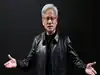
'No ordinary CEO': Why the AI race cannot do without Nvidia's Jensen Huang
The star power that 63-year-old Huang draws as the gatekeeper to Nvidia's chips shows how badly the AI industry is leaning on him for the graphics processing units that train models and run services such as ChatGPT.

NSE rolls out direct-to-chip liquid cooling to scale AI computing capabilities; plans to scale GPU capacity beyond 80 this quarter
The NSE has deployed Direct-to-Chip Liquid Cooling technology at its on-premises data centre to support expanding AI infrastructure. The exchange plans to scale its GPU capacity to more than 80 units this quarter, with the cooling system designed to accommodate up to 224 GPUs across high-density racks.

Arm beats second-quarter revenue estimates on AI and data-center demand
Arm said its server-chip architecture accounted for more than 50% of deployments at major cloud providers in 2025 and is expected to exceed 60% by the end of 2026.
Qualcomm signs major 5G infrastructure deal with SpaceX for Starlink Mobile network
Qualcomm said the equipment would provide a flexible foundation for a multi-band network, which can be deployed in stages. The initial rollout will focus on terrestrial 5G, with the architecture designed to accommodate developments in connectivity and network intelligence.
In 2026, Sonya Jin and Aadi Nashikkar-led Phinity Labs raised $5.2 million to let AI agents design computer chips from text prompts
Phinity Labs has raised $5.2 million to develop AI agents that can design computer chips from text prompts. Founders Sonya Jin and Aadi Nashikkar want the technology to explore chip architectures beyond conventional engineering methods. Backed by Uncork Capital, Moxxie and investors including Jeff Dean, the startup plans to build a system that tests designs using physical feedback and improves them before manufacturing.

Honeywell leaning on physical AI to net $1 billion India revenues
The $69 billion building, process, and industrial automation giant, carved out from the Honeywell industrial conglomerate as part of a companywide restructuring, is betting big on physical AI, leveraging its hardware and software experience, Anant Maheshwari, president of strategy and president & CEO of global regions told ET in an interview.
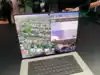
Apple Pro and Tell: How much will the first touchscreen MacBook Pro cost in the US, UK and Canada?
Apple Pro and Tell: Apple has launched its first touchscreen MacBook Pro at the “Pro and Tell” event, with US prices starting at $2,899. Apple has opened preorders for the new touchscreen MacBook Pro models, with availability scheduled to begin on November 6 Here's what buyers in the US, UK and Canada need to know about pricing, new features and availability.

Power to empower must include the power to stay well
“The true value of power lies in its purpose,” the Prime Minister told the Bloomberg New Economy Forum in October. India’s next lever of power is the health of its people, and the digital infrastructure behind CoWIN can now help keep a billion Indians well.

Apple Mac mini M6 review: A compact powerhouse for video editing, AI agents and everyday productivity
Apple’s Mac mini M6 packs powerful performance into a compact desktop, but is it the right choice for creators and professionals? From 4K video editing and multitasking to experimenting with local AI models and tools such as ChatGPT and dots, the machine offers plenty of possibilities. However, its starting configuration comes with limitations that buyers should consider before investing.

The future of AI depends on how we design the energy infrastructure that powers it
The design challenge is to make the building, its engineering systems, and its computing infrastructure work as one, accommodating rising densities and new technologies without repeated redesign.

AI's hidden power problem: 'Weeteq' claims to cut the electricity wasted inside data centres, here's how
Power consumption is a growing challenge for AI data centers, primarily due to outdated voltage management systems. To tackle this, Weeteq presents a solution designed to enhance power delivery efficiency by managing voltage spikes. This technology enables lower operational voltages, which significantly curtails energy usage in data centers.
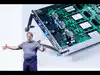
AI chip startup Tenstorrent more than doubles its valuation to $6.2 billion in funding round
Based in Santa Clara, Tenstorrent has just secured an impressive $1.5 billion in its latest funding round, propelling the AI chip startup's valuation to $6.2 billion, a leap since late 2024. This investment will significantly bolster the production of their Galaxy servers, which are crucial across various applications. Among the diverse investors backing this initiative are renowned firms like ARK Invest and T.

One decision that made Jensen Huang worth $185 billion: Nvidia nearly went bankrupt in 1996, then a risky bet helped build its AI dominance
Jensen Huang went from working as a dishwasher at Denny’s to becoming the billionaire CEO of Nvidia. The turning point came in 1993, when he cofounded the company with two engineers to develop chips for better computer graphics. After an early setback nearly bankrupted Nvidia, Huang backed graphics-processing technology that later became essential to artificial intelligence, helping transform the company into a global technology powerhouse.
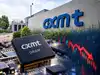
Global Market: Why China’s CXMT is putting global memory chip giants under pressure
Global semiconductor stocks tumbled as Chinese chipmaker CXMT’s reported progress on a new memory chip design raised concerns about intensifying competition. Samsung, SK Hynix and Micron face potential pricing pressure as Chinese manufacturers seek to narrow the technology gap. The selloff also reflects growing scrutiny of AI valuations and whether heavy investment in AI infrastructure will deliver sustainable returns.
US chip stocks slide as China’s CXMT advances; AI spending fears rattle investors
Shares in US chip manufacturers tumbled, primarily influenced by memory and data storage firms, following competitive moves from China's CXMT. The sector faced significant pressure, stemming from concerns over escalating rivalry and demands for AI investments. Key players like Micron Technology, Seagate Technology, SanDisk, and Western Digital saw notable declines in their stock prices.
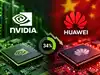
Nvidia’s share of China AI chip market falls to 34% as Huawei gains ground
Nvidia's share of China's AI chip market dropped to 34% in the first half of 2026 due to US export restrictions. Domestic competitors like Huawei increased their market presence significantly during this period. The total AI accelerator shipments in China reached over 2 million units, with non-GPU shipments surpassing GPU sales for the first time.
Sequoia-backed chip startup Nuvacore raising funds at about a $2.5 billion valuation
Nuvacore is seeking to raise the funds as the appetite for central processors has swollen due to the thirst for data-crunching capacity to power chatbots such as Anthropic's Claude. CPUs perform vital functions as traffic controllers for Nvidia's AI chips and run autonomous AI software known as agents.
Qualcomm and Arm jury to return next week after deliberations in contract dispute case
The five-day trial that wrapped up this week was the second in two years between the companies, highlighting the deterioration of their business relationship after SoftBank Group acquired control of Arm in 2016 and Arm shifted from licensing the technology needed to make chips to selling chips of its own.
Load More

