
CHINESE MODELS

This isn't a swadeshi test: Sarvam using foreign AI models need not come at the cost of building our own
Sarvam launched its inference service, Token Factory, which provides access to both domestic and Chinese AI models. Developers are increasingly utilizing these models due to lower costs and competitive performance. The service allows for local operation of AI models without sending data overseas, preserving foreign exchange. Concerns regarding data privacy and model biases remain important in the context of sensitive data handling.
Nvidia Blackwell chips turn up at China site tied to Alice Huang
Nvidia's Blackwell semiconductors were installed in a Shanghai data center, raising concerns of illegal trade practices. Evidence shows the hardware was tied to Alice Huang and her company, Megaspeed, which faces US scrutiny. The Chinese firms involved offered the Nvidia equipment as collateral for substantial loans from local banks. Investigations have revealed connections to multiple companies related to the Yangtze River Delta Project.

Focus on adoption, to seed India R&D
Nikesh Arora emphasizes that India should enhance economic benefits through AI adoption rather than pursue frontier models. The country's digital infrastructure supports productivity growth, yet talent retention remains a challenge. India can leverage the US-China AI rivalry by building AI infrastructure and securing semiconductor supplies. Enterprise AI deployment needs to exceed pilot projects for lasting impact, requiring coordination with legacy technologies.
US chip curbs, distillation crackdown threaten Chinese AI model development, sources say
Developers Z.AI and Moonshot AI in China are facing significant setbacks in the rollout of their key AI models, primarily due to new restrictions imposed by the US on critical computing resources. This has forced Z.AI to potentially delay its GLM-5.5 model launch until 2027, while Moonshot's Kimi K4 is also expected to see major postponements. Both companies are actively seeking alternative resources to mitigate these disruptions.

Data from Chinese AI firm MiniMax accessed by unidentified parties, researcher says
MiniMax, which listed its shares in Hong Kong earlier this year, develops multimodal AI models - which can process multiple types of data - and consumer applications.

Apple pulls MiniMax AI chatbot from App Store over child safety concerns
Apple this week removed MiniMax's popular chatbot app Talkie from its App Store worldwide after media reports alleged that the product's AI-generated characters sent sexualised messages to minors.
- Go To Page 1

Sarvam’s inference platform needed to generate revenue: S Krishnan
Krishnan was speaking at an event organized by another government-backed startup Chariot to unveil its new multilingual text-speech AI model. The Chariot-1 model supports 10 Indic languages and English, offers more than 50 voices and allows users to switch between two supported languages within the same sentence.

MeitY backs Sarvam AI, says no misuse of govt support amid Chinese models row
Ministry of Electronics and Information Technology (MeitY) secretary S Krishnan said the government was aware of Sarvam's plans to offer multiple open-source and open-weight AI models, including its own, to Indian businesses and consumers.

South Korea to unveil EV industry support measures as Chinese competition grows
South Korea plans to unveil measures to boost its electric vehicle industry competitiveness during a government meeting. The Finance Ministry is considering a tax credit proposal for locally produced EVs, although no decision has been finalized yet. Chinese electric vehicles have gained significant market share in South Korea, capturing over 43% of new registrations.

From electric limousines to performance cars: Luxury EV makers raise the stakes in India
Luxury carmakers are increasing their electric vehicle offerings in India as demand grows among affluent buyers. Nearly 52,000 luxury vehicles were sold in 2025, with electric vehicles accounting for about 15%. Manufacturers are expanding into high-end models, significantly increasing competition in the market. Hyundai plans to introduce its luxury marque Genesis, while Mercedes-Benz expects a boost in EV sales.

Too big to ignore. The attacks on Sarvam are a compliment
Sarvam has launched Token Factory, allowing users to run AI models on their GPUs in India. Despite offering eight AI models, some critics claim Sarvam primarily serves foreign solutions. The company's own model was developed and trained in India, maintaining local data and legal framework.

Jensen Huang back as Nvidia CEO; CrowdStrike scoops up Zscaler
Nvidia’s board reinstated Jensen Huang as its president and CEO on Monday in a surprise move. This and more in today’s ETtech Top 5.
How Nvidia's billion-dollar turnaround in China is threatened by Huang's exit
Nvidia products used to run AI models powering everything from business software to humanoid robots have found growing demand in China from universities, companies and research institutes, even as the US chipmaker's most advanced AI processors remain largely off limits, according to people in the industry and a Reuters review of more than 100 Chinese corporate disclosures and procurement records.

ETtech Explainer: Why Sarvam's Token Factory has Indian AI circles divided
Sarvam launched the Token Factory platform to provide access to various AI models, including Chinese options. Some in the Indian AI community have criticized this, suggesting it undermines national efforts. Sarvam's cofounder Pratyush Kumar explained that the Chinese models do not detract from their core objectives. Supporters argue that cheaper access to open-source models can benefit businesses in India.

Sarvam hits back at critics amid backlash over Chinese models, announces improved 105B AI model
Sarvam AI cofounder Pratyush Kumar said open-weight AI models have seen significant adoption globally this year because they are cheaper than closed models and allow businesses to have greater control over their AI systems.

SpaceX's Cursor weighs phasing out Chinese AI models over geopolitical risk, CNBC reports
SpaceX's AI platform Cursor is reportedly considering discontinuing Chinese AI models because of geopolitical risks. This decision follows a congressional investigation into the integration of such models into American technology. Companies like Airbnb and DoorDash have also been part of the inquiry regarding their AI practices. Meanwhile, the Trump administration is contemplating requiring public disclosures about the use of Chinese AI models.
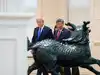
Trump says he and China's Xi want moderate AI rules
Donald Trump and Xi Jinping discussed the importance of AI regulations during their recent meeting in Shenzhen. Both leaders expressed a desire to ensure AI is regulated for safety and security purposes. They emphasized the need for strong communication between the United States and China to prevent AI-related security risks. Additionally, concerns were raised about Nvidia's role in AI development within the context of national security.
Trump admin cleared 9 lakh Nvidia, AMD chips for China in six months, House committee says
The US Commerce Department has authorized the shipment of nearly 900,000 advanced AI chips to Chinese firms. This approval is part of a larger request involving 3.4 million AI chips to China. Several Chinese Military Companies, including Alibaba and Tencent, are among those receiving these shipments. Investigations reveal potential chip-smuggling fronts for NVIDIA's sales to these companies.

Is Chinese AI behind recent outages from flights, banking to Microsoft? Here's all about Z.ai's powerful GLM-5.3 AI model
Bridgewater Associates has flagged the Chinese AI model GLM-5.3 as a potential factor in the increase of cyber incidents. Its cost-effective pricing and open-weight design are appealing to developers looking to create AI applications. Z.ai, the developer of GLM-5.3, has made notable strides in cybersecurity performance, surpassing its predecessor in software vulnerability assessments. Additionally, Z.ai is witnessing swift growth, bolstered by substantial investments in R&D.

Hong Kong stocks sink nearly 2% to four-month low as US-China trade tensions escalate
Asian markets came under pressure as renewed US-China trade and technology tensions rattled investor sentiment. Hong Kong's Hang Seng Index plunged to a four-month low, while mainland Chinese equities extended losses amid concerns over tighter US semiconductor restrictions and further Fed rate hikes.

US lawmakers seek Microsoft briefing on reported AI deal talks with ByteDance
Washington has stressed the need for the United States to be ahead of China in the race for AI advancements. In recent weeks media reports about former Nvidia CEO Jensen Huang's affair with a suspected Chinese spy has increased scrutiny on technology business ties.

Sarvam defends token factory strategy amid criticism over Chinese AI models
Token factory is a commercial inference platform that allows developers and enterprises to access AI models through Sarvam’s computing infrastructure at competitive pricing. It hosts the company’s own Sarvam 105B model as well as leading open-weight models, including China’s DeepSeek V4.1 Flash, Kimi K3.1 Pro and GLM 5.3, and Google’s Gemma 4 31B.
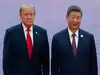
Trump administration weighs forcing US firms to disclose Chinese AI use
The Treasury Department and the White House Office of Science and Technology Policy (OSTP) have discussed the plan, which would apply to companies such as Airbnb, the people said. The company uses Qwen, an AI model made by China's Alibaba , to power its AI customer service agent.
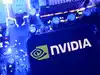
China seeks advanced Nvidia chips for AI weapons despite US curbs, report says
The US-China Economic and Security Review Commission said Beijing was seeking to circumvent US export controls to obtain advanced semiconductors critical to its push for "intelligentized warfare," the People's Liberation Army's term for integrating artificial intelligence into weapons, command and control, kill chains and logistics.
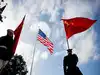
Trump administration weighs forcing US firms to disclose Chinese AI use
The Trump administration is exploring a plan to require companies to disclose their use of Chinese AI models. This initiative intends to discourage reliance on Chinese technology by increasing transparency without imposing harsh regulations. Such disclosure could apply to companies utilizing models like Qwen from Alibaba. Congressional investigations have also been launched to scrutinize American companies adopting Chinese AI.

China, Hong Kong stocks fall as US-China tech tensions weigh on AI shares
Chinese and Hong Kong stocks decline as concerns over tighter US technology restrictions weigh on AI hardware exporters and technology giants. The CSI300 and Shanghai Composite fall around 0.4%, while Hong Kong's Hang Seng Tech Index drops 1.5%. Mainland semiconductor stocks gain as investors bet on domestic chipmakers.

ARTEX AI Cyberattack: What is it? Why is FBI issuing warning about hacking?
ARTEX does not include its own SI model but integrates with external LLM providers, including frontier models like Anthropic Claude, OpenAI GPT and open-source or Chinese-origin models such as DeepSeek, GLM, Grok, Kimi.

China taps US AI models to train homegrown rivals as chip curbs bite
Chinese entities are adopting increasingly sophisticated ways to use output from leading American AI models to train domestic rivals, documents show, as China aims to broaden its AI strategy and offset tightening US curbs on its access
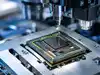
China takes a page from US AI playbook to build cheaper domestic rivals as chip curbs bite: Report
Chinese companies and researchers are increasingly using output from leading US AI models to train domestic alternatives through a technique known as distillation, a Reuters review of more than 300 documents found. The practice is gaining industrial traction as Beijing seeks cheaper AI systems and faces tighter US restrictions on advanced chips.
Load More

