
CHINESE EV SUBSIDIES

View: India-China thaw faces major economic tests
India and China are working to improve their diplomatic relations following past military tensions over border disputes. Recent measures include relaxed restrictions on foreign direct investment and increased export activity from India to China. However, India's reliance on Chinese imports for critical industries poses significant challenges. The unequal economic relationship remains a concern for India's long-term strategies.

UK weighs tariffs on Chinese EVs amid ‘dumping’ concerns: Report
Britain is contemplating the implementation of tariffs on Chinese electric vehicle imports in the near future. This consideration arises from concerns regarding the potential flooding of the market with state-subsidised vehicles. Business Minister Jonathan Reynolds is preparing a package of potential tariffs for Chinese vehicle imports. British officials are eager to align their strategy with the European Union to protect the national car industry.

India's commercial vehicle market just had its best year in seven. Then the June quarter arrived, and margins fell
There is, at this point, an apparent contradiction at work in the Indian commercial vehicles space. One: FY 2026 was the best of the last seven years. A tax cut saw prices of trucks drop by about 10%, releasing pent-up replacement demand in a fleet with an average age of about 10 years. Two: Although the sector's second-largest truck maker sold a record number of vehicles in the June quarter, adding 10% to revenue, the benefits did not flow in. Rising material costs swallowed the operating leverage.

Forced labour and import: Reading India’s latest foreign trade policy additions
With this notification in place, India has tried to put a protective layer for the domestic industry from unfair foreign competition.
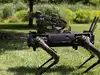
How U.S. military funding propelled China's robot dogs
The rise of Unitree, a Chinese company known for its impressive robot dogs, can be attributed to research breakthroughs funded by the US military. These innovations, which originated in American universities, have propelled Unitree's expansion into the market. Unlike smaller US manufacturers, Unitree's economical designs benefit from China's robust industrial strategies, raising concerns about the competitive landscape for American high-tech industries.
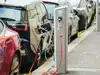
Mideast war supercharges electric car sales: IEA
Soaring fuel prices due to the Mideast war have supercharged sales of electric cars in the second quarter, the International Energy Agency said Thursday. "Despite a challenging backdrop for the global car market, sales of electric cars surged in the second quarter of this year as the energy crisis sparked by the war in the Middle East brought fuel price volatility back into sharp focus," it said.
- Go To Page 1
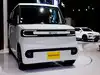
BYD launches EV mini-car in Japan
BYD has launched the Racco electric mini-car in Japan, priced below 2 million yen before subsidies, aiming to revive weak sales and boost brand recognition. The Chinese automaker is targeting 10,000 orders by end-2026, challenging Japanese rivals in the country's dominant kei-car segment.

Trump is killing American EV companies to benefit China; how Tesla is losing to BYD, SAIC and Geely
Chinese automakers lead the global electric vehicle market. Donald Trump may cut federal subsidies for Tesla. This could weaken the US EV industry. China dominates EV production and battery supply chains. US companies like GM and Ford face global competition. Tariffs protect US automakers but may hinder innovation. Chinese EVs are expanding globally.

China finishes EU probe report, hints at 'retaliatory measures'
The Ministry of Commerce released the findings of its investigation into the EU's Foreign Subsidies Regulation on Thursday, highlighting "selective implementation" as a major concern. The inquiry started in July last year after the EU started examining Chinese subsidies for electric vehicles.

Price wars: Chinese EV makers extend offers
The incentives are intended to encourage purchases before the government subsidy schemes for the new year start. More than 5.2 million cars sold as of mid-December had benefited from Chinese government subsidies.
Donald Trump's transition team aims to kill Joe Biden EV tax credit
President-elect Donald Trump's team is formulating plans to eliminate the $7,500 tax incentive for electric vehicle buyers. This move is part of a larger tax reform strategy. The energy transition team, led by figures like Harold Hamm, sees this as a straightforward measure likely to garner support in a Republican-controlled Congress.

Volkswagen's EV Woes: From 'das auto' to 'drive digger' and the road ahead
Volkswagen, after facing setbacks in its electrification strategy, is announcing plant closures and layoffs. The company's struggles stem from declining sales in China, its largest market, where buyers are shifting towards locally produced EVs. VW's situation is further aggravated by tariff wars, reduced government subsidies, and strong competition from Chinese EV manufacturers like BYD.

Shift to electric vehicles will have far-reaching impact, IMF says
The International Monetary Fund (IMF) warned that the global shift to electric vehicles (EVs) will have significant impacts on investment, production, trade, and employment, as outlined in its latest World Economic Outlook. This transition is crucial for meeting climate goals, as transportation contributed to 36% of U.S. greenhouse gas emissions in 2022.

EU plan to press ahead with China EV tariffs bad for ties and green ambitions -Xinhua
The European Commission's move to impose tariffs on Chinese-made electric vehicles may strain China-EU relations and hinder climate change efforts. Despite Germany's opposition, the tariffs, aimed at countering alleged unfair subsidies, could lead to a trade conflict, impacting European green transition goals.

Nitin Gadkari says don't have a problem with FM giving subsidies on Electric vehicles
Union Minister of Road Transport and Highways, Nitin Gadkari, stated on Monday at the 64th ACMA annual session that he has no objections to subsidies for electric vehicles (EVs) from the Finance and Heavy Industries Ministers. This comes after Gadkari previously suggested that subsidies might no longer be necessary due to falling lithium-iron battery prices and increased EV manufacturing.

Not all easy riding on EV subsidies
Nitin Gadkari suggests that subsidies for EV makers are no longer necessary as production costs have declined and consumer confidence has increased. While Germany and France have stopped production subsidies, they continue with purchase credits. India may need to revisit its EV subsidies considering global factors.
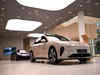
EU plans 36% tariff on Chinese EVs, lower for Tesla
Brussels last month slapped Chinese EVs with hefty provisional tariffs -- coming on top of current duties of 10 percent -- after an anti-subsidy probe found they were unfairly undermining European rivals. On Tuesday the commission released a draft plan to make those tariffs definitive, subject to input from interested parties by end August, and to approval by EU member states by end October at the latest.

EU slashes planned tariff on Tesla's China-made EVs to 9%
On Tuesday, the European Commission reduced its proposed tariff on Tesla cars imported from China to 9%, down from the previously indicated 20.8%. This adjustment followed Tesla's request for recalculation based on specific subsidies received. Despite this reduction, the Commission maintained higher duties for other Chinese electric vehicles, setting final tariffs up to 36.3%, slightly lower than the provisional 37.6%. The Commission's anti-subsidy investigation found Tesla received fewer subsidies compared to other Chinese EV producers, leading to the revised rate.
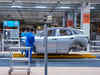
China's SAIC Motor files defence to EU's preliminary EV anti-subsidy ruling
SAIC Motor defended itself against the EU's ruling, stating the EV probe involved commercially sensitive information beyond the normal scope. The European Commission had imposed up to 37.6% tariffs in July, ignoring critical information and inflating subsidy rates for many projects. SAIC, being the most affected, filed to safeguard its legitimate rights amid claims the investigation exceeded standard boundaries.

China wants EU to scrap EV tariffs on EVs by July 4
Beijing urges the European Union to revoke its preliminary tariffs on Chinese electric vehicles (EVs) by July 4, as reported by China's state-controlled Global Times. The EU plans to impose provisional duties of up to 38.1% on Chinese-made EVs while investigating alleged excessive and unfair subsidies to Chinese EV makers. China is willing to negotiate to avoid another tariff war, reminiscent of U.S. tariffs imposed during the Trump administration, but will protect its firms if necessary.

EU and China set for talks on planned electric vehicle tariffs
The confirmation came after China's commerce ministry said its head Wang Wentao, and Dombrovskis, executive vice president of the European Commission, had agreed to start consultations over the EU's anti-subsidy investigation into Chinese EVs.
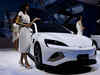
Diversion ahead? For Chinese EVs, the road may fork out to India
The European Union's decision to hike tariffs on cheap electric vehicles made by Chinese companies has sparked concerns about unfair competition and the impact on the global auto sector. The move could lead to a reshuffling of the market dynamics, with potential consequences for both Chinese and European automakers.

Europe wants affordable electric vehicles from China. But not at the cost of its own auto industry
The European Union plans to increase tariffs on Chinese-made electric vehicles due to unfair subsidies. This move aims to address the surge in Chinese EV exports to Europe, posing a threat to EU manufacturers and green tech industries.
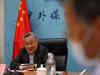
China says EU's 'unfair' EV subsidies probe risks damaging ties
China's ambassador to the EU, Fu Cong, criticized the EU's probe into Chinese electric vehicle manufacturers, calling it unfair. Cong emphasized China's cooperation with the investigation to avoid trade measures. He pointed out that the EU also subsidizes its own companies, suggesting that if China followed suit, it would face scrutiny. The European Commission is investigating whether to impose tariffs on Chinese EV imports benefiting from state subsidies. Recently, investigators from the Commission will inspect BYD, Geely, and SAIC, escalating tensions between China and the EU.
EU investigators to inspect China's BYD, Geely and SAIC in EV probe
European Commission investigators are to inspect Chinese automakers in the coming weeks as part of a probe into whether to impose punitive tariffs to protect European electric vehicle (EV) makers, three people involved in the process said.
China voices dissatisfaction after EU's formal launch of EV subsidy probe
China was "very much dissatisfied" with the anti-subsidy investigation as it lacked adequate evidence and did not conform with World Trade Organization rules, the country's commerce ministry said in a statement.

China rebukes EU, says it is rushing consultations in EV subsidy probe
The European Commission has said it will investigate whether to impose tariffs to shield European producers from a "flood" of cheaper Chinese electric vehicle (EV) imports it says benefit from state subsidies.

China EV adviser Dong Yang sees tech tie-ups resolving EU trade conflicts
The Chinese government, industrial associations and companies should alleviate the impact on other markets as Chinese EVs exports grow and seek win-win relationships with local companies, Dong Yang, vice Chairman at think tank China EV100, wrote.
Did Europe just start a trade war with China over electric cars?
The European Union (EU) has launched an investigation into China's financial support for its electric vehicle (EV) industry, fearing that the surge in Chinese EV exports could put millions of auto jobs in Europe at risk. The investigation could result in new EU tariffs on Chinese EV imports, potentially leading to a global subsidy war. The move by the EU, along with the US imposing tariffs on Chinese EVs, reflects a broader trend of governments seeking to secure supply chains and protect key industries, which could lead to economic fragmentation.
Load More

