
CHINESE ACADEMY OF SCIENCES

Blue Angels fly with five jets after Scott Laux's removal: What happened to No. 6 pilot ahead of final Pensacola air show and why Navy hasn't revealed reason?
Marine Corps Maj. Scott Laux was removed from the Blue Angels' flight demonstration team for unspecified reasons. The Chief of Naval Air Training stated he failed to meet the expected standards. His removal occurred just before the team's annual homecoming air show at Naval Air Station Pensacola. Laux's position as the No. 6 opposing solo pilot will remain vacant for the remainder of the season.
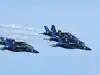
US Navy Blue Angels fires pilot, team flies five instead of six jets during homecoming show: Who is Scott Laux and why was he removed?
Marine Corps Major Scott Laux has been taken off the Navy's Blue Angels squadron. He had been serving as the number 6 opposing solo since September 2024. His removal means he will miss the rest of the season's performances, although the Blue Angels plan to proceed with their shows, wrapping up on November 7.
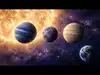
Three planets survived where they should have vanished: What does it mean for Earth and what did the Chinese scientists discover?
Three distant planetary systems are challenging expectations about what happens when stars grow old. The mystery offers a fresh way to examine planetary survival, including questions about Earth.
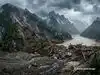
Dam in China trapped millions of tonnes of water, rising 7 feet daily and threatening millions. How did engineers avert disaster?
The 2008 Wenchuan earthquake triggered a massive landslide that blocked China's Tongkou River, creating the unstable Tangjiashan lake and threatening millions downstream. Authorities evacuated residents and airlifted heavy machinery to carve a controlled drainage channel through the natural dam. The operation averted a catastrophic flood and informed landslide-dam management strategies later applied during China's 2018 Baige landslide crisis.
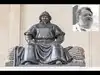
An Illinois attorney convinced investors to put $1.2 million into finding Genghis Khan’s tomb in 2000; expedition found 60 unopened graves and pottery that may predate the ruler, before a Mongolian PM halted the search for sacrilege
Maury Kravitz, an untrained lawyer from Chicago, dedicated years to the quest for Genghis Khan's final resting place. In 1994, he secured privileged access to explore sites in Mongolia, but faced numerous challenges that halted his efforts. After his passing in 2012, the search persisted, with fresh insights suggesting that prior investigations may have misidentified the correct locations altogether.
Nobel 2026: Ozempic, Mounjaro research tipped for medicine prize
The 2026 Nobel season is set to reveal the winners of various prestigious awards, starting with medicine. The medicine prize is anticipated to acknowledge research on appetite-regulating hormones related to weight-loss drugs. Alongside this, other fields such as skin regeneration and immunology are also potential candidates for recognition. The peace prize is expected to generate significant interest due to last year's controversial winner.
- Go To Page 1
Could bacteria hold the secret to delaying death? Magnetic microbes extended worm lifespan by more than 43% in a new ageing study
Researchers at Hefei Institutes of Physical Science found that Magnetospirillum magneticum AMB-1 increased the lifespan of C. elegans by 43.39%. The treated worms demonstrated improved neurological function and intestinal health as they aged. The study linked these benefits to reduced ferroptosis and iron accumulation, highlighting the role of magnetosomes. Comparisons with non-magnetotactic bacterial strains suggested the importance of magnetosome production in lifespan extension.
Scientists in China have turned worn-out wind turbine blades into material for building roads: ‘The roads don’t show any cracks’
Wind turbines can last for decades against the punishing winds, but what happens when they reach the end of their lives? A group of researchers from China did the impossible – they came across a technology which would transform the blades to concrete for making roads.
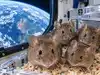
In 2025, China sent four mice to Tiangong for about two weeks; one female later produced three litters of 9, 10, and 9 pups after returning to Earth
In a groundbreaking Chinese space experiment, four mice were sent into orbit for two weeks. Remarkably, one female mouse returned and gave birth to three litters with pups larger than average. These mice's genetic similarities to humans make them invaluable for scientific studies. Prior research has also confirmed that male mice can reproduce post-space travel, paving the way for deeper insights into mammalian reproduction in space environments.
Scientists find an anti-aging effect hidden in a seafood eaten in Asia
Anti-aging brain research: Researchers studied compounds from sea squirts, which are eaten in parts of Asia. These compounds, called plasmalogens, improved learning and memory in aged mice. The treated mice showed more synapses and less brain inflammation after supplementation. Scientists are exploring how these molecules might promote brain regeneration and synaptic health.
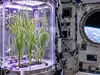
In 2022, China grew rice from seed to seed on Tiangong for 120 days; six seeds produced 59, and their descendants reached a third generation on Earth
Chinese astronauts have made remarkable strides in agricultural innovation by growing rice aboard the Tiangong space station. The experiment led to a successful seed-to-seed growth cycle, and subsequent generations thrived back on Earth, yielding rice with enhanced sweetness and nutritional value. This success opens exciting possibilities for future food cultivation in space environments.

Quote of the Day by Angelina Jolie: ‘Love one person, take care of them…’ - life lessons on love, family, friendship and finding what you truly love from the Oscar-winning actress and filmmaker
Quote of the Day by Angelina Jolie: Angelina Jolie shares a profound insight on love and parenthood, stressing the significance of nurturing both romantic and platonic relationships. She advocates for the pursuit of personal passions with unwavering dedication. With her multifaceted career encompassing acting, directing, and humanitarian efforts, Jolie embodies a life of meaningful connections alongside a journey of self-exploration.
From dance floor to war: China readies humanoid robots for combat
China is rapidly advancing humanoid robot research for potential military deployment. Military institutions are testing these robots against battlefield requirements and seeking new technologies. Chinese manufacturers dominate global humanoid shipments, providing access to an expanding industry. The PLA envisions robots clearing buildings and infiltrating enemy lines in future conflicts. While challenges remain, China's defense establishment is planning for eventual wartime deployment.
From dance floor to war: China readies humanoid robots for combat
Two days after the Games ended, the People's Liberation Army's official newspaper drew its own conclusions from the show. The PLA Daily called for researchers to accelerate the transfer of cutting-edge technologies from laboratories to military training grounds for robotic "combatants."
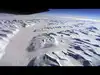
What is a Rossby wave train? Scientists explain how Antarctica gained nearly 700 billion tons of ice - The surprising atmospheric pattern that disrupted normal weather, delivered extraordinary snowfall and and temporarily reversed the continent’s long-term ice loss
In a surprising turn, Antarctica temporarily gained ice mass, attributed to warm tropical ocean currents. These warm waters triggered atmospheric shifts that led to significant snowfall across the region. A Rossby wave train transported these phenomena over vast distances to East Antarctica. However, this short-lived ice gain does not indicate a permanent recovery for the continent, emphasizing the need for understanding these remote interactions for accurate sea-level rise predictions.
China has developed a new material that pulls uranium from seawater at eight times a US benchmark — what it could mean for nuclear power
Chinese scientists have created PhosCage, a material that captures uranium from seawater. This new substance performs significantly better than existing benchmarks set by the US Department of Energy. The material shows promise for future nuclear fuel sourcing from the world's oceans. Researchers developed a bead form for practical deployment and reuse in marine environments. This breakthrough offers a potential new pathway for securing nuclear fuel supplies globally.
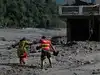
China-Nepal glacial flood alert system warned of seven disasters – but missed this one
A China-Nepal warning system had successfully issued seven alerts for glacial hazards, but Wednesday’s deadly ice-rock avalanche exposed its limits. Experts say cross-border monitoring gaps and the speed of such disasters can leave downstream communities with as little as 20 minutes to respond.

The Tang Dynasty never existed? Inside China’s bizarre viral history conspiracy challenging what happened almost 1200 years back, the astronomical claims behind it and why Beijing is taking the controversy seriously
A fringe theory circulating on Chinese social media is casting doubt on the historical authenticity of the Tang dynasty. However, this notion stems from unvalidated online videos and is heavily contested by historians. With a wealth of archaeological evidence upholding the Tang's significance, Chinese authorities are actively countering these unfounded claims to safeguard the integrity of the nation’s historical narrative.
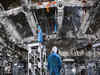
JUNO: China has a new lab, 2,300 feet underground, to solve a physics mystery
China has constructed Juno, an underground lab in Kaiping, Guangdong province, to study neutrinos and solve the mass hierarchy problem. Costing $311 million, the project involves 750 scientists worldwide and aims to advance particle physics within six years despite geopolitical challenges.

China testing AI chatbot for brain surgeons
A Hong Kong-based agency under the Chinese Academy of Sciences on Monday introduced an AI model based on Meta Platform's Llama 2.0. Researchers trained and fine-tuned the model with papers, medical journals and manuals to act as a surgery consultant of sorts for doctors, said Liu Hongbin, the center's executive director.
China releases world's 'most detailed' map of Moon
Chinese scientists from multiple research institutes and universities have created the high resolution topographic map based on data from China's lunar exploration Chang'e project and other data and research findings from international organisations, the state-run China Global Television Network (CGTN) reported on Wednesday.

China launches earth science satellite
The satellite, called Guangmu, was launched by a Long March-6 carrier rocket at 10.19 a.m. (Beijing Time) and entered the planned orbit, Xinhua news agency reported. Developed by the Chinese Academy of Sciences, the satellite (SDGSAT-1) is the world's first space science satellite dedicated to serving the UN 2030 Agenda for Sustainable Development.

Chinese scientists develop gene therapy which could delay ageing
The method, detailed in a paper in the Science Translational Medicine journal earlier this month, involves inactivating a gene called kat7 which the scientists found to be a key contributor to cellular ageing.

Researchers identify two coronavirus types associated with the disease outbreak
The researchers, from Peking University's School of Life Sciences and the Institute Pasteur of Shanghai under the Chinese Academy of Sciences, cautioned that their analysis examined a limited range of data, and said follow-up studies of larger data sets are needed to better understand the virus's evolution.
2017 sees warmest ocean on record: Chinese Academy of Sciences
The Atlantic and Antarctic oceans warmed up the fastest, as warming has already taken place in most of the other seas.
China to conduct large-scale survey of Tibetan plateau
The government of Tibet Autonomous Region and Chinese Academy of Sciences have agreed to launch a large-scale survey of the plateau.

Glacier collapses in China's Xinjiang,causes extensive damage
A huge glacier has collapsed in China, burying over 100 cattles, crushing dozens of houses and damaging 1,000 hectares of grassland.
First design complete for world's largest telescope project
The project, currently supported by 11 countries including India, encompasses two complementary world-class telescopes in Australia and South Africa.

Chinese official Ma Chaoqun held with $20 million cash, 37 kg gold
Ma Chaoqun was suspected of embezzlement after 120 million yuan (about $20 million) and 37 kilogrammes of gold were found at his residence.
Load More

