CHINA UNDER US SANCTIONS
Trump backed Jensen Huang until the end, urged Nvidia chief to fight for his job before exit: Report
Donald Trump called Nvidia CEO Jensen Huang to urge him to maintain his position amid an espionage scandal. Trump remained a prominent supporter of Huang despite warnings about his alleged relationship with a Chinese citizen. The president viewed Nvidia as essential to the US economy and feared the impact of Huang's removal. Huang's influence shaped Trump's approach to semiconductor exports to China.
US returns over $12 billion in oil proceeds to Venezuela since Maduro's ouster, report says
The Trump administration has reported returning over $12 billion in oil revenue to Venezuela as of September 30. Almost all funds from oil sales have been directed to support infrastructure and humanitarian needs. The U.S. Treasury managed the escrow account from which these funds were disbursed following approved requests. Various payments were made for essential supplies and services, including healthcare-related equipment.

India’s Russian fossil fuel imports hit record €6.4 billion in October: CREA
India was the world’s second-largest buyer of Russian fossil fuels in October, with purchases hitting a record €6.4 billion, according to CREA, as crude oil imports rose across major Indian refineries. Higher global oil prices also lifted Russia’s overall fossil-fuel export revenues to their highest monthly level since December 2022, despite Western sanctions and price caps.
Why is Nvidia so powerful in the AI world, and what could Jensen Huang's scandal really cost?
Nvidia's CEO Jensen Huang has recently admitted to an extramarital affair, and the woman involved, Alice Huang, has been accused of being a Chinese spy. The company's share price tumbled after the affair was revealed and is reportedly under criminal investigation. The industry is known for its circular financing schemes, with investors already fretting over whether AI investments can ever return profits.
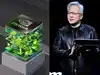
China’s army-linked university was served Nvidia chips despite US sanctions
A Chinese university with close links to the country's military has purchased two of Nvidia's powerful H200 AI chips despite being on the US export blacklist, according to procurement records reviewed by Reuters. The findings raise fresh concerns over gaps in Washington's export restrictions and China's access to advanced American technology through domestic suppliers. Other Chinese universities and research institutions have also reportedly obtained restricted Nvidia chips or rented computing capacity powered by them.
- Go To Page 1
Nvidia chips getting diverted to China: Donald Trump crackdown on companies following consultations with Elon Musk stalled by US Commerce Secretary
This comes after a controversy surrounding Nvidia CEO Jensen Huang and the chipmaker's China business has spiraled into a national-security and political storm.
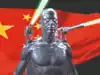
Dragon's Army-linked university was served Nvidia chips despite US sanctions
The findings come as Nvidia and its CEO Jensen Huang face mounting scrutiny in Washington over his lobbying for looser restrictions on sales of AI chips to China, following reports alleging he was targeted by a Chinese spy.

Ghayal hoon, isliye Vishwasghatak hoon
Alice Huang has emerged as a pivotal player in the controversial exports of Nvidia chips to Chinese firms. In defiance of US export laws, her operations allegedly facilitated the transfer of chips worth $7.5 billion. This breach has prompted considerable setbacks for Nvidia, evident in the notable drop in its share value.
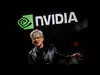
Nvidia servers still in their boxes: As Jensen Huang's controversy grows, here's what a US official found inside Megaspeed's Malaysian data centre in 2024
The US agencies believe that Alice Huang was a Megaspeed executive and a Chinese spy. She was assigned the role to feed the information back to China. Megaspeed is a Singapore-based AI infrastructure company. According to reports, it had purchased $4.8 billion in Nvidia chips over the last two years.
Who is Joon H. Kim? Meet the former US Attorney leading the Nvidia-Jensen Huang investigation
Nvidia's CEO Jensen Huang confirmed his extramarital relationship, prompting the board to initiate an investigation. This inquiry is centered on his ties with Alice Huang, a Chinese national allegedly involved in intelligence operations. Joon H. Kim, a former acting U.S. attorney, will oversee the probe. In parallel, Nvidia faces a lawsuit alleging they misled investors about this relationship, while concerns about China's access to their technology amid U.S.

Nvidia CEO Jensen Huang and Alice Huang affair: Timeline of suspected Chinese spy scandal
The reports of Nvidia CEO Jensen Huang’s alleged involvement in a spy scandal have sent shockwaves through the tech world. President Donald Trump defends Huang as an ‘honorable guy’, whereas Nvidia’s board of directors has confirmed an independent investigation into the Jensen Huang-Alice Huang case to understand whether Huang was under the radar of Chinese spy operations. Here’s an entire timeline of how this spy drama unfolded.
Chinese yuan remains range-bound as US rate hike bets strengthen dollar
The Chinese yuan edged higher but remained range-bound as a weaker PBOC midpoint and expectations of further US rate hikes limited gains. Strong export data and a sizeable trade surplus, however, continue to support the currency's longer-term outlook.
Huang in suspense, chips may crack
Huang is a hands-on boss at Nvidia. Although he owns a small amount of the company's stock, replacing him will be difficult. In the new political dispensation, Washington may be forced to take a harder look at its export control regime and make it more watertight. 'Jensanity' offers a good trigger.
Iran's economic 'pain' will intensify, says US Secretary of State Marco Rubio
US Secretary of State Marco Rubio on Tuesday (local time) said economic pressure on Iran would continue to intensify over the coming months, warning that the country's oil revenues would dry up as sanctions compound.
Makkah defence pact with Saudi Arabia, Turkiye not directed against any country: Pak Deputy PM Dar
Pakistan's Deputy Prime Minister Ishaq Dar highlighted the Makkah Joint Defence Agreement with Saudi Arabia and Turkiye. The agreement is aimed at enhancing regional stability without targeting any specific country. Dar emphasized the importance of collective security and Pakistan's balanced foreign policy strategy in light of geopolitical tensions. He also addressed the ongoing conflicts in Jammu and Kashmir and Palestine as crucial regional issues.

Moonshot AI rents Nvidia’s top AI chips in China, documents show
Documents indicate that Moonshot AI possibly accessed advanced Nvidia chips despite US export restrictions and related investigations. The servers were reportedly rented from Super Micro Computer Inc. with significant financial backing from Lingmeixin Technology Co.
China’s trade surplus tops $1 trillion for second straight year as exports surge
China's trade surplus reached $1.04 trillion in January-October, crossing $1 trillion for a second consecutive year. October exports rose 35.2% year-on-year, while imports grew 41.6%, narrowing the monthly surplus to $105.3 billion. Strong overseas demand is supporting exports, but weak domestic consumption and rising trade tensions pose risks to the outlook.
US midterm results may give India trade leverage, but tariff and AI risks remain
The US midterm results may give India some room in trade negotiations by increasing congressional scrutiny of executive action, but they do not remove tariff risks or alter Washington's strategic priorities. AI investment is also unlikely to retreat, with capital expected to remain within the US rather than shift significantly to emerging markets.
Trump announces Task Force Iron Gate to choke off Iran's trade routes, enforce restrictions on weapons supplies
US President Donald Trump has announced Task Force Iron Gate to restrict the movement of weapons, dual-use technologies and sanctioned materials into and out of Iran. The initiative will operate alongside a US naval blockade that CENTCOM says has prevented Iran from exporting more than $25 billion in crude oil.
Rubio to visit France on first post-midterm foreign trip to face questions on Trump policies
US Secretary of State Marco Rubio will attend the G7 foreign ministers meeting in France this weekend. This trip follows significant Republican losses in the midterm elections, raising questions about Trump's international policies. Rubio is expected to address various global issues, including the Iran and Russia-Ukraine conflicts. The meeting aims to cover topics like energy security and support for Ukraine amidst ongoing challenges.
Iran reviewing proposals on Tehran's nuclear programme, officials say
Iran is reviewing proposals made by Qatar that aim to address its nuclear program and tensions with the US. As part of these discussions, Iran is demanding certain core conditions be met by the US. The White House acknowledged ongoing discussions but did not comment on the proposed measures. Regional leaders have engaged in diplomatic talks to ease tensions, with emphasis on political solutions.
US Treasury sanctions Canadian money services firms over Iran-related transactions
US Treasury imposed financial sanctions on eight Canadian money services firms involved with sanctioned Iranian entities. The sanctions block access to dollar-based financial systems and prohibit transactions with US persons. Secretary of the Treasury Scott Bessent stated that Canada cannot provide safe havens for illicit financial facilitators. Additionally, MEXC Global, a virtual currency exchanger, was cut off from the US financial system.

US sanctions India-based couple, companies over alleged support for Iran's Shadow oil fleet
The United States imposed sanctions on Suniel Kumar Sharma and Jaspreet Preeti Shahid for aiding Iran's shadow fleet. Their network allegedly provided fraudulent maritime registrations to help sanctioned vessels transport Iranian petroleum. Several companies linked to the couple also received sanctions under Executive Order 13902. Additionally, a Turkiye-based company was sanctioned for providing services to US-designated Iranian airlines.
Trump's midterm defeat dims hopes of North Korea meeting
A meeting between Donald Trump and Kim Jong Un seems less likely following Trump's midterm election defeat. Analysts believe Kim has less incentive to engage with Trump in the current political environment. North Korea's leadership expresses reluctance to resume dialogue, citing distrust toward the US government. The ongoing nuclear ambitions of North Korea add complexity to potential negotiations between the two leaders.

US slaps sanctions on Indian, Turkish firms and people for aiding Iran
The sanctions are part of the Trump administration's "Operation Economic Outcast," which aims to cut off Iran's ability to sell oil to fund the war with the US and Israel. Treasury unveiled the new sanctions a day after Democrats made huge gains in midterm elections, winning control of both houses of Congress as voters expressed anger about the Iran war and its impact in fueling US inflation.
Trump's midterm setback may put India under pressure for quick trade deal on US terms: GTRI
Amid electoral challenges, US President Donald Trump is likely to ramp up pressure on India to seal a trade deal. This potential agreement would require India to decrease import tariffs on US goods while the US keeps its tariffs intact. Analysts caution that such an arrangement may breach WTO MFN principles, undermining India's trade credibility. Additionally, compromising energy security and development aspirations could have serious implications.
Load More