CHINA SUPPLY CHAIN EXPO
US-China AI race could face financial setbacks, mass layoffs over next three years: Report
The report highlighted, the global artificial intelligence (AI) race is increasingly becoming a contest between China's state-led approach and the US market-driven model.
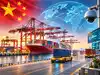
China’s high-tech ports push raises global trade ambitions, sparks security concerns
China is expanding its global maritime influence through AI-powered automated ports, smart shipping technologies and digital infrastructure. While these innovations promise greater efficiency, Western governments fear growing dependence on Chinese systems could create security vulnerabilities, geopolitical leverage and risks to critical global supply chains and international trade networks

Fires, protests, pollution: How Apple's supply chain woes in India have caused troubles over the years
Three contract workers lost their lives due to asphyxiation at a Tata Electronics factory in Hosur. This incident has prompted investigations by the companies involved and the Tamil Nadu state government. Recent years have witnessed various operational issues at Apple supplier facilities, leading to heightened scrutiny. Apple's supply chain in India continues to face challenges amid efforts to diversify from China.

China, Hong Kong stocks rise as AI shares rally, oil prices slide
Chinese and Hong Kong stocks edged higher as a rally in global technology shares and falling oil prices lifted sentiment. AI-linked stocks led gains, while energy shares declined amid a broader regional market rebound.

AI demand unlikely to be derailed by Nvidia CEO controversy: Taiwan supply chain executives
Global demand for artificial intelligence (AI) is expected to remain strong despite the controversy surrounding Nvidia Chief Executive Officer Jensen Huang, with Taiwan's semiconductor supply chain sources expecting limited long-term impact on the industry, according to a news report by Focus Taiwan.
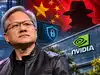
Alice in Nvidia CEO's secret world: Jensen Huang's personal affair matters far beyond than what meets the eye
Concerns about national security have emerged regarding Nvidia CEO Jensen Huang and a Chinese businesswoman, Alice Huang. US intelligence suggests Alice may have gathered information for Beijing after forming a close relationship with Jensen. Nvidia's advanced processors play a crucial role in AI and military applications, making them strategically significant in US-China relations. Congressional inquiries are seeking clarity on Nvidia's security protocols regarding foreign espionage risks.
- Go To Page 1

Who is Alice Huang, Chinese exec accused of spying on Nvidia CEO?
Alice Huang, a citizen of China, stands accused of espionage for Beijing through her romantic connection with Nvidia's Jensen Huang. Reports suggest she played a pivotal role at Megaspeed International, a data center firm, allegedly gathering intelligence on Jensen following the disclosure of their relationship. US authorities are scrutinizing Megaspeed for possibly violating chip export regulations. Both Alice and Megaspeed firmly reject these allegations as investigations continue.

56% of global business leaders expect disruptions to severely hit operations: KPMG
A recent KPMG International report indicates that 56 percent of global business leaders anticipate severe disruptions affecting operations. The report highlights increasing risk exposure, with 70 percent of leaders noting escalated risks in recent years.

Inside Rs 77,000 cr plan rewiring India’s tech DNA forever
The initiative is already delivering results, with 38 facilities in active production plugging domestic gaps and 16 units progressing through machinery setup. Small and medium enterprises drive half of these ventures.

56% of global business leaders expect disruptions to severely hit operations: KPMG
A recent KPMG International report indicates that 56 percent of global business leaders anticipate severe disruptions affecting operations. The report highlights increasing risk exposure, with 70 percent of leaders noting escalated risks in recent years. Technology disruption and geopolitical tensions are identified as primary concerns for the near future. Companies are prioritizing AI and predictive analytics to enhance supply chain resilience and managing risks.

Pharma industry steps up API investments to cut import dependence, move up value chain
India's pharmaceutical sector is shifting towards high-value medicines and reducing reliance on imports through local manufacturing. Investments in active pharmaceutical ingredients and advanced therapies are on the rise to meet new healthcare demands. Industry leaders highlight the significance of supply-chain resilience and advancements in manufacturing capabilities. Recent data indicates strong domestic market growth and increasing pharmaceutical exports.

Diwali Patakha from China: The world's fireworks capital is reinventing its centuries-old industry
Liuyang in China's Hunan province is a significant hub for global fireworks production. The county supplies around 60% of the domestic fireworks market and 70% of exports. This industry has evolved to incorporate advanced technology, like digital ignition and AI. Although safety measures have improved since past catastrophic incidents, risks still exist.

India eyes energy self-reliance as supply risks put renewable manufacturing in focus
India must prepare for energy supply disruptions by strengthening domestic renewable energy manufacturing, Union minister Pralhad Joshi said. The country is targeting 500 GW of non-fossil fuel capacity by FY30 and 800 GW by FY35. The government is also drafting guidelines to improve the recyclability of renewable energy equipment.

China cleantech stocks surge on hopes of stronger US clean energy support
Chinese cleantech stocks rallied on Thursday as Democrats' strong US midterm election performance fuelled hopes of stronger support for renewable energy. Investors expect potential policy shifts to benefit solar, battery and clean energy companies, although existing US tariffs and trade restrictions could limit Chinese exporters' access to the American market.
India’s solar components market to more than double to $7.8 billion by March 2028: CEEW
India's market for solar module components is projected to exceed $7.8 billion by March 2028. This growth is primarily driven by increased domestic manufacturing capacity and rising demand. Planned expansions of production facilities are crucial for meeting anticipated requirements. Additionally, ensuring consistent quality and reliable supply chains will enhance competitiveness against imports. The study emphasizes the importance of clear standards and regulations for the solar components industry.

Hong Kong stocks jump 3%, China shares edge higher as tech stocks rally
Hong Kong stocks rallied sharply, led by technology and gold shares, as investors welcomed the US midterm election outcome. Alibaba and Tencent drove gains, while mainland Chinese equities advanced modestly. Energy stocks tumbled as crude oil prices plunged on hopes of easing geopolitical tensions.

BMW Q3 profit falls 15% as China competition weighs
BMW reported a 15% year-on-year decline in third-quarter net profit to 1.45 billion euros, a day after issuing its second profit warning of 2026. Intensifying competition from Chinese automakers, rising costs and weaker demand in China are weighing on the German luxury carmaker. Its vehicle deliveries in China plunged 24.8% during the quarter, while global deliveries fell 6.3%.

70% of global business leaders report rising risk exposure amid AI, geopolitical disruptions: KPMG
According to the report, 56% of respondents said external disruptions involving geopolitical, energy, cyber, trade or climate-related factors would cause severe operational disruptions or significantly affect their organisations' costs and performance over the next three to five years.

India's natural diamond industry eyes revenue stabilisation at $15 billion, not recovery
An analysis indicates India's natural diamond industry's revenues are projected to stabilize rather than rebound. Domestic demand is expected to cushion export weaknesses, particularly from the US and China. Lab-grown diamonds are reshaping the entry-level segment, affecting market dynamics and pricing. While profitability faces pressure, supply discipline is helping maintain stability in credit profiles. Overall, improved inventory and consumption trends could support a more robust industry outlook.
Are Russia, China, Iran planning to carry out large scale cyberattacks bigger than Europe supermarket fridges hacking? Top Britain official reveals shocking details
Moscow, Beijing and Tehran have all repeatedly denied similar accusations of malevolent cyber actions in the past.
Asian companies to ramp up investments in US amid supply-chain shifts
Citi expects investments by South Korean, Japanese and Taiwanese companies in the US to rise as global supply chains shift. The bank also sees growing cross-border business flows involving India and China, creating opportunities in transaction banking and financial services.

Silver crashes below $60 from $122 and enters oversold zone. What should you do?
Silver’s sharp rally has reversed amid expectations of higher US interest rates, rising bond yields and a stronger dollar. HSBC expects limited upside as weaker demand, increasing supply and a narrowing market deficit reduce the chances of the metal returning to $100 soon.

India-New Zealand FTA: Expanding India’s footprint in Oceania
More than a trade deal, the India-New Zealand FTA is a strategic gateway to new markets, fresh investment and stronger capabilities, positioning India to compete, connect, and grow across the Asia-Pacific.
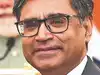
China's international criticism on Covid toughened its attitude: Foreign Secretary
Vikram Misri indicated that international condemnation impacted China's approach to the Covid-19 pandemic effectively. He noted that China perceived itself as being unfairly blamed for the outbreak. Misri explained how returning to China involved a strict 21-day quarantine during the pandemic period. The restrictions further complicated diplomatic relations, especially during the Galwan clash in 2020. China's response also affected global supply chains, creating challenges for various countries, including India.

EAM Jaishankar urges Quad to focus on freedom of choice
External Affairs Minister S Jaishankar emphasized freedom of choice and resilient supply chains during the Quad meeting. He highlighted countering non-market practices as a key priority for discussions with partner nations. The Quad aims to enhance cooperation in maritime security and counter-terrorism measures. Additionally, over USD 85 million will be extended for AI access across the Indo-Pacific region.

3 Warning Signs Your Supplier Is in Distress
Suppliers to multinational corporations are under growing pressure from tariffs, logistics disruptions, compliance demands, and repeated global shocks, yet many buyers still rely on conventional indicators—audits passed, orders filled, service levels met—that can obscure deeper distress. Supplier weakness often appears first not as outright failure but as a gradual retreat: range thinning, when suppliers stop investing in innovation and improvements; descaling, when they reduce capacity, defer upgrades, or lose resilience; and withdrawal, when they quietly stop bidding, decline complex work, or exit parts of the network. By assessing supplier health across innovation, investment, capability, service resilience, commercial participation, and network position, executives can detect early warning signs before a valued partner disappears. The right response depends on the stage of distress: protect innovation through cost-sharing and co-investment, protect capability through operational support and simpler governance, and protect optionality through targeted retention plans and stronger supplier voice mechanisms.

Piramal Pharma cutting China exposure to manage supply-chain resilience, says Nandini Piramal
In a strategic move to enhance risk management, Piramal Pharma has drastically cut its reliance on Chinese raw materials to under 10%. The company is actively diversifying its supply chains to provide greater flexibility against geopolitical challenges while broadening its manufacturing footprint to locations like India, the UK, and the US.

Government needs to incentivise domestic solar production as China eyes curbs on tech exports: Solex Chairman
The government needs to incentivize domestic production of solar equipment, as China's proposed export restrictions may create supply issues. Chetan Shah, from Solex Energy, emphasized India's limited cell capacity compared to module manufacturing. He proposed extending the ALMM-II framework to support local manufacturers in meeting their demands. Collaborating with other nations could also reduce reliance on Chinese solar equipment.
Load More