
CHINA DATA
Singapore confirms a probe into Megaspeed but denies investigating Alice Huang over spy claims; how is Nvidia CEO Jensen Huang linked to the controversy?
US media reports have alleged that Nvidia CEO Jensen Huang developed a 'close relationship' with an alleged Chinese spy. US intelligence believes Alice Huang was recruited by China's Ministry of State Security (MSS). The alleged relationship was reportedly mentioned in a memo. Singapore has reportedly rejected the claims that Alice Huang was investigated by its authorities.
Donald Trump was reportedly briefed a year ago that a suspected Chinese spy was close to Nvidia's CEO, but why was Jensen Huang never told?
According to media reports, US intelligence believes Alice Huang was recruited by China's Ministry of State Security (MSS). Alice had developed a close professional relationship with Jensen through her work in the AI and data centre industry. Their alleged relationship attracted intelligence attention because Nvidia's technology is central to the US-China competition over artificial intelligence.
From TV journalist to private banker to AI chip executive: The unusual career of Alice Huang, the alleged spy linked to Nvidia CEO Jensen Huang
Alice Huang, also known as Huang Le, is a Chinese citizen whose reported career spans TV journalism, banking, investment management and AI infrastructure. She became the subject of US intelligence scrutiny because of her reported connections with Huang and her position in the AI computing industry. US intelligence officials reportedly suspected that she was gathering information about Nvidia and its advanced AI chips.
How China's clean-tech machine is reshaping the global climate fight
In 2024, China took the lead as the top investor in global clean technology, directing $132 billion to developing nations to aid carbon reduction efforts. This unprecedented infusion of resources could potentially reshape the landscape of international climate finance.
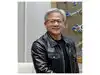
Spy targeting Nvidia CEO was alleged China intelligence service recruit: NYT
The Chinese businesswoman, with whom Nvidia's CEO Jensen Huang had alleged ties, was recruited as a spy for China’s Ministry of State Security, The New York Times reported, citing a memo circulated among policymakers in the Trump administration.

Spy targeting Nvidia CEO was alleged China intelligence service recruit: Report
The Chinese businesswoman, with whom Nvidia's Chief Executive Officer (CEO) Jensen Huang had alleged ties, was recruited as a spy for China’s Ministry of State Security, The New York Times reported, citing a memo circulated among policymakers in the Trump administration.

Middle East crude oil premiums tumble to pre-war levels amid ample supply
Middle Eastern crude exports have increased in September and October, leading to declining spot premiums. Dubai's cash premium to swaps fell to 65 cents a barrel before recovering slightly. Murban crude exports reached a record of 2.4 million barrels per day in September. Asian refiners have shown reduced purchasing interest due to cooling refining margins. Competition with West African crude is intensifying as sellers offer steeper discounts to attract buyers.
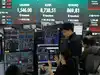
Global Market Today: Asian stocks join US selloff as AI slump deepens
South Korea’s tech-heavy Kospi Index slid 8.8% in early trading, triggering a circuit breaker, with chipmakers Samsung Electronics Co. and SK Hynix Inc. both plunging more than 9%. Japan’s benchmark Nikkei 225 Stock Average lost 6.2%, while the MSCI Asia Pacific Index declined 2.9%. Futures pointed to losses in Taiwan, Hong Kong and China.

Emerging markets lose $33.8 billion in October as investors flee Asian stocks
October witnessed an alarming withdrawal of $33.8 billion by foreign investors from emerging markets, the largest since March. Almost all of this outflow consisted of equities, severely impacting Taiwan. While Emerging Asia grappled with major losses, Latin America encountered minimal setbacks amid election related volatility. Additionally, Chinese stocks continued to see foreign sell offs for the fifth consecutive month.

US midterm results threaten data center boom as AI backlash grows
US midterm election results have raised fresh concerns over the future of America's data centre boom, with Democratic victories in Texas and Georgia strengthening opposition to new projects. Investors fear tighter regulations, construction moratoriums and reduced tax incentives could disrupt AI infrastructure spending, putting nearly 45% of planned US capacity at risk.
China blocks SoftBank's $5.4 billion takeover of ABB's robotics division: FT
Softbank had agreed to buy ABB's robotics business in October last year, as CEO Masayoshi Son sought to establish SoftBank as a core player in the development of artificial intelligence.

China blocks SoftBank's $5.4 billion takeover of ABB's robotics division: Report
China has informed Japanese investor SoftBank that it will block the $5.4 billion acquisition of ABB's robotics segment. This decision is driven by concerns about data transfer overseas for artificial intelligence training. SoftBank had hoped for approval after reaching an agreement last October. ABB's robotics business significantly relies on the Chinese market, contributing about 30% of its total operations.

Chinese chipmaker YMTC puts IPO on hold as weaker markets weigh, sources say
That process has been put on hold due to "various factors", according to an internal note YMTC sent to its staff and seen by Reuters. It did not elaborate on the factors. The delay, which two of the people said could last several months, has not been reported previously.

SK Hynix's New York chip plans hit snag over US restrictions on China, sources say
SK Hynix is seeking US export licenses to equip its Dalian plant, arguing that increased production there would help fund its planned US expansion. But the Commerce Department has yet to approve the new licenses, the people said. Its Solidigm unit plans to invest about $45 billion and build two NAND plants in Marcy, New York, two people said, with investment potentially reaching about $100 billion over time. NAND is memory that retains data even when power is turned off and is used for storage in data centers.

Tesla misled South Korean customers about automated-driving tech, consumer group alleges
Tesla has marketed Full Self-Driving (Supervised) software to prospective buyers in South Korea for years, often collecting lump-sum payments of 9.043 million won ($6,726).

Tesla misled South Korean customers about automated-driving tech, consumer group alleges
Tesla is facing a consumer complaint in South Korea over allegedly misleading customers by selling its Full Self-Driving (FSD) software to buyers whose vehicles cannot legally use it. The software, which was sold for a one-time payment of 9.043 million won ($6,726), is compatible with only about 20% of Tesla cars registered in the country, mainly US-made models.

SK Hynix's New York chip plans hit snag over US restrictions on China, sources say
SK Hynix is awaiting approval from US officials for equipment necessary for expanding production in China. The company aims to increase its Dalian plant's output to support its US expansion plans. Meetings between SK Hynix's subsidiary, Solidigm, and the Commerce Department have been ongoing in search of approval. Solidigm is also exploring potential locations worldwide for a new NAND memory facility.

Green-debt fees hit nearly $3 billion, topping fossil fuels for fifth year
For the fifth consecutive year, leading global banks generated more revenue from green projects than fossil fuel financing. Data shows these banks earned approximately $3 billion from climate-related financing this year. Major players include Bank of China, BNP Paribas, and Deutsche Bank for green bonds. However, US banks dominated the fossil fuel financing deals, led by Wells Fargo and JPMorgan.
Washington set to cut wire connecting Chinese companies to US phone numbers
The US Federal Communications Commission intends to vote on banning Chinese telecom firms from accessing US phone numbers. Concerns around national security have led to this potential decision against companies like China Mobile and China Telecom. The measure aims to prevent illegal robocalls and protect US telecommunications. China has opposed this likely ban, asserting it undermines legitimate business practices.
Load More


