
CARBON CAPTURE

UN climate talks in Turkey end without overarching deal over fossil fuel divisions
Climate talks in Antalya did not achieve a main agreement after contentious discussions over fossil fuels. Many countries disagreed on whether to mention fossil fuels, causing a breakdown in negotiations. The Turkish-Australian leadership proposal was rejected by key nations, including those from the European Union. While some countries accepted the proposal reluctantly, others insisted on including fossil fuels in the agreement.

Confusion at climate talks as final deal offered doesn't mention fossil fuels
Several nations, including the European Union and Panama, express strong objections to the draft climate agreement. The draft fails to mention fossil fuels, which are a major contributor to global warming. Delegates voiced concerns that the agreement does not adequately address climate change impacts or financial aid for vulnerable countries. Activists are urging negotiators to reject the draft due to its shortcomings.

IPCC at COP 31: UN climate science in geopolitical crossfire
The climate conference in Antalya is currently addressing crucial issues related to the IPCC's report publication. Disputes over the timeline for these reports and the budget for 2027 remain unresolved. Developed nations advocate for early publication before the 2028 global stocktake, while developing countries oppose this. The differing priorities of emission reductions and adaptation to climate impacts have created tension among member countries.

COP31 talks stretch into overtime as countries remain divided on key climate issues
COP31 in Antalya is ongoing as negotiations extend beyond the scheduled time for closure. Countries are divided on key issues such as fossil fuel references and adaptation finance. The Turkish-Australian leadership is working to bridge gaps between developed and developing countries. Saudi Arabia insists on including carbon capture technology in the final text to secure its support.

Countries race to secure COP31 deal after fossil fuel row
During the COP31 climate talks in Turkey, nearly 200 nations encountered significant divisions over fossil fuel discussions. As negotiations extended into Saturday, countries voiced concerns over energy, science, and financial obligations. The removal of mentions of fossil fuels from the draft text created urgency among delegates to secure an agreement.

India's hot new glass-and-concrete obsession hides a costly trap for generations
India's rapid urban development has led to buildings that often fail to cope with extreme heat. Reliance on glass facades increases indoor temperatures and electricity consumption. Traditional architectural elements like courtyards and jaalis could provide more sustainable solutions for climate challenges. Implementing energy-efficient designs may significantly reduce reliance on air conditioning in new constructions. By combining heritage knowledge with modern techniques, India can enhance living conditions in a warming climate.
- Go To Page 1

She dropped out of high school and waited tables to make ends meet, then earned a PhD from Rice University; now she directs technology testing at NASA
Dr. Tanya Rogers's journey from a waitress to the Energy Systems Director at NASA illustrates an inspiring tale of resilience. Battling chronic illness and facing academic hurdles, she obtained her Bachelor’s degree in Chemical Engineering before pursuing a PhD at Rice University. With a focus on innovative environmental solutions, she co-founded a Houston startup dedicated to citizen-driven carbon capture.

Algorithmic Shopping Is Here. Is Your Company Ready?
Executives have spent years preparing their organizations to use AI internally. The next challenge is preparing for AI as the customer. As intelligent shopping agents increasingly evaluate, compare, and purchase products on behalf of consumers, companies must rethink how they compete. Success will depend less on persuasive marketing and more on structured data, technical infrastructure, organizational capabilities, and executive alignment. Leaders should assess whether their organizations are equipped across five critical areas: strategy, data readiness, commercial capabilities, talent, and governance. Regular audits can expose hidden weaknesses, prioritize investment, and help organizations adapt before algorithmic commerce becomes mainstream. Companies that act early will be better positioned to shape emerging standards, strengthen competitive advantage, and remain visible in a marketplace where machines increasingly influence buying decisions.

Backsliding? COP31 draft omits fossil fuels
Observers and experts said the presidency's explanation wasn't borne out by the text. The draft "welcomes efforts that contribute to urgently and rapidly scaling up the development, dissemination and deployment of Carbon Capture Utilization and Storage and Carbon Dioxide Removal technologies". The Intergovernmental Panel on Climate Change (IPCC) does recognise that carbon dioxide removal has a role in achieving the long-term temperature goal.

FM Sitharaman chairs seventh pre-Budget consultation with infrastructure, energy and sustainability experts
The government holds these consultations annually to gather input from experts and industry representatives before finalising Budget priorities and proposals.

India’s rocket ambitions need a little more space to grow
India space news: India is enhancing its space sector by promoting private involvement and easing investment rules for startups. Current challenges include the need for better infrastructure and local production of critical components. Initiatives like shared testing facilities and collaborations with ISRO aim to support the growing number of space startups. The government projects significant growth in the space economy by 2040, targeting global competitiveness.

India backs fair trade but won't allow unfairly priced imports to hurt steel sector: ISA
Naveen Jindal, President of the Indian Steel Association, highlighted the importance of fair trade for the steel industry. He noted that India's steel sector can expand significantly by 2030-31 if challenges are addressed. Jindal emphasized embracing technology, particularly artificial intelligence, to improve operations and sustainability. Concerns were raised regarding Chinese steel exports and trade barriers posed by developed economies.

Tata Steel eyes 50 MT capacity in India, to pump 75% of capex into domestic growth: TV Narendran
Tata Steel is planning to increase its steelmaking capacity in India to 50 million tonnes by exploring new projects. The company aims to establish a 15 million tonne greenfield plant in Maharashtra to facilitate growth. Investment plans include spending approximately Rs 18,000-20,000 crore this year, predominantly in India.

Study estimates magnitude of US data center pollution as climate talks unveil clean AI pledge
The pledge also calls for focusing the power of artificial intelligence on solving the so-far intractable problem of climate change and reflects burgeoning concerns about AI's ever-expanding environmental footprint. The political backlash has played out in U.S. elections and major local objections for new sites.

MIT scientists kept growing ocean microbes that clung to test tubes; the sticky share rose from 6% to 85%, revealing a hidden way they release carbon into water
Prochlorococcus, a small but abundant marine microbe, was thought to exist mainly as solitary cells. New research findings reveal that it can form biofilms and attach to particles. This discovery has implications for understanding the biological carbon pump in the oceans. While these microbes can switch between free-floating and attached forms, they contribute significantly to carbon transport. Scientists are further investigating the role of attached Prochlorococcus in marine ecosystems.

India seeks to triple clean energy capacity to 900 gigawatts by 2035, but major hurdles remain
India has announced an ambitious goal to install 900 gigawatts of clean energy by 2035. The government has approved nearly $20 billion to improve power grid infrastructure. Experts emphasize that grid enhancements are crucial for this energy transition. While coal remains a significant energy source, the shift toward renewables is essential. Meeting future demands will require integrated solutions for electricity generation and storage.

Norway reins in data centre industry amid AI boom
Norway produces more power than it consumes and is a net exporter, but recent projections show that demand from new data centres could lead to an energy deficit and rising electricity prices in the coming years.

Enough of COP Jamborees
Falling solar and battery costs have made renewable energy commercially competitive with coal in India. As COP31 begins in Turkiye, the focus should shift to accelerating electrification of transport, promoting agrivoltaics, investing in transmission and grid stability, and ensuring reliable payments by discoms to sustain the country's green transition.

Environmental groups embrace AI, even as they warn of data center impacts
Environmental organisations are increasingly leveraging artificial intelligence to enhance conservation efforts and analyze ecological data. Many express concerns about the environmental impact caused by data centers that support AI technologies. The energy and water consumption of these centers is projected to double by 2030, raising emissions concerns.

Scientists mixed just 3% volcanic ash into forest soil in a UC San Diego experiment; coleus plants grew roughly three times as much as plants in untreated soil
At UC San Diego, researchers have made an exciting discovery: adding volcanic ash to soil can significantly enhance plant growth. Their study revealed that incorporating just 3% basaltic ash not only boosts the biomass of coleus plants but also positively influences beneficial soil microbes. This finding showcases volcanic ash as a viable solution for rejuvenating poor agricultural soils, making it an effective tool for sustainable practices and carbon capture initiatives.

Reliance Industries shares rally 6% after Q2 results. Here’s why Jefferies, others analysts see up to 47% upside
Reliance Industries shares rose up to 6% after the company reported a 41% YoY increase in Q2 net profit to Rs 25,548 crore, while revenue climbed 29% to Rs 3.32 lakh crore. The O2C business led earnings growth, with EBITDA surging 68% YoY to a record Rs 25,203 crore, supported by strong refining and petrochemical performance.

A Nobel-winning chemist's device pulls drinking water out of dry air with no power needed
A machine that can produce drinking water from the air could offer a new way to tackle water shortages. Developed by Nobel Prize-winning chemist Omar Yaghi and his company Atoco, the technology is designed to collect moisture from the atmosphere, even in dry regions. The company says a container-sized unit could produce up to 1,000 litres of clean water a day.

In 2007, Range Fuels broke ground on a Georgia plant designed to produce 100 million gallons of ethanol a year from wood waste; by 2011, it had closed without selling any
In Soperton, Georgia, a factory built to produce biofuels closed in 2011 without selling any product. Range Fuels was supported by $156 million in federal funding but failed due to inconsistent technology performance. The cellulosic ethanol mandate established in 2007 aimed to spur a new industry but resulted in shortfalls. Despite advancements in biofuel science, government investments must match realistic technological capabilities.

Colossal iceberg nearly the size of London nears a British island after traveling 1,400 miles; here’s how it could benefit marine life and the environment
Iceberg A-81 has been adrift for three years after breaking away from the Brunt Ice Shelf in Antarctica. As it nears South Georgia, scientists are closely observing its reduced movement. This iceberg poses significant ecological concerns due to its vast size and potential effects on the marine ecosystem, following historical patterns where such icebergs have significantly influenced local wildlife and productivity in surrounding ocean waters.

India's deeptech dream remains import dependent for critical components
The founder of a spacetech startup developing rockets said geopolitical tensions, including the Russia-Ukraine war, disrupted the supply of critical components. “Parts that were earlier available within weeks are now taking months to arrive, making it harder for startups to plan development and testing schedules,” the founder said, requesting anonymity.

Trump says he's ending restrictions on climate-warming methane from oil drilling
US President Donald Trump has announced the termination of a Biden-era rule aimed at reducing methane emissions from oil and gas operations, arguing that the move will save energy producers and consumers $45 billion. The rollback would ease restrictions on oil and gas companies, including requirements to detect and repair methane leaks. Environmental groups have criticised the decision, warning it could increase greenhouse gas emissions and undermine efforts to tackle climate change.

India, Dutch port authorities weigh digital push to boost logistics: Piyush Goyal
Commerce and industry minister Piyush Goyal and Port of Rotterdam CEO Boudewijn Siemons held discussions on advancing port-led growth, logistics efficiency, supply chain connectivity and unlocking new opportunities for trade and investment.

India aims to quadruple port capacity by 2047, eyes stronger maritime cooperation with Rotterdam: Piyush Goyal
India intends to increase its port capacity significantly by 2047 to support economic growth and trade. Union Minister Piyush Goyal emphasized collaboration opportunities with the Port of Rotterdam for sustainable development. The Sagarmala initiative aims to enhance India's maritime infrastructure and connectivity effectively. A major maritime education institution will be established in Mumbai to train skilled seafarers. These efforts highlight India's commitment to bolstering its position in global maritime trade.
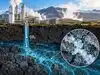
Iceland is turning 120,000 tonnes of carbon dioxide into stone. It is locking away the greenhouse gas underground to fight global warming
Scientists in Iceland are using volcanic rocks to turn captured carbon dioxide into solid minerals, locking the greenhouse gas underground instead of storing it as gas. The Carbfix project has stored more than 120,000 tonnes of CO2 in rock, with recent results showing that its Steingerður plant processed 99.6% of the CO2 entering the facility.
Load More

