
CAPE CANAVERAL

SpaceX's Starship returns from orbit and is captured by launch pad arms in a dramatic first
SpaceX's Starship made a significant return to Earth after completing its mission in space. The spacecraft was caught midair by mechanical arms, marking a historic achievement for the team. Despite this success, the first-stage booster experienced an explosion shortly after liftoff from Texas. SpaceX is preparing for future Starship launches from Kennedy Space Center in Florida. NASA plans to utilize Starship for upcoming Artemis missions, focusing on lunar exploration.
NASA space telescope plunges to Earth after two decades studying cosmic explosions
NASA's Swift Observatory has reentered Earth's atmosphere after more than two decades of effective research. Its mission, which began in 2004, far exceeded initial expectations by lasting 11 times longer than planned. A recent attempt to boost its orbit failed due to complications with a private rescue mission. Meanwhile, NASA is exploring options to save the Hubble Space Telescope, set to fall in the mid-2030s.
NASA adopting Apollo's urgency to build a moon base and land astronauts within two years
NASA plans to return astronauts to the moon with the Artemis III mission set for next summer. Following that, Artemis IV aims to accomplish a historic moon landing by 2028, marking the first since the Apollo missions. Administrator Jared Isaacman emphasized the importance of efficiency and a fast-paced approach similar to Apollo's playbook. Docking exercises with SpaceX and Blue Origin's landers will occur before the moon base establishment.
SpaceX’s Falcon 9 to put 32 payloads in orbit: All you need to know about Bandwagon-5
SpaceX is targeting October 20 for the launch of its Falcon 9 rocket on the Bandwagon-5 rideshare mission, carrying 32 payloads, including cubesats, microsats and reentry vehicles. The mission will mark the booster's 19th flight, with the first stage scheduled to land on the A Shortfall of Gravitas droneship in the Atlantic Ocean.
Amazon founder Jeff Bezos bought three Miami mansions worth $234 million, know why he moved to the 'Billionaire Bunker' and what makes it exclusive
Bezos bought the first two properties in 2023 for $68 million and $79 million, respectively. In 2024, he purchased a third waterfront mansion for $87 million, according to real estate reports. His purchases gave him three properties in one of the most exclusive residential areas in the US.
SpaceX Falcon 9 launches on NASA cargo resupply mission to International Space Station; check details
SpaceX launched its Falcon 9 rocket on October 13 for an important resupply mission to the International Space Station, designated CRS-35. This operation features the Dragon spacecraft on its fourth journey, with a docking scheduled for October 15. Following liftoff, the first-stage booster will return to Cape Canaveral Space Force Station. Live launch coverage will be available via SpaceX's website and social media channels.
A satellite was launched for the first time with frequency division multiple access in 1966. After functioning for nearly 20 years, it slipped into a useless orbit almost 7 years after official deactivation
ATS-1 was launched on December 7, 1966, to test satellite communications, weather observation and orbital technologies. The spacecraft was the first to use frequency division multiple access to combine independently transmitted signals for delivery over a downlink carrier. After getting deactivated on December 1, 1978, the satellite continued to function for years. It finally failed to respond to commands in 1985.
Israel's first lunar mission put spacecraft Beresheet into orbit in 2019. Here's what happened next
Beresheet was Israel’s first lunar mission and the first attempt by a private company to land a spacecraft on the Moon. The mission did not complete a landing, but it reached the Moon and provided a milestone for Israel’s space program and private lunar exploration.
NASA's Mercury-Atlas 6 Friendship 7 mission created history in 1962 with a 4 hours, 55 minutes and 23 seconds flight
NASA's Mercury-Atlas 6 Friendship 7 mission put John Glenn into Earth orbit on February 20, 1962. Glenn became the first American to orbit Earth, circling the planet 3 times in a flight lasting 4 hours, 55 minutes and 23 seconds. The flight was plagued by bad weather, a fuel tank leak, a problem with the control system, and a false alarm that sent out a heat shield warning.

NASA's Crew-12 undocks from ISS, set to splash down off California after nearly eight months in space
NASA's SpaceX Crew-12 has undocked from the International Space Station and is on its way home. The mission included significant scientific investigations aimed at future Moon and Mars missions. Crew members participated in critical spacewalks, with Jessica Meir and Sophie Adenot completing important tasks outside the station. NASA is targeting a splashdown in the Pacific Ocean off the California coast on Thursday.
In 1962, a spacecraft was launched by NASA to study Venus but a few moments later, the rocket went off course and was lost
A spacecraft, called Mariner 1, was NASA's first probe which planned to study Venus. A software error and a guidance control problem led to the loss of the spacecraft after it went off its intended path.
SpaceX launches Crew-13 to ISS in record US transit, with first Black woman to lead orbital crew
On Thursday, four astronauts launched by SpaceX successfully reached the International Space Station after an eight-hour journey. The mission marked the fastest transit to the station by a US operator, including NASA. Commander Jessica Watkins made history as the first Black woman to lead an orbital crew. Other crew members include NASA's Luke Delaney, Canada's Joshua Kutryk, and Russia's Sergey Teteryatnikov.

Joi Barua takes India's sound to the stars with NASA-linked project
Indian composer Joi Barua is merging space science with performing arts. His project, Cosmic Rhapsody, connects NASA's astrophysics research with orchestral music. The project will premiere at the Hollywood Bowl in July 2027. It combines live music, animation, and pop songs for an immersive experience. This collaboration highlights the fusion of science and imagination for young audiences.
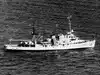
On Jan 5, 2011, the USS Kittiwake was scuttled off Grand Cayman; five years later, 120,800 divers and snorkelers had visited as fish, corals, and other marine life moved in
The USS Kittiwake, once a proud Navy ship, now serves as an artificial reef off the coast of Grand Cayman, drawing in countless divers and snorkelers eager to explore around the famous Seven Mile Beach. Though these artificial reefs are beneficial in promoting biodiversity and boosting tourism, research indicates they fall short compared to natural reefs in terms of species diversity.
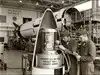
In 1958, a mouse nicknamed Minnie Mouse was sent to space by the United States Air Force under the first Mouse-in-Able (MIA-1) mission aboard a two-stage Thor-Able rocket but the animal didn't survive the flight
In 1958, a mouse nicknamed Minnie Mouse was sent to space by the United States Air Force under the first Mouse-in-Able (MIA-1) mission aboard a two-stage Thor-Able rocket but the animal didn't survive the flight. The mission was launched on April 23 from Cape Canaveral to study how a living mammal could respond to launch acceleration, zero gravity and atmospheric reentry.
In 1965, MIT's LES-1 failed to reach its planned orbit and fell silent in 1967; 45 years later, the zombie satellite unexpectedly began transmitting again
A surprising discovery was made in 2012 when an old satellite from the 1960s unexpectedly resumed broadcasting signals. Originally believed to be out of commission since 1967, the LES-1 satellite has been transmitting for a decade due to a theorized battery malfunction. This event underscores the persistent presence of our technological artifacts in Earth's orbit and their potential to resurface long after their intended missions have ended.
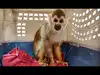
A 1.5-pound squirrel monkey named Goliath was launched into space in 1961; 35 seconds later, his Atlas E rocket was destroyed
In an unfortunate chapter of space exploration, a squirrel monkey named Goliath found himself amidst America's fierce space race. His ill-fated journey lasted just 35 seconds before a catastrophic rocket explosion robbed him of his mission objective. Designed to understand primate behavior in zero gravity, Goliath's unrestrained condition ultimately led to the loss of vital data, marking a sorrowful moment in the annals of space history.

In 1958, the US launched Gordo the squirrel monkey 300 miles above Earth; he endured 8.3 minutes of weightlessness and 40 g during re-entry, but died after his capsule sank at sea
In the historic space flight of 1958, Gordo, a courageous squirrel monkey, faced intense conditions that ultimately validated human survival in the cosmos. Although a flotation device malfunction led to his spacecraft's descent into the ocean, the mission was deemed partially successful by the US Army. The crucial data gathered from Gordo's experience played a vital role in advancing Project Mercury further.
SpaceX launch today: Record-breaking Falcon 9 mission set to kick off busy Space Coast schedule
Florida's Space Coast is preparing for a busy launch schedule. SpaceX will launch Starlink satellites using a reusable Falcon 9 rocket. NASA's Roman Space Telescope will launch aboard a powerful Falcon Heavy rocket. Crewed missions and commercial satellites will also fill the autumn manifest. Spectators should monitor weather and range updates for viewing opportunities.
Load More


