
BUDGET CUTS ITALY

Security forces deploy for Italy protests after clashes
Security forces have been deployed across Italy ahead of planned protests due to recent violent clashes. Policemen and military personnel have been seen in Milan, as citizens express concern about safety during the protests. Italy's government has approved strict measures targeting protestors, including detaining minors and imposing fines on parents. The protests involve various groups, including truck drivers and students demanding action on living costs.

Rome, Milan brace for fresh protests under heavy security after last weekend’s violence
Security forces in Italy are preparing for protests set to occur in eight cities. While the demonstrations are expected to address budget cuts and cost of living concerns, heightened security measures are being enforced. Authorities aim to balance public safety with the right to protest, especially after recent violent incidents. The government is also implementing new regulations regarding protest participation and minors.

UK student visa refusals for Indian applicants rise to 8%, complicating international recruitment for universities
The refusal rate for student visas in the UK for Indian applicants has surged to eight percent, sparking worry among universities that heavily depend on international students from higher-risk backgrounds. Many institutions are now reevaluating their recruitment strategies variously as they face application backlogs resulting in increased refusals. While some universities have halted recruitment from certain nations, others are reshaping their approaches to continue attracting foreign students.

With France embroiled in protest, a look at the nation's economic standing by the numbers
France is grappling with significant economic challenges as public debt continues to rise, exceeding 119% of GDP. Government spending represents a substantial portion of the economy, reaching 57.2%, which constrains fiscal options. The country has recently reported low growth predictions, with only 0.4% expected for the upcoming period. Comparatively, borrowing costs for France are higher than those for Germany, impacting public service funding.

As France erupts, Europe's far right gains from fuel-price anger ahead of elections
The tractors rolling into the town of Gela on the southern tip of Europe are flying the Sicilian flag, emblazoned with Medusa, three bent legs and ears of wheat, a reminder of the island's role as a breadbasket

France is on fire but something more dangerous burns below the unrest
France is engulfed in protests as the public gives vent to growing anger over soaring expenses and diminishing educational quality. Citizens are voicing their demands for improved services, yet the government grapples with managing an overwhelming public debt. Amid budget cuts proposed by President Macron's administration, increasing political challenges may hinder these efforts.
- Go To Page 1

Germany regains safe haven status as European bond risks mount
European government bond markets face renewed volatility as investors pull funds from fiscally vulnerable nations like France and Italy. Germany has re-emerged as a primary safe haven, benefiting from capital inflows alongside Dutch, Swiss, and Swedish debt amid rising fiscal and political concerns across the euro zone.
A look at France's public debt as economy takes centre stage in French Presidential election
France's public debt has climbed to unprecedented levels, currently reaching 119 per cent of its GDP. The increasing debt burden poses significant challenges for the government and upcoming presidential election candidates. Prime Minister Sebastien Lecornu plans to unveil the 2027 draft budget in response to the growing financial concern.

US hiring appetite is healthy as economy powers ahead
The labor market in the US is poised for notable growth as nonfarm payrolls are anticipated to climb in September. Economists foresee the unemployment rate holding steady at a low 4.1%. Promising economic data highlights strong consumer spending and substantial capital investments, painting a picture of economic resilience.

Give blood, buy bonds: Countries get creative in hunt for cash
Romania is tapping retail investors through an unusual blood-for-bonds program, offering donors access to government securities with yields above standard rates. The initiative has raised $604 million since 2025 while addressing blood shortages. As governments worldwide seek household savings to fund rising deficits, policymakers are increasingly using incentives, marketing and tax breaks.

Trump's pressure on NATO is reshaping Europe's defences. Will it break the alliance?
European nations are increasing defence spending and exploring alternatives to American military technology. This shift is happening as doubts grow about the durability of United States support for NATO. While allies have met spending demands, uncertainty about future US troop presence has persisted. Further, Russia's actions have tested NATO unity and European defence capabilities.

Global interest rates are rising: Will RBI rates, home loan EMIs and investments be affected?
Loans would get costlier if and when the RBI hikes interest rates. In floating-rate loans, EMIs would rise even for existing loans. However, the RBI’s next rate-hike cycle would be shallow. High global bond yields or interest rates matter for the RBI, but they are not the decisive factor.

Late-stage funding squeeze; ISRO opens up space
Happy Tuesday! India’s late-stage funding market is tightening, with investors writing smaller cheques and pushing for lower valuations. This and more in today’s ETtech Morning Dispatch.

Europe’s economy faces the hard reality of climate change this summer
The intense heatwaves sweeping across Europe this summer are leaving deep economic scars. With soaring temperatures and severe drought hampering agriculture and power generation, key waterways are also facing transportation restrictions. Southern European regions are bracing for lower tourist influx and skyrocketing food costs as authorities grapple with increased financial pressures and the looming influence on the European Central Bank.

Germany demands $450 billion cut to 'unaffordable' EU budget, document shows
Germany is pushing for a massive €400 billion cut to the European Commission's proposed €2 trillion budget for 2028-2034, deeming it "unaffordable." As the EU's largest net contributor, Berlin warns that an agreement is currently impossible due to the significant increase from the previous budget. Chancellor Merz is urging member states to finalize a deal this year to provide planning certainty ahead of crucial elections.

US debt crisis: America to surpass Italy and Greece for first time in 100 years - can Washington fix it before it’s too late?
US debt crisis is spiraling. For the first time in 100 years, America’s debt burden is projected to exceed Italy and Greece, IMF data shows. The US national debt has soared past $38 trillion, and the IMF expects it to reach 143.4% of GDP by 2035, overtaking Italy’s 137% and Greece’s 130%. With deficits above 7% of GDP every year and rising interest costs, the world’s largest economy is now facing its most dangerous debt level in modern history.
Italy wins Fitch rating upgrade on fiscal performance, political stability under Meloni
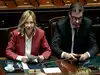
Fitch has upgraded Italy's credit rating. This reflects Italy's political stability and better public finances under Giorgia Meloni's government. The rating is now 'BBB+' from 'BBB'. Fitch expects Italy's deficit to fall. It also acknowledges improved labor market conditions and tax compliance. This upgrade signals international market confidence in Italy. Other agencies will review Italy's rating soon.

How Italy's tax system got rigged for the rich
Italy's tax system disproportionately benefits the wealthiest 7%, resulting in a regressive tax structure that exacerbates inequality and challenges public finances. Despite high overall tax rates, favorable terms for the wealthy and the self-employed contrast sharply with higher burdens on middle and low-income workers, prompting calls for reform.

Higher-for-longer rates keep euro zone yields near multi-year highs
Germany's 10-year government bond yield, the euro area's benchmark, was last flat at 2.788%, having briefly hit a 12-year high of 2.813% in early trade. Bonds yields move inversely with prices.

UK PM Rishi Sunak launches new UK-Italy-Japan joint fighter jet project
The UK will work with Italy and Japan on the next generation of combat air fighter jets through an "unprecedented" international aerospace coalition, British Prime Minister Rishi Sunak announced on Friday.

Moody’s cuts Italy ratings to one step above junk
The credit score was lowered one level to Baa3 and the outlook was shifted to stable.

High noon in Brussels: Italy prepares for budget showdown
"The European process might not be central," Bank of America Merrill Lynch said in a note to clients.

EU says size of Italy’s planned budget deviation is unprecedented
The letter was delivered by EU economics chief Moscovici during a meeting in Rome

Italian stocks, banks bruised by report Italy budget meeting may be delayed
Weak results and broker notes caused some sharp moves lower.

Wolfgang Schaeuble says France, Italy on right path as borrowing falls
France and Italy are on the right path in reducing their net new borrowing, German Finance Minister Wolfgang Schaeuble said in a radio interview to be aired on Sunday, adding that net new borrowing had been cut sharply throughout the euro zone.
European Union leaders weigh rescue measures at crisis meet
European Union leaders focused on immediate help for Spain and Italy at the start of a two-day summit intended to chart a path out of their financial crisis.
A look at countries with most severe austerity measures and ramifications
In what has been called by some as the 'age of austerity', here's a look at countries with some of the most severe austerity measures and the ramifications.
Spanish woes push up Italian borrowing costs sharply
Italy and Spain have traded testy comments in recent days on who is to blame for the rise in borrowing costs which has afflicted both countries.
Italian Prime Minister Silvio Berlusconi survives vote of confidence
Silvio Berlusconi survived a second confidence vote on his austerity plan, paving the way for final passage of the package intended to balance the budget.
Load More

