
BRITAIN NUCLEAR WEAPONS
Duo before trio: Vladimir Putin, Xi Jinping blast western 'protectionism'
It has also unnerved some European and Asian capitals, which fear the world's greatest military powers will disregard their interests. In his opening address, Xi urged support for what he called "free and open trade," trying to portray his country as a stable partner on the global stage, in contrast with the US, which has raised tariffs and adopted a more muscular foreign policy under Trump.
Trump-Xi-Putin summit: Can the three find common ground on war, oil, nukes?
With Trump, Xi and Putin coming together, Shenzhen could produce an extraordinary diplomatic spectacle, but without delivering an extraordinary outcome. The real test will not be the great photo-op, but whether the three can use their power to avoid further trade and geopolitical instability.
China says Xi, Trump, Putin to discuss 'world peace'
Leaders Xi Jinping, Donald Trump, and Vladimir Putin are set to meet in Shenzhen this week. The discussions will primarily focus on world peace, denuclearization, and the ongoing conflict in Iran. Beijing has noted the talks may hold significant meaning for strategic stability among major powers. However, the issue of Ukraine's invasion is expected to be avoided. The outcomes of this summit could impact international relations in key global issues.
Amid World War III fears, Putin issues UK, France nuclear ultimatum in Ukraine peace deal demands
Russian leader Vladimir Putin has taken a decisive step by issuing an ultimatum to the UK concerning its nuclear defense commitments. He is urging Britain and France to abandon its protective nuclear measures for European allies to allow for peaceful resolutions in Ukraine. Additionally, Russia is demanding substantial concessions, such as the withdrawal of NATO forces from Eastern Europe and the cessation of military supplies to Ukraine.

Donald Trump, Xi Jinping and Vladimir Putin plan unprecedented joint meeting on APEC sidelines, White House and Kremlin say
Trump has warmly embraced Xi after coming to a truce in their short-lived trade war last year and in spite of differences over the U.S. war with Iran and other tensions between the world's foremost economic powers. Similarly, Trump has sought to build his relationship with Putin, even as the Russian leader has persisted in his nearly 5-year-old war with Ukraine and as Moscow has deepened its military, intelligence and diplomatic partnership with Iran.
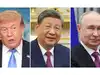
A new Yalta? Why a Trump-Xi-Putin meeting has the world on edge
Negotiations are ongoing for a potential meeting of world leaders Trump, Xi, and Putin next week. These leaders have different priorities, leading to uncertainty about the meeting's agenda and outcomes. While Trump hopes to discuss nuclear arms control, Xi is more reticent about this topic. Smaller nations, including Ukraine and Taiwan, express concern over a possible private agreement among the major powers.
- Go To Page 1

Trump, Xi and Putin plan an unprecedented joint meeting on the sidelines of APEC, White House says
The three leaders may meet during the Asia-Pacific Economic Cooperation summit. This unprecedented summit is expected to focus on nuclear arms discussions and regional tensions. While no significant agreements are anticipated, the meeting symbolises their ongoing diplomatic engagements.

Amid Nvidia CEO Jensen Huang and alleged Chinese spy controversy: Here's a look at notorious honey trap spy scandals in history
The reported association between Nvidia CEO Jensen Huang and alleged Chinese spy Alice Huang has sparked fresh discussions about honey traps in espionage. This intrigue echoes past scandals involving romantic liaisons, such as Mata Hari’s execution and the downfall of diplomats like Maurice Dejean. Furthermore, the case of whistleblower Mordechai Vanunu exemplifies how personal relationships can intertwine with espionage efforts, emphasizing the profound implications they hold.

'It looks like World War III': Historian Sarah Paine gives chilling warning on global conflict; explains why nuclear weapons may not keep the world safe
Historian Sarah Paine warns that the world could be moving towards another global war as tensions involving Iran, Russia and NATO continue to rise. Calling the Iran war “probably one of the most incompetent wars in human history”, she says conflicts can quickly spiral out of control and are difficult to end once they begin. Paine also raises concerns about Vladimir Putin’s actions near NATO territory.

Pentagon's 'doomsday' plan as World War III fears grow: How US bases are planning to survive for 90 days as UK urges people to 'Be Ready' for crisis
Amid fears of a potential World War III, the Pentagon' Doomsday plan is to keep major US military bases operational for 90 days without outside support under its FORTRESS initiative. The plan includes independent power supplies, strategic reserves of essential materials and preparations for wartime factory production. Meanwhile, the UK government has launched its 'Be Ready' campaign, urging households to stockpile food, water, cash and emergency supplies in preparation for a national crisis.
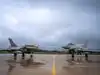
British jets join French nuclear exercise for first time, France says
In a significant show of solidarity, British and French military jets have engaged in a collaborative exercise aimed at enhancing their nuclear capabilities amid rising threats in Europe. Named 'Rummy', this operation involved British Typhoons and French Rafales simulating a nuclear strike. French officials stress the critical nature of their nuclear partnership in bolstering European security, underscoring their dedicated efforts to peace through robust deterrence strategies.
The next Iran war could be bigger, wider and harder to contain
Iran is actively preparing for potential military engagements that could provoke a major regional conflict. The escalation of Houthi attacks on Saudi territory complicates the situation for US allies in the Gulf. American military assets are being deployed in the region, anticipating possible Iranian reprisals. The interplay between ongoing conflicts could threaten critical infrastructure and international shipping lanes.
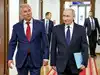
Days after Moscow warns NATO of nuclear attack, Russian strategist warns there will be ‘little left’ of Europe amid World War III threat
After Russia warned NATO that it could use nuclear weapons if the alliance tried to isolate Kaliningrad, Russian foreign policy strategist Sergei Karaganov issued another stark warning. Karaganov said Moscow could initially use conventional weapons but would “go nuclear” if European countries continued backing Ukraine and refused to surrender, warning there would be “little left” of some European countries.

A TV show on a detached piece of Russian land triggers nuke warning
Recent tensions have arisen between Russia and NATO regarding the strategic territory of Kaliningrad. This situation escalated following a fictional British TV war game that depicted potential military actions. Russia responded harshly, warning of possible nuclear actions if Kaliningrad faced isolation. NATO maintains that its planned exercises are purely defensive and not aimed at Russian territory.
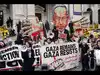
Netanyahu is booed as he begins his UNGA speech, with many delegations walking out of the General Assembly hall
During his speech at the United Nations General Assembly, Benjamin Netanyahu was met with protests and significant walkouts. Many delegates left the hall as a sign of disapproval, while Netanyahu called them moral cowards. In his speech, he defended Israel's military actions against Iran and criticized various global leaders. Outside the United Nations, demonstrators assembled to protest against Israel's actions in the ongoing conflict.

Pope Leo puts AI risks at centre of Vatican’s global agenda: 'Future of humanity is at stake'
The Vatican warned about the risk of an apocalypse spurred by artificial intelligence years before major American firms sounded the alarm at the United Nations Security Council on Wednesday - a concern that Pope Leo is placing at the heart of his

Three nations, one union under strain: The long history behind United Kingdom's latest breakup threat
The United Kingdom formed through centuries of unions and legislation. Recent pacts highlight calls for constitutional change from devolved nations. Scotland, Wales, and Northern Ireland seek self-determination and independence. Energy and defence issues pose significant challenges to any breakup. The UK's future remains uncertain as consent for the union weakens.
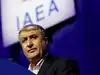
Iran nuclear chief’s IAEA appearance hangs in balance over travel ban
Iran's Atomic Energy head is not expected at the IAEA conference. He faces an international travel ban, impacting relations with the West. Austria sought a waiver for his attendance, but it was not granted. Iran has restricted IAEA inspectors' access to nuclear sites since June 2025. The UN sanctions reinstated include travel bans and other restrictions.
UN nuclear watchdog board reports Iran to the UN Security Council for the first time in 20 years
The UN atomic watchdog's board has reported Iran to the Security Council. This action stems from Iran's failure to cooperate with inspectors investigating uranium traces. Twenty-three nations supported the resolution, while China and Russia opposed it. This diplomatic move escalates tensions amid ongoing conflict between the US and Iran. The Security Council now holds responsibility for potential further measures against Iran.
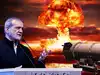
UK publishes legislation for tougher sanctions on Iran over nuclear programme
Britain has published new legislation imposing tougher sanctions on Iran. These measures will restrict Iran's access to the British financial system. Trade bans will also be broadened to include more goods and technology. Iranian aircraft will be prohibited from landing in Britain unless exemptions apply. This legislation aims to curb Tehran's nuclear program and hostile activities.
US and allies push IAEA board to report Iran to UN Security Council, diplomats say
Western nations are seeking a UN resolution to report Iran's nuclear activities to the Security Council. This move follows Iran's non-compliance with nuclear non-proliferation obligations and IAEA investigations. Iran's uranium enrichment plants were previously damaged by airstrikes, limiting its options. The IAEA has expressed serious concerns over Iran's enriched uranium stockpiles. Concrete Security Council action remains unlikely due to Russian and Chinese veto power.
In 1949, Soviet Union detonated its first atom bomb, ending U.S. monopoly on atomic weapons, more than seven decades later United States and Russia together hold over 80 per cent of world's nuclear arms stockpile
Soviet Union’s first atomic bomb test transformed the international security landscape. On August 29, 1949, the world entered a new stage in which the United States was no longer the sole nuclear power. The event intensified the Cold War arms race, reshaped American strategic thinking, and increased the urgency of debates over international nuclear control.
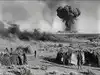
In 1953, Britain detonated an atomic bomb in Australia, sending a mysterious black mist across the desert before a secret programme began testing children’s bones for radiation
During the Cold War, Britain undertook covert nuclear tests in Australia, leading to hazardous radioactive fallout termed the Black Mist that endangered Aboriginal communities. Authorities, without consent, gathered human bones to assess strontium-90 levels, specifically focusing on infants and children for bone growth studies. The ramifications of these nuclear tests have lingered far beyond their completion.

U.S. spending on rebuilding nuclear arsenal more than all other nuclear states combined including China, Russia
U.S. spent $69.2 billion, more than all other nuclear states combined, and saw largest increase, at 22 per cent.

Britain renews nuclear weapons system
SNP's George Kerevan asked, "Are you prepared to authorise a nuclear strike that could kill hundreds of thousands of men, women and children?"
With eye on China, India ramps up nuclear arsenal
India appears to be ramping up its arsenal with China in its calculations since Pakistan’s smaller land mass has few targets.
Pakistan aims to develop smaller lighter nuclear warheads: Report
Pakistan is expected to surpass Britain's nuclear stockpiles in a decade, the Bulletin of the Atomic Scientist said.
US, UK prevented Pak from going nuclear and acquiring "gray area" technology
The US and Britain undertook a secret campaign in the late 1970s to prevent Pakistan from going nuclear and unsuccessfully tried to block its attempted covert purchasing of "gray area" technology.
US firms now control UK's nuclear weapons plant
Britain's government said on Friday that a state-owned nuclear group has sold its stake in the company that manages the UK's atomic weapons research centre, bringing the facility under the control of US companies.
Load More

