
BRICS STRATEGIC AUTONOMY
US sanctions have India cornered. BRICS charts an escape route
US sanctions have significant implications on international trade, especially concerning countries like India. As BRICS countries explore alternative payment systems, the renminbi could become an attractive option. This change might reduce reliance on the US dollar and offer nations more strategic autonomy. The recent discussions emphasize the importance of cross-border interoperability and local-currency settlements among BRICS members. These developments highlight a potential shift in global economic power dynamics.

Lula vs Bolsonaro: As Brazil lies on the brink of tilting right, India watches its major BRICS partner
Flávio Bolsonaro secured leading votes against incumbent Luiz Inácio Lula da Silva in Brazil's elections on October 4. The runoff on October 25 could solidify right-wing power across South America, following a regional trend. Lula aims to reduce economic inequality while Bolsonaro focuses on crime and spending cuts. India is observing the elections closely due to its strategic partnership with Brazil in various sectors.
India navigating multipolar 'age of flux', says Jaishankar; talks on with Russia, Ukraine for safe Black Sea passage
External Affairs Minister S Jaishankar affirmed the importance of the US as a primary strategic partner for India. He emphasized India's nuanced approach to relationships with various nations including China and Russia. Jaishankar also addressed the challenges in securing grain and fuel shipments amid the Russia-Ukraine conflict. He called for a reform in the United Nations to better represent the Global South.
Jaishankar meets Russia, Iran foreign ministers at UNGA days after Trump signs sanctions law
During the UN General Assembly, India's External Affairs Minister S. Jaishankar conferred with officials from Russia and Iran, highlighting vital areas like bilateral ties, BRICS collaboration, and the Gulf conflict. He reaffirmed India's focus on energy security in light of recent US sanctions. Furthermore, Jaishankar participated in discussions with the Gulf Cooperation Council to fortify partnerships, alongside co-chairing a dialogue centered on the ramifications of artificial intelligence on maritime security.

On the table or on the menu? A new power play begins at the UN
Partners for Multilateralism, or P4M, unites diverse nations to reform global institutions. This new grouping reflects a changing global mood and a desire for greater maneuverability. Countries seek more influence in a multipolar and contested international system. P4M offers an open framework for issue-based coalitions across different political traditions. It signifies a new mood where middle powers think beyond established alliances.
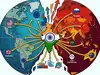
India’s strategic autonomy faces a trade test as WTO warns non-aligned economies could pay a price for fragmentation
India's foreign economic policy aims for broad trade ties. The WTO warns of rising costs in a fragmented global trade system. India's numerous free trade agreements offer preferential market access. Diversification and multiple pacts help maintain economic flexibility. This strategy counters rising trade costs in a bloc-driven world.
- Go To Page 1
Piyush Goyal to visit US for G20 trade talks as India eyes key FTA milestones
Commerce Minister Piyush Goyal will attend the G20 trade ministerial in Milwaukee this month. He is expected to hold bilateral talks with the US Trade Representative regarding trade issues. India also anticipates signing a free trade agreement with the European Union before year-end.

New Delhi scripts a post-US worldview
The New Delhi Declaration signifies a transformative shift in global dynamics, asserting a multipolar world that transcends Western dominance. BRICS stands against unilateral sanctions, branding them as coercive actions that undermine legitimacy. This unified stance underscores the importance of sovereignty and dialogue while highlighting a move towards strategic autonomy. India's advocacy for UNSC reform further supports this newly conceived worldview, as BRICS actively engages with the shifting global landscape.
BRICS 2026: India cracks the code in a divided room with 4 AM talks & diplomatic heavy lifting
Prime Minister Narendra Modi helped broker a unanimous BRICS statement on the Middle East conflict despite sharp differences among members including Iran, Saudi Arabia and the UAE. After negotiations lasting into the early morning, the bloc called for maximum restraint and expressed concern over attacks on civilian and nuclear infrastructure.

Beyond bloc politics: India’s BRICS bet on multipolarity
Under India's BRICS chairmanship, the importance of practical cooperation is underscored with an aim to launch impactful development initiatives. Enhancing citizens' lives through tailored health programs and technology is paramount. The chairmanship also prioritizes the nurturing of startup ecosystems and the support of MSMEs, while dedicating significant efforts to climate finance and vital infrastructure projects.
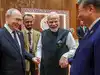
The Modi-Xi-Putin picture and the rise of a multipolar world trying to remake global power
The expanded BRICS grouping now represents nearly half the world's population. Leaders adopted the New Delhi Declaration, showing consensus despite differences. BRICS aims to build practical mechanisms for global trade and finance. India seeks strategic autonomy and a stronger voice for the Global South. This evolving order allows countries to engage multiple power centers simultaneously.
World’s biggest handshake at BRICS: Can it shake the world order?
Modi, Xi and Putin’s BRICS meeting carries symbolic weight, but its impact will depend on deliverables. An expanded, divided BRICS faces internal contradictions and lacks strong institutional mechanisms. India seeks strategic autonomy, while Russia and China push alternatives to Western systems.
BRICS 2026: India's chairship and Global South's push for 'endless war to end of war'
New Delhi hosts the 18th BRICS Summit amid global conflicts and economic challenges. Developing nations seek this platform to voice concerns and find alternative solutions. The bloc faces internal divisions due to differing geopolitical alignments and national priorities. India aims to facilitate dialogue and steer discussions towards shared Global South objectives. The summit will explore practical solutions for global problems and promote peace and prosperity.
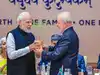
India can steer expanded BRICS from rapid growth to practical cooperation: Brazil media
The upcoming BRICS summit in New Delhi will focus on consolidating the bloc's recent expansion. India's Prime Minister Modi is expected to play a key role in this transition. The summit aims to transform collective weight into practical cooperation among diverse members. Areas like development finance and technology will be central to the bloc's future agenda. Success hinges on strengthening institutions and managing internal differences effectively.

From Tech NAM to NAS: India’s case for tech sovereignty through strategic choices
It is crucial for countries to embrace a non-aligned sovereignty approach in artificial intelligence, enabling them to diversify their technological alliances and systems. Brazil's proactive AI investment strategy sets a strong example by collaborating with multiple global partners. India’s foreign policy reflects this multi-alignment ethos, crucial for its AI initiatives. To secure autonomy, nations need to oversee critical infrastructures while keeping alternative options available.
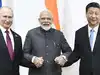
Modi-Xi-Putin together again: What will the Bishkek photo-op tell?
India’s next Modi-Xi-Putin photograph at the SCO summit in Bishkek is likely to carry geopolitical weight, but it should not be read as evidence of a new India-China-Russia alliance.
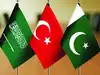
Turkiye, Saudi Arabia, Pakistan's Mecca Pact: What it means for India
A new 'Mecca Pact' between Turkiye, Saudi Arabia, and Pakistan is forming. This alliance could redefine the Indo-Pacific region's security landscape. India must carefully monitor this development and its implications. New Delhi needs to adjust its strategic calculus in the western Indian Ocean. The nation should also enhance its global engagement through multilateral partnerships.
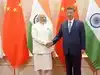
Enter the dragon: Delhi Brics meet can stage a historic handshake
Xi Jinping's potential visit to India for the BRICS Summit is generating significant international attention. This meeting would mark a third encounter between Prime Minister Modi and President Xi in under two years. Such high-level engagement suggests a move towards sustained dialogue and stable management of differences. India's strategic autonomy is reinforced as it balances multiple global power centers.

India’s BRICS presidency: Beyond trade and investment narratives
India's upcoming BRICS presidency in 2026 presents a key chance to foster global stability. Discussions highlight the need for practical cooperation and tangible outcomes. BRICS+ can evolve into a more cohesive bloc, strengthening its voice for developing nations. India aims to guide focused initiatives in trade, investment, and digital connectivity, contributing to a balanced world order.

BRICS for the future: India’s chairship to lead from ideas to implementation
India's upcoming BRICS+ chairmanship in 2026 presents a pivotal chance to champion the Global South's development and reform global governance. A recent conference highlighted BRICS+ as a corrective force, emphasizing South-South cooperation in finance, technology, and energy. Experts stressed the need for actionable partnerships and a unified approach to global challenges, moving beyond declarations to tangible delivery.

From Russian oil to Pakistan policy: Jaishankar on India's clear 'red lines' in trade talks with US
External Affairs Minister Jaishankar affirmed India's unwavering commitment to protecting its farmers' interests and strategic autonomy during trade negotiations with the U.S. He highlighted India's firm stance against mediation with Pakistan and emphasized the nation's right to make decisions based on its national interest, particularly regarding Russian oil imports, despite external pressures.
Cross-border platforms and development finance to power BRICS+ growth: EY Report
BRICS+ nations are strategically advancing financial autonomy through a cross-border payments platform, the New Development Bank (NDB), and the Contingent Reserve Arrangement (CRA). These initiatives aim to reshape the global financial system, offering alternatives amid geopolitical uncertainties and evolving trade dynamics.

The GCC and the Global South: Voices in an age of civilisational crisis
Humanity faces an existential clash of civilizations, particularly in the Indo-Mediterranean region, the birthplace of major religions. The Gulf Cooperation Council emerges as a stabilizer in the Islamic world, while BRICS offers a platform for the Global South. India's civilizational diplomacy and the GCC's evolving role could shape a more inclusive global order, reflecting the voices of the majority.

BRICS: India’s role is to ensure the grouping doesn’t get a distortionary ideological edge
What is India's role in BRICS? The process of expansion is revealing. Every incumbent member country came with its wish list of potential newcomers. Some names overlapped, some were exclusive to one list. Notably, every single country that was admitted was among India's recommendations. None of the other existing members could claim a similar privilege. In Kazan, as the larger BRICS now considers partner countries - from North Africa to Southeast Asia - India's contribution is likely to be similarly influential.
India's new age non-alignment: NAl 2.0
This new-age NAl - NAl 2.0, if you will - allows India to conduct transactions with Russia, a traditional partner, while deepening ties with Western powerhouses. Critics may view such an approach as opportunistic. But it is a testament to India's maturity and shrewdness.

India engages with China ahead of Quad summit as two agree to expedite LAC disengagement
According to a Ministry of External Affairs (MEA) statement, both sides agreed that the completion of the disengagement in the North and South Bank of the Pangong Lake provided a good basis for the two sides to work towards early resolution of these remaining issues.

Modi dials Putin on his birthday; discussed the President's India visit for the annual summit
The Prime Minister recalled his long association and friendship with Putin, and appreciated the personal role that the latter has played in nurturing the Special and Privileged Strategic Partnership between the two nations, according to the statement. This comes close on the heels on the India and Russia celebrating Declaration of the 20th anniversary of strategic partnership on October 3.

Chinese state paper downplays Quad meet
Beijing feels that there was no need to overreact over this meeting, as it said India, as one of Quad members, believed in strategic autonomy and was seeking a balance between the US and China.
Load More


