
BRAZIL FOREIGN POLICY

Research: Navigating the Business Risks of Changing Pro-America Sentiment
U.S. firms increasingly operate in a marketplace where “Made in USA” is no longer a neutral provenance claim but a charged political signal. A new study analyzing 5,355 companies over twenty years found that pro-America marketing has increasingly shifted from pride-based patriotism to grievance-fueled, us‑versus‑them nationalism. While this can create upsides—new customers, loyalty, pricing power—it also exposes companies to narrative capture, boycotts, and legal scrutiny. To avoid risk, companies must examine their exposure along two axes: domestic embeddedness and symbolic intensity. Leaders must align operations and symbolism, set clear guardrails, and proactively manage meaning drift before others define their loyalties.

5 world market themes for the week ahead
An important week is upcoming with central banks like the Federal Reserve and European Central Bank making policy decisions. Major companies, including Alphabet, Amazon, and Microsoft, are set to report their earnings. Political events are also significant, with elections in Israel and Brazil influencing markets. China's leadership will hold discussions focused on party governance amidst external pressures.

Lula vs Bolsonaro: As Brazil lies on the brink of tilting right, India watches its major BRICS partner
Flávio Bolsonaro secured leading votes against incumbent Luiz Inácio Lula da Silva in Brazil's elections on October 4. The runoff on October 25 could solidify right-wing power across South America, following a regional trend. Lula aims to reduce economic inequality while Bolsonaro focuses on crime and spending cuts. India is observing the elections closely due to its strategic partnership with Brazil in various sectors.

Charting the global economy: Inflationary pressures mount in US
A broad upswing in consumer prices last month helps reinforce expectations for additional Federal Reserve interest-rate increases in the months ahead.

Import of GM soybeans into India should not be allowed at all, say processors
Processors across India are urging the government to impose a ban on the import of genetically modified soybeans from abroad. They argue that such imports could harm local farmers and make the economy overly dependent on foreign sources.

Satellite network a 'technology of geopolitical control': Think tank for hard limits on Starlink
An Indian policy group has advised the government to enforce strict conditions on foreign satellite operators. The Kutniti Foundation argues that SpaceX's Starlink poses strategic risks to India's telecommunications sovereignty. The report emphasises the need for India to establish its own satellite constellation to ensure data security. It highlights concerns about potential foreign intelligence vulnerabilities linked to external operators.
- Go To Page 1
Trump's tariffs fuel factory job losses, threaten Republican support ahead of US midterms
Job losses in battleground states have led to political shifts among workers who previously supported Republicans. This includes individuals affected by President Trump's tariffs, which some blame for layoffs and company closures. Many voters are expressing dissatisfaction with the economic impact of these trade policies. Democratic candidates are likely to benefit from this backlash against tariffs in forthcoming elections.

Why wait for Starlink when the rural internet gap is India’s to fix
Starlink has not obtained a license in India yet continues to push for service expansion. The reported costs for Starlink services are significantly higher than existing internet options for Indian consumers. Concerns arise regarding the potential misuse of Starlink equipment by insurgents in regions of conflict. Additionally, control over user data remains a contentious issue, with calls for stronger local regulation.

The debate is settling, the business is moving. Time to look at a larger set? 9 sugar-ethanol ecosystem stocks for the watchlist
A new fuel programme is not an easy thing to implement. And it sparks intense debate. Ethanol, for instance, has taken over two decades to reach some scale, and it has been dogged by controversies. But the noise is now dying down as it meets targets that were said to be impossible to achieve. Check out Stock Reports Plus, powered by Refinitiv, for price targets of over 4,000 listed stocks along with detailed company analysis focusing on five key components – earnings, fundamentals, relative valuation, risk, and price momentum – to generate standardised scores. SR+ Reports is a complimentary offering to ETPrime members.
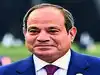
Egypt navigates Mecca pact, steps up ties with India
President Abdel Fattah el-Sisi of Egypt met Indian Prime Minister Narendra Modi to deliberate over the Mecca Pact. Their talks centered on fostering robust bilateral strategic partnerships, amid Egypt's choice to refrain from joining the defense pact. Observers remark that the Mecca Pact's relevance is questionable due to a shared enemy's absence. Nonetheless, Egypt positions itself as a crucial stabilizing force within the region.

Trump’s diesel squeeze may put Indian refiners in a sweet spot, and a bind
A potential US diesel export ban could worsen an already tight global fuel market by removing about 1.2 million barrels a day of supply at a time when Middle Eastern, Russian and Chinese exports are constrained. Europe would be particularly exposed, while India could gain export opportunities for its refiners but also face higher crude and domestic fuel costs as global buyers compete for scarce diesel.

US 10-year yield at 24-year high rattles Nifty, rupee and bond markets. Why is India hit hard?
The US 10-year Treasury yield surged to a 24-year high, triggering a global bond sell-off and pressuring Indian equities, bonds and the rupee. Higher US borrowing costs are raising concerns over FII outflows, currency weakness, imported inflation and RBI policy. Rising crude prices are adding to the pressure on Indian markets.

India-Brazil-South Africa make strong pitch for ambitious, comprehensive and profound reform of UN
IBSA Foreign Ministers convened to call for urgent reforms of global governance institutions and the UN Security Council. They expressed support for increased representation of developing countries in decision-making processes, particularly in the UNSC. The Ministers highlighted the need for reform to address contemporary challenges, including climate change and socio-economic inequality. They also raised concerns about conflicts in the Middle East affecting the Global South.

US hiring appetite is healthy as economy powers ahead
The labor market in the US is poised for notable growth as nonfarm payrolls are anticipated to climb in September. Economists foresee the unemployment rate holding steady at a low 4.1%. Promising economic data highlights strong consumer spending and substantial capital investments, painting a picture of economic resilience.
India, other G4 nations express 'strong concern' at lack of progress on UNSC reform
The G4 nations of Brazil, Germany, India, and Japan convened to address UN Security Council reform concerns. They expressed disappointment over the lack of advancements in previous negotiations regarding UNSC reform. The Ministers emphasized the necessity for the reform to reflect contemporary geopolitical realities and represent underrepresented regions. They reiterated the importance of including more voices from Africa, Asia-Pacific, and Latin America and the Caribbean.
India’s 30-year wait for a seat has a new twist and an old problem
European nations now support India's bid for a permanent UN Security Council seat. Prime Minister Modi stresses the urgent need for Security Council reform. Key questions involve seat allocation and regional claim resolution. The UN reform process has stalled without a negotiating text. India continues its campaign for elected terms while pursuing permanent membership.

Solar's $1.3 bn bet is a turn for India's defence-industrial complex
The piece argues that Solar Industries’ ₹12,951-crore acquisition of South Africa’s Omnia Holdings could mark a new phase for India’s defence industry, as Indian companies increasingly move beyond domestic production into overseas acquisitions, manufacturing and technology partnerships.

School Assembly News Headlines, September 15, 2026: Top national, international, business, sports updates and thought of the day
Today’s school assembly news headlines (September 15): Due to unfavourable weather conditions, the Adi Kailash Yatra in Uttarakhand has been postponed until September 20. Meanwhile, Uruguay's Foreign Minister commended India’s effective leadership during the BRICS Summit, praising Prime Minister Modi's role. Union Home Minister Amit Shah encouraged the promotion of Indian languages and applauded the Vande Mataram rule. In the global aviation sector, airlines are advocating for increased competition in used jet engine parts.
Making a dollar detour: Why BRICS isn’t breaking up with the dollar
The latest BRICS declaration emphasizes interoperable payment systems and local currency settlement. It explicitly avoids proposing a common BRICS currency or linking central bank digital currencies. This approach acknowledges the impracticality of a unified currency due to diverse economic conditions. BRICS countries aim to reduce dollar dependence through enhanced payment choices and national currency use. The focus remains on practical cooperation rather than a monetary union.

BRICS 2026: A declaration, no roadmap
India displayed diplomatic strength by forging consensus for the New Delhi Declaration. Member nations hold differing perspectives on BRICS's future direction and goals. China's influence is evident as it prepares for its upcoming chairmanship of the grouping. The declaration reiterates support for UNSC reform without setting a clear timeline. BRICS members aim to shape global rules rather than merely follow them.

A weekend in New Delhi: At BRICS, Modi and India provided an adroit demonstration of tactically gathering a motley crew
The recent BRICS summit hosted twenty nations, fostering debate and wide interpretation of its joint statement. This gathering served as a protest forum against global economic instability and institutional failures. India's diplomacy showcased its appeal as a stable pillar amidst geopolitical challenges. The summit highlighted crucial supply chains and commodity linkages within BRICS family countries. India's engagement demonstrates the need for intricate networks and tactical arrangements in global affairs.

Brazil is in fashion, as Brazilians like to say. Here's why
Brazil is experiencing a surge in global popularity and cultural appreciation. Brazilcore fashion and increased tourism are driving this significant international attention. Celebrities and major brands are embracing Brazilian culture and its vibrant aesthetics. This trend reflects a growing "caramelo pride" celebrating the nation's unique identity. However, experts suggest this heightened interest may eventually begin to fade.

Beyond bloc politics: India’s BRICS bet on multipolarity
Under India's BRICS chairmanship, the importance of practical cooperation is underscored with an aim to launch impactful development initiatives. Enhancing citizens' lives through tailored health programs and technology is paramount. The chairmanship also prioritizes the nurturing of startup ecosystems and the support of MSMEs, while dedicating significant efforts to climate finance and vital infrastructure projects.
Iran and UAE back joint BRICS statement urging restraint in war
Iran and the United Arab Emirates joined a BRICS statement urging Middle East restraint. This move signals diplomatic progress between the two nations after recent conflict escalations. Leaders met on the summit's first day to discuss regional stability and development efforts. The BRICS bloc aims to challenge the existing world order and promote equity. India hosted the summit, focusing on boosting trade and reducing global barriers.

Brazil, India have potential to build deeper strategic, economic ties: FM Mauro Vieira
Brazil and India's bilateral trade is rapidly growing and nearing twenty billion dollars. This partnership holds significant potential for deeper strategic and economic collaboration. Brazilian companies are expanding their presence and activities across various Indian sectors. BRICS serves as a vital platform for dialogue and consensus-building among nations. Brazil also seeks to strengthen its engagement with Asian markets and foster cooperation.
The Modi-Xi-Putin picture and the rise of a multipolar world trying to remake global power
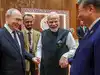
The expanded BRICS grouping now represents nearly half the world's population. Leaders adopted the New Delhi Declaration, showing consensus despite differences. BRICS aims to build practical mechanisms for global trade and finance. India seeks strategic autonomy and a stronger voice for the Global South. This evolving order allows countries to engage multiple power centers simultaneously.

World’s biggest handshake at BRICS: Can it shake the world order?
Modi, Xi and Putin’s BRICS meeting carries symbolic weight, but its impact will depend on deliverables. An expanded, divided BRICS faces internal contradictions and lacks strong institutional mechanisms. India seeks strategic autonomy, while Russia and China push alternatives to Western systems.
BRICS Summit 2026: PM Modi emphasises on global welfare, positive dialogue ahead of key gathering
Prime Minister Narendra Modi emphasized global well-being and positive dialogue for the upcoming BRICS Summit. Leaders from Russia, China, and other nations will gather in Delhi for discussions. The summit aims for meaningful conversations on various important global issues. Participants include heads of state and directors-general from international organizations. India anticipates a productive summit focused on shared aspirations for global progress.

India hosts BRICS summit as Iran war tests bloc unity
India hosts the BRICS Leaders' Summit this weekend seeking to boost its global profile. The summit faces challenges due to the Iran-UAE conflict, which has divided members. Leaders will attempt to find common ground on the Middle East crisis for a joint declaration. Chinese President Xi Jinping and Russian President Vladimir Putin will attend the important meeting. Bilateral discussions between leaders will also focus on economic cooperation and geopolitical issues.
Load More

