
BRAIN IMPLANT

TIME’s Best Inventions of 2026: This wheelchair drives like a self-driving car, with sensors, voice commands, and collision avoidance
The Strutt ev¹ stands out as a revolutionary invention, featuring an intelligent co-pilot navigation system that empowers users with unmatched independence. This electric wheelchair operates autonomously and adapts to diverse settings. Equipped with state-of-the-art robotics, sensors, and voice-activated controls, it offers unparalleled accessibility. Priced at $7,499, the Strutt ev¹ is available online, complemented by a test drive option.

'I got to show Elon how it feels to be deeply understood...': Who is Elon Musk’s ex-partner, Shivon Zilis? What did she reveal about their sudden breakup?
Shivon Zilis and Elon Musk recently ended their romantic relationship after having welcomed four children together. Their twins, Strider and Azure, were born in 2021, followed by a daughter and a son. Zilis expressed her sadness while emphasizing the deep connection they shared during their relationship. She described their home as a safe space for Musk amid his challenging career.
Could growing human brain tissue inside a mouse finally help scientists study brain diseases that are difficult to recreate, understand and treat?
A small piece of human brain tissue was placed inside newborn mice. Over the following months, it did something researchers had rarely been able to observe so directly. The human tissue grew. It occupied much of the space where the mouse’s cerebral cortex would normally develop. It produced several types of human cortical neurons. Some of those cells sent long connections into the mouse brain and even toward the spinal cord.

Scientists develop a new way to test autism & epilepsy treatments: Why traditional mice cannot explain complex human brain disorders
Scientists have implanted human brain organoids into specially engineered mice. These human cells survived and connected with the animals' existing nervous systems. This new model allows observation of human brain cells within a living organism. It could aid research into conditions like autism and epilepsy more effectively. The technology offers a valuable intermediate step before human clinical trials.
From Ping-Pong table to Harvard: This 13-year-old built a Rs 3,000 robotic arm you can control with mind
A teenager Benjamin Choi built a low-cost prosthetic arm during the 2020 lockdown using a 3D printer, fishing line and non-invasive brainwave technology. After more than 75 prototypes, his AI-powered arm could interpret brain signals with about 95% accuracy and cost around $300 (nearly Rs 3,000) to manufacture. The project earned him major science and engineering recognition and led to research opportunities at MIT, Johns Hopkins, NASA and Harvard.

Neuralink plans 'high-volume' brain implant production by 2026, Musk says
Elon Musk's company Neuralink plans to begin mass production of its brain implants in 2026. The company also aims for fully automated surgical procedures for implanting the devices. Human trials have already begun, with patients using the implants to control digital tools. Neuralink secured significant funding and is working to help individuals with paralysis.
- Go To Page 1

Elon Musk's Neuralink taps FDA regulator who led division overseeing the startup
McMullen most recently served as director at the Food and Drug Administration's Office of Neurological and Physical Medicine Devices, which is responsible for the total lifecycle review of devices such as Neuralink's brain implant. The move places a top government official inside Musk's orbit after the billionaire led a government cost-cutting enterprise earlier this year that forced out regulators overseeing Neuralink and other medical device companies. The FDA ended up asking some of those scientists to return.

Neuralink device helps monkey see something that’s not there
Neuralink's Blindsight implant enabled a monkey to perceive nonexistent objects by stimulating vision-related brain areas, as revealed by engineer Joseph O'Doherty. The company aims to help blind people see and eventually achieve superhuman vision. Neuralink is also working on implants for paralyzed individuals, allowing them to communicate with computers, with five people already receiving implants.

Apple to develop brain-computer interface, following path laid by Elon Musk’s Neuralink
Apple is developing brain-computer interface technology to allow users to control devices like iPhones using brain signals. Partnering with Synchron, its approach contrasts with Elon Musk’s Neuralink. While still early-stage, Apple’s move highlights its focus on accessibility, aiming to support users with severe motor impairments through innovative, non-invasive neural technology.

Elon Musk says a third patient got a Neuralink brain implant. The work is part of a booming field
Elon Musk's Neuralink has successfully implanted brain-computer interface devices in three people and aims to implant the devices in 20 to 30 more individuals this year. The technology is showing promising results, with patients using it to play video games and create 3-D objects. Other companies are also actively working on similar technology to benefit people with brain injuries.

Elon Musk's Neuralink just gave third human a brain implant - Here’s what’s next
Neuralink has implanted its device in third human patient and plans more procedures in 2025. The device allows paralyzed individuals to control external devices with their thoughts. The company is conducting studies to evaluate the safety and efficacy of its brain implants. Neuralink aims to revolutionize neurotechnology.

Elon Musk's Neuralink to launch feasibility trial with brain implant, robotic arm
In the United States, Neuralink has already implanted the device in two patients. It has allowed the first patient to play video games, browse the internet, post on social media and move a cursor on his laptop.
Neuralink says implant had issues after first human surgery
In the weeks following the January surgery on patient Noland Arbaugh, some of the electrode-studded threads that sit in the brain tissue began to retract from that tissue, the company said, resulting in the device not working properly.
'Demonstrating telepathy': Neuralink's first brain chip patient plays chess with his mind
Elon Musk's Neuralink showcased Noland Arbaugh, paralyzed post-diving, easily getting brain chip implant. Arbaugh played Civilization VI, facing challenges but praising ongoing process. Robot aids in brain-computer interface surgery.
Want details on Elon Musk's brain implant trial? You'll have to ask him
Neuralink does not have to divulge even basic details about its trial, including the facility where patients are being implanted with the device and monitored, as well as the number of participants and expected completion date.

Elon Musk says Neuralink installs brain implant in first human
The neurotechnology company co-founded by Musk in 2016 aims to build direct communication channels between the brain and computers. The ambition is to supercharge human capabilities, treat neurological disorders like ALS or Parkinson's, and maybe one day achieve a symbiotic relationship between humans and artificial intelligence.

Elon Musk's Neuralink seeks first human volunteer for groundbreaking brain chip implant trial
The company is actively searching for a human volunteer, ideally a quadriplegic under 40, willing to undergo a revolutionary brain implant procedure.
Elon Musk's Neuralink to start human trial of brain implant for paralysis patients
Billionaire entrepreneur Elon Musk's brain-chip startup Neuralink said on Tuesday that it has received approval from an independent review board to start the first human trial of its brain implant for paralysis patients.
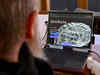
Revolutionizing communication: Brain implants show promise in restoring speech for patients with neural disorders
Breakthrough implants unlock speech for ALS and Paraplegic patients. Stanford University's Innovative Brain Implant Study and the University of California San Francisco's Strides in Neural Communication have paved the way for enhanced independence and social interaction.
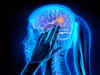
The race to link our brains to computers is hotting up
Billions of dollars are flowing into a clutch of specialist companies hunting for treatments for some of the most debilitating ailments.
Key facts about Neuralink, Elon Musk's cyborg gamble
Neuralink's technology would mainly work through an implant called the "Link" -- a device about the size of five stacked coins that would be placed inside the human brain through invasive surgery.
Elon Musk's Neuralink says cleared for human test of brain implants
Neuralink said clearance from the US Food and Drug Administration (FDA) for its first in-human clinical study is "an important first step" for its technology, which is intended to let brains interface directly with computers.

Revolutionary brain implants enable paralyzed man to regain ability to walk
A groundbreaking achievement has occurred as a paralyzed individual, Gert-Jan Oskam from the Netherlands, has experienced the ability to walk again through the power of his thoughts, thanks to electronic brain implants.

Elon Musk's brain implant company in search of human trials partner
Neuralink has been developing brain implants since 2016 it hopes will eventually be a cure for intractable conditions such as paralysis and blindness.

Elon Musk wants YOU to build a brain-computer interface
Musk, a founder of both the electric car company Tesla Motors and the private space-exploration firm SpaceX, has become an outspoken doomsayer about the threat artificial intelligence might one day pose to the human race.
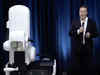
Musk's Neuralink venture unveils pig with computer chip in brain
Neuralink aims to implant wireless brain-computer interfaces that include thousands of electrodes in the most complex human organ to help cure neurological conditions like Alzheimer's, dementia and spinal cord injuries.
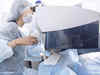
This brain implant can work wonders for the visually-impaired, may help distinguish between light & dark
The device Orion helps people who lost their vision to injury or disease.

A chip in brain to help paraplegics move prosthetics
For a prosthetic patient, the neural implant is connected to a computer that decodes the brain signals so the artificial limb can move.

People are getting Matrix-style brain implants to boost their memory
These implants could someday be used to restore memory to people suffering from traumatic brain injury or other neurological problems.
Load More

