
BRAIN CHIP ADVANTAGES

China's robot makers have mastered the moves. Now comes the race for brains
The shift is fuelling an investment boom in embodied AI, a field focused on software that allows robots to understand their surroundings, learn unfamiliar tasks and adapt without having to be programmed for every job.

SoftBank junk bond sale raises stakes for CEO Son's all-in AI bet
SoftBank's promise to pay its highest-ever yields in a record $11 billion junk-bond offering highlights the pressure on CEO Masayoshi Son to secure returns on his all-in bet on AI amid concerns about possible overheating in the market.

ET Startup Awards 2026: Deeptech wants government to step up as the first customer
At the discussion, titled ‘Building the Hard Stuff in India’, moderated by Accel partner Prashanth Prakash, founders from the space, semiconductor and healthtech sectors discussed the challenges of building capital-intensive technologies, developing domestic capabilities and taking complex products to market.

Next-gen silicon wave could see India leapfrog global chip giants: Experts
India’s late entry into semiconductor manufacturing could help it catch up as the industry enters a new phase driven by silicon photonics, post-quantum security and neuromorphic computing. Experts said these emerging technologies could help new entrants leapfrog established players, as AI infrastructure faces pressures on computing power, bandwidth, energy consumption and security.

Europe’s youngest self-made billionaire: James Dacombe dropped out of high school at 17 to build his startup and now his wealth has crossed the $1 billion mark at 25
At just 25, James Dacombe has catapulted himself into billionaire territory with his AI chip enterprise, Olix, which he founded a mere two years ago. His wealth has crossed $1 billion mark and he is considered Europe’s youngest self-made billionaire. He's also a stakeholder in his previous brain-monitoring venture, CoMind.

China begins to snap at America's heels in a tightening tech race
China’s latest supercomputer ranking has renewed debate over global technology leadership, but current evidence shows the United States still leads in advanced artificial intelligence systems. The new LineShine system, which topped the latest TOP500 list, is built on domestically designed Chinese chips, but it ranks lower on AI-focused benchmarks where US systems remain ahead.
- Go To Page 1

Beijing-backed brain chip firm says it is 3 years behind Elon Musk's Neuralink
NeuCyber's frontier Beinao-2 product is an invasive BCI with flexible electrodes that fully implant into the brain, currently undergoing large-scale animal implantation. Neuralink's technical advantage is that its surgical robot can insert hundreds of electrodes into the brain in minutes for its invasive N1 chip.

Japan aims to sell eight times more chips in 2040 as in 2020
Japan is targeting a massive boost in its chip manufacturing sector. The nation aims for an eightfold increase in domestically produced microchip sales by 2040. This ambitious plan involves significant government investment in new factories. Japanese chipmaker Rapidus is building a plant for advanced chips. Taiwan's TSMC will also produce semiconductors in Japan.

China could see widespread use of brain-computer tech in 3-5 years, expert says
China could see brain-computer interface (BCI) technology move into practical public use within three to five years as products mature, a leading BCI expert said, as Beijing races to catch up with U.S. startups including Elon Musk's Neuralink.

Aravind Srinivas issues stark warning: Multi-billion data centers may soon become obsolete, Perplexity CEO flags 'biggest threat'
Perplexity CEO Aravind Srinivas has warned that massive data centers for which big tech giants Meta, Amazon, Microsoft and others are pouring billions of dollars may become irrelevant in the future. He mentioned that the biggest threat to traditional data centres is if AI “can be packed locally on a chip that's running on the device”. Perplexity CEO Aravind Srinivas highlighted a future where artificial intelligence (AI) shifts from centralised servers to local devices.

Kolkata born IITian invents an injectable chip that can treat diseases without surgery: Who is MIT researcher Deblina Sarkar
Kolkata born scientist Deblina Sarkar has developed a breakthrough brain treatment platform called Circulatronics. The technology uses microscopic electronic chips, or SWEDs, that travel through the bloodstream, cross the blood brain barrier, and implant themselves at diseased sites without surgery. Activated by an external laser, they successfully stimulated targeted neurons in mouse trials. Sarkar’s team at MIT aims to apply the system to conditions like Alzheimer’s, cancer and chronic pain, with human trials expected within three years.

Scientists develop computer-like memory from shiitake mushrooms that could replace silicon-based chips
Scientists have engineered a novel memory device using mushroom mycelium, the intricate white threads beneath fungi. These bio-based circuits, dubbed 'mushristors,' exhibit memory capabilities by adapting to electrical currents, mimicking brain-like functions. This breakthrough offers a promising, eco-friendly alternative to silicon chips, potentially leading to more energy-efficient computing in the future.

The healthiest fruits you are not eating — dietitian’s top pick revealed
Fruits are nutrient-dense foods flourished with vitamins, minerals, antioxidants, and fiber, aiding overall health. Top fruits such as blueberries, strawberries, raspberries, avocados, watermelon, and peaches provide science-backed advantages ranging from antioxidant protection to enhanced immunity, heart health, and cognitive function. Accompanying a variety of fruits in daily meals nourishes the body, aids weight management, and makes the meals flavorful.

Neuralink device helps monkey see something that’s not there
Neuralink's Blindsight implant enabled a monkey to perceive nonexistent objects by stimulating vision-related brain areas, as revealed by engineer Joseph O'Doherty. The company aims to help blind people see and eventually achieve superhuman vision. Neuralink is also working on implants for paralyzed individuals, allowing them to communicate with computers, with five people already receiving implants.

Are brain chips the path to human evolution or a step toward control?
Elon Musk's Neuralink has sparked debate about brain chips (BCs). While they hold medical promise, their potential to enhance abilities raises concerns about privacy, control, and the very essence of being human. As BCs advance, will they become indispensable, blurring the lines between progress and dystopia?

U.S. creates high-tech global supply chains to blunt risks tied to China
The core elements of the plan include getting foreign companies to invest in chipmaking in the United States and finding other countries to set up factories to finish the work.

AI drinks energy up - quantum computing will work to our advantage, but the tech is new
The rapid advancement of computing over the past 70 years, driven by increases in computing power, has revolutionized various sectors such as banking, communication, healthcare, product design, and warfare. Semiconductor chip technology plays a crucial role in this growth. However, the future of computing faces a significant challenge due to the increasing power needs of AI innovations like ChatGPT. This surge in demand poses a threat to the sustainability of global energy resources and the environment.

India has potential for exporting a lot of EVs: Warren Harris, Tata Technologies
"I am really bullish on India given the way digital has pervaded the society here. Given that it is a price-sensitive market, India has the potential to establish something that it relevant to the world, so there can be a lot of exports from India, particularly in the EV space, given their competitive advantage."

Chip wars: How 'chiplets' are emerging as a core part of China's tech strategy
Industry experts say chiplet technology has become even more important to China since the U.S. barred it from accessing advanced machines and materials needed to make today's most cutting edge chips, and now largely underpins the country's plans for self-reliance in semiconductor manufacturing.
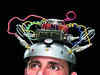
Brain-Computer uneasy alliance
It's a space attracting much attention, involving invasive brain-computer interfaces (BCI) attached to the brain or electrodes placed on the scalp. Rehabilitation areas impacted positively encompass mobility assistance, neuro-prosthetic limbs, precision surgeries, and speech and hearing enablement.

A tech industry pioneer sees a way for the US to lead in advanced chips
Tech pioneer Sutherland argues that instead of looking for more expensive technology, the US must focus on training a generation of young engineers who can think outside the box.

For automakers, the EV surge is everything everywhere all at once
Tesla already earns roughly seven times as much per vehicle as Toyota. Its 17% pretax margins are roughly double the average for the rest of the industry. And after a rough 2022 for the company's shares, the stock has gained 28% to open up 2023.

India is providing a 20-year roadmap to chip companies, says Ashwini Vaishnaw
The government will not just provide infrastructure support but also fast-track clearances, with approvals coming in for a large chip manufacturing facility in the next "four to six" months, Ashwini Vaishnaw told ET.

Post SoftBank buyout, we are placing our chips on future: Simon Segars
We are putting together a technology portfolio that people can build their chips which are so energy efficient that they can run for years and yet be connectivity.
Golf - Thomas finds 59 reasons for three-shot lead at Waialae
GOLF-PGA:Golf - Thomas finds 59 reasons for three-shot lead at Waialae
UPDATE 1-Golf-Thomas finds 59 reasons for three-shot lead at Waialae
GOLF-PGA/ (UPDATE 1):UPDATE 1-Golf-Thomas finds 59 reasons for three-shot lead at Waialae

Carbon nanotubes seems to be best bet as IBM proposing first carbon computer by 2020
By then silicon chips will reach a feature size of four nanometers and industry will want a replacement technology.
Intel Q4 profit plunges 90 pc
Intel Corp.'s fourth-quarter profit plunged 90 percent but still met Wall Street's subdued expectations Thursday, as the chip maker was hurt by wheezing PC sales that have crimped demand for microprocessors. Sales slumped 23 percent, in line with Intel's previous guidance.
Intel details first stand-alone graphics chip
Intel Corp has disclosed the most details yet of a next-generation microchip architecture that will first take direct aim at the graphics semiconductor market and could pack some 100 electronic brains into a single microprocessor.
Load More

