
BLACK HOLE RESEARCH

In 2023, 1,800 volunteers classified simulated neutrino events from Antarctic ice data; 128,000 assessments helped scientists compare human judgments with AI
In a remarkable feat in 2023, the IceCube Neutrino Observatory harnessed the efforts of 1,800 participants to classify simulated neutrino events with impressive accuracy. This initiative underscored the indispensable role of citizen science in intricate scientific endeavors, as the volunteers classified over 128,000 events, achieving results on par with advanced deep neural networks.
Is Sabrina Pasterski the next Einstein? Meet the physicist who built her own aircraft at 12 and is exploring Einstein’s biggest unanswered questions about gravity
Sabrina Pasterski's journey from building an aircraft as a teenager to studying Einstein's biggest unanswered questions has drawn attention to her work in physics. The MIT graduate now researches quantum gravity, black holes and space-time at Canada's Perimeter Institute. She also leads an $8 million research initiative exploring how gravity and quantum mechanics could fit together.
Largescale cyberattacks test the limits of insurance cover
While businesses rush to enhance their cyber insurance cover, the incidents have triggered a debate over whether existing policies adequately cover emerging cyber risks. The biggest question insurers are policyholders seem to be confronting is: who pays when a vulnerability exposes thousands of organisations to the same threat?
Interstellar comet 3I/ATLAS has a surprising chemical link to icy worlds beyond Neptune? What James Webb discovered and what it reveals about planets around other stars
A comet from another star system is giving scientists a fresh look at how planets form. NASA’s James Webb Space Telescope found chemical similarities between interstellar comet 3I/ATLAS and some icy objects beyond Neptune. The finding may help researchers understand whether distant planetary systems share similar building blocks, even when they formed around different stars.
Indian patch patrol sets out to resolve PHP risk
Two critical security flaws in PHP, the programming language underpinning an estimated 70% of the internet, have triggered emergency cybersecurity measures in India. Banks are auditing applications and preparing backups, while the government is patching official websites. Razorpay has deployed AI-led vulnerability detection and warned merchants about potential breaches.

Arjun Prajapati: This 5-year-old with Vadodara roots started reading before turning 2, has an IQ of 141, ranks in the top 2% and has read 3,000 books
Five-year-old Arjun Prajapati has drawn attention for his exceptional learning abilities, scoring 141 on an IQ test and qualifying for Mensa International and Intertel at the age of four. He reportedly began reading independently at 18 months and has explored more than 3,000 books on subjects including mathematics, astronomy, genetics and human physiology. Despite his advanced interests, his parents want him to learn at his own pace and enjoy his childhood without academic pressure.

He is first Indian scientist to win Oskar Klein Medal: Meet physicist Ashoke Sen, who found new ways to understand black holes, gravity & string theory
Indian physicist Ashoke Sen has become the first Indian to receive the 2026 Oskar Klein Medal for his pioneering contributions to string theory, black-hole physics and quantum gravity. The ICTS-TIFR professor delivered the memorial lecture, ‘Gravity from strings and strings from gravity’, in Stockholm on October 22. Sen has also received the Padma Shri, Padma Bhushan and the 2012 Breakthrough Prize in Fundamental Physics.
PHP security vulnerabilities: Indian govt rushes to fix official websites, banks audit apps
Banks have begun auditing applications for weaknesses, taking some non-critical services offline and preparing backups to divert traffic if parts of their websites or mobile applications experience downtime, according to executives.
Fastest known star races around Milky Way’s black hole at 15,900 miles per second; how its orbit could reveal cosmic secrets
The discovery of the star S301 near Sagittarius A* offers unique insights into black hole properties. S301 travels at remarkable speeds, completing an orbit in just 8.7 years. Its proximity allows researchers to study the effects of black hole spin on space-time. Astronomers anticipate further observations to enhance understanding of these phenomena. S301 serves as a natural laboratory for examining gravity under extreme conditions around supermassive black holes.
Giant 'heat storms' are scorching the Earth. This is the story of the biggest one on record
Heat storms have increased dramatically, causing severe global consequences including excess deaths and environmental catastrophes. Recent heat storms have been identified as a new classification, representing larger and more persistent heat events. The intensity of these heat storms has worsened due to climate change and greenhouse gas emissions. Associated weather patterns have significantly disrupted ecosystems and agriculture worldwide.
Astronomers detect mysterious signal in empty space twice, leaving James Webb Telescope scientists searching for answers
Astronomers using the James Webb Space Telescope noticed a bright signal in the Hubble Ultra Deep Field. This mysterious signal was seen twice, yet no visible source was detected during earlier observations. Various theories about the origin of the signal have been considered, but none have been confirmed. Further observations are needed to understand the nature of this unusual phenomenon.

‘Russian diesel won’t help US, it shows double standards on India’: Margarita M. Balmaceda, Professor at Seton Hall University
Margarita M. Balmaceda examines the hidden dynamics of energy dependency between Russia and other nations. The discussion highlights Russia's role as a 'Trojan horse' in energy politics. Recent diesel deals between the US and Russia may have limited short-term benefits for American consumers. Additionally, the implications of these deals could adversely impact Ukraine's situation. This situation reflects a troubling double standard in international energy relations.
What are 'ghost particles' that pass through your body every second? Francis Halzen wins Physics Nobel for catching them in South Pole ice
Francis Halzen has been awarded the 2026 Nobel Prize in Physics for his groundbreaking work on the IceCube Neutrino Observatory. This observatory detects high-energy neutrinos originating from extreme cosmic events beyond our Solar System. The project has provided vital information about cosmic rays and potential sources of these ghost particles. Halzen's research has led to several significant discoveries since the observatory's completion in 2010.

AI can pick the fund, but can it stop you from selling at the bottom?
The software can analyse thousands of funds and figure out that the three or four you are researching have almost identical portfolios. However, the investor’s real challenge lies in the middle stage. Choosing a good fund is the easy part because there are actually a lot of good funds and distinguishing the good from the bad is not black magic, nor is it guesswork.
NASA’s $1.2 billion plan to explore the history and evolution of the universe enters Phase B
NASA has progressed the PRIMA mission into Phase B, concentrating on the creation of essential technologies and designs. This innovative space telescope is intended to perform detailed far-infrared surveys of our universe. With a scheduled launch in 2033, it aims to operate for five years, allowing scientists to delve into the formation and evolution of diverse cosmic phenomena.
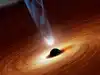
The strange 2% rule: Why black holes suddenly switch on their powerful jets
A new study reveals black holes become predictable when feeding. Jets emerge when accretion rates fall to two percent of the Eddington limit. This threshold applies to black holes of vastly different sizes. Tidal disruption events offer a rare view of this process. Future observations may predict when these powerful jets will appear.

55 million light-years away, scientists spot something unusual: A strange galactic collision may have left this spiral galaxy with a centre that spins sideways
The Hubble telescope captured images of spiral galaxy NGC 4698. Its central bulge is tilted at an unusual angle to the main disk. Astronomers suggest this structure resulted from past gas absorption or a minor merger. This galaxy is located in the Virgo Cluster, approximately 55 million light-years away. Further observations will clarify NGC 4698's complex cosmic history.
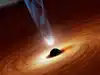
A black hole destroys a star, then fires off a powerful jet years later — scientists discover the 'burping' feeding pattern behind these cosmic outbursts
Scientists have found a new trend in black hole feeding patterns. Powerful jets emerge during two distinct phases of a black hole's feeding process. These jets appear during heavy feeding and later when feeding slows significantly. This discovery helps explain jet appearances long after a star's destruction. The findings may aid astronomers in planning future radio observations more efficiently.
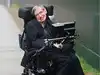
Quote of the day by Stephen Hawking:"We are just an advanced breed of monkeys on a minor planet of a very average star."
Stephen Hawking posited that humanity's uniqueness lies in our capacity to grasp the universe's complexities. He believed this insight evolved from our humble beginnings and evolutionary journey. His groundbreaking research on black holes and cosmology revolutionized theoretical physics, while his iconic book, A Brief History of Time, simplified intricate scientific concepts for a global audience. Overcoming physical limitations, Hawking became a celebrated science communicator and cultural symbol.
Load More


