
BLACK HOLE BOUNDARY
Is Sabrina Pasterski the next Einstein? Meet the physicist who built her own aircraft at 12 and is exploring Einstein’s biggest unanswered questions about gravity
Sabrina Pasterski's journey from building an aircraft as a teenager to studying Einstein's biggest unanswered questions has drawn attention to her work in physics. The MIT graduate now researches quantum gravity, black holes and space-time at Canada's Perimeter Institute. She also leads an $8 million research initiative exploring how gravity and quantum mechanics could fit together.
A black hole destroys a star, then fires off a powerful jet years later — scientists discover the 'burping' feeding pattern behind these cosmic outbursts
Scientists have found a new trend in black hole feeding patterns. Powerful jets emerge during two distinct phases of a black hole's feeding process. These jets appear during heavy feeding and later when feeding slows significantly. This discovery helps explain jet appearances long after a star's destruction. The findings may aid astronomers in planning future radio observations more efficiently.

Quote of the day by Jennifer Lawrence: 'The internet to me is kind of like a black hole, and I never really go on it' - What Hollywood Oscar-winning actress' words teach us about digital detox
Jennifer Lawrence has officially entered the world of Instagram, making her feelings known about technology and the vastness of the online space. In her first post, she emphasised the need for positivity and stated that she would exit if negativity emerged. This move talks about the significance of digital well-being and personal boundaries. Read on!
Science says black holes don’t actually suck everything around them: Here’s what really happens
Black Holes are called black because light cannot escape from inside their event horizons. Astronomers nevertheless detect black holes indirectly through their effects on nearby matter, gravitational lensing, stellar orbits and radiation from accretion disks.
NASA looked back at the first Black Hole ever photographed, and found a big surprise
The universe keeps reshaping our cosmic perspective. When the Event Horizon Telescope captured the historic first image of a black hole in 2019, humanity stared at a fiery orange ring. That glowing donut of hot gas became an instant scientific monument. However, static pictures rarely tell the whole story of deep space. New Chandra X-ray observations reveal moving jet activity inside the heart of the galaxy Messier 87, proving this monster is far from quiet.

Researchers finally found evidence from a region in Space where nothing is supposed to escape
A historic black hole discovery is changing how scientists explore the universe. Researchers have detected possible fingerprints of a black hole event horizon through gravitational waves, giving humanity a closer look at the mysterious edge where gravity dominates everything. The breakthrough from black hole merger data opens a new chapter in space science, testing Einstein’s theory and helping experts understand spacetime, cosmic collisions, and the hidden physics of the universe.
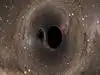
For the first time, researchers reached a region near a Black Hole once beyond study
A powerful black hole collision has opened a new chapter in space science. Scientists used the loudest gravitational wave signal ever detected to study the hidden region near an event horizon. This breakthrough helps researchers understand extreme gravity, black hole mergers, spacetime, and Einstein’s theory of relativity. The discovery gives astronomers a rare chance to explore how black holes behave at the edge of the unknown.
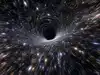
What Would You Actually See If You Fell Toward a Black Hole?
Falling into a black hole presents a bizarre cosmic experience. From afar, an observer sees time slow and light redshift. Inside, spacetime warps, creating visual distortions and potentially spaghettification depending on the black hole's size. While the event horizon is crossed without fanfare, the singularity's physics remains a mystery, pushing the boundaries of our understanding.
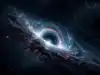
What Happens to Time at the Edge of a Black Hole?
Near black holes, gravity warps spacetime, causing time to slow dramatically for distant observers. An object falling in appears to freeze at the event horizon, its light redshifted. However, a falling observer experiences time normally, crossing the horizon in their own finite time. This phenomenon, gravitational time dilation, is supported by astronomical observations.
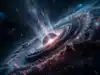
How Giant Stars May Create the Supermassive Black Holes at the Centres of Galaxies
Astronomers are rethinking how supermassive black holes formed so quickly after the Big Bang. New evidence suggests that either giant stars or direct gas-cloud collapse produced larger initial black holes. These larger seeds grew faster, solving a cosmic timing puzzle. Telescopes such as the James Webb Space Telescope are providing crucial data; this research reshapes our understanding of the early universe's colossal objects.

10 Best Stephen Hawking Books: Illuminating Insights into Cosmology and the Universe's Mysteries
Explore some of the best Stephen Hawking books that delve deep into the mysteries of the universe. "A Brief History of Time'' captivates with its exploration of black holes, the Big Bang, and the nature of time itself. "The Universe in a Nutshell" provides a visually stunning journey through modern physics, including string theory. Co-authored with Leonard Mlodinow, "The Grand Design'' challenges conventional ideas about the universe's creation. These books not only simplify complex theories but also inspire profound contemplation on existence and the cosmos.
What will happen if astronaut falls into black hole? NASA finds answer. Watch video of simulation it made
NASA simulated two different scenarios, one where a camera, a stand-in for a daring astronaut misses the event horizon and slingshots back out. In another scenario, an astronaut crosses the boundary.
NASA’s new simulation video unravels mysteries linked to blackhole. See what is it?
NASA releases a new simulation video enabling its viewers to experience what it feels to get close to a blackhole and beyond. The users can either be at the center of the video and actually experience traveling close to a blackhole or simply watch it as an enlightening video.
Now you can experience falling in a black hole, NASA unveils virtual simulator; Here's how to use the cosmic tool
NASA has unveiled a groundbreaking visualisation that allows the public to take a virtual journey near a black hole, combining scientific theory with digital imagery. Developed by astrophysicist Jeremy Schnittman, this tool offers two scenarios: one where a camera approaches the event horizon and is slingshot back out, and another where it crosses the event horizon, illustrating the intense gravitational pull of black holes.
First-ever direct evidence of spinning Black Hole found
Astronomers have captured direct evidence of a spinning black hole for the first time, providing new insights into these cosmic phenomena. The discovery was made using a global network of radio telescopes and confirmed that the supermassive black hole at the heart of the Messier 87 galaxy is spinning. Observations of an 11-year cycle within the jet of material surrounding the black hole indicated a phenomenon called precession. This finding has significant implications for understanding the history and nature of black holes. The research was published in the journal Nature.
Discovery of closest Black Holes to Earth unveiled in Hyades Star Cluster — Details
A recently published paper in the journal "Monthly Notices of the Royal Astronomical Society" has revealed the presence of a cluster of black holes residing within the Hyades star cluster which is closest to the Earth.
With a doodle, Google pays tribute to Stephen Hawking, the famous physicist who taught us to embrace imperfections
The Google video is a reminder of Hawking's strength to fight all odds in life.
View: Why this year's Physics Nobel comes as a pleasant surprise
Alfred Nobel's will clearly indicates that these prizes are meant for those inventions that are of the ‘greatest practical benefit to mankind’. Possibly as a result of this phrasing, the physics Nobel has been awarded mostly for experimental work and practical inventions.
Team led by Indian scientists finds X-ray signature of boundary around black holes
Although black holes does not have a surface, it is confined within an invisible boundary, called an event horizon, from within which nothing, not even light, can escape, the scientists said.
Load More


