
BIPARTISAN SUPPORT FOR AI
US midterm results may give India trade leverage, but tariff and AI risks remain
The US midterm results may give India some room in trade negotiations by increasing congressional scrutiny of executive action, but they do not remove tariff risks or alter Washington's strategic priorities. AI investment is also unlikely to retreat, with capital expected to remain within the US rather than shift significantly to emerging markets.
Voters demanded economic relief. Trump and Democrats face tough choices on how to deliver
Voters have conveyed a clear message about the necessity of addressing inflation and economic issues. Both parties are preparing to respond to the economic challenges revealed by recent election outcomes. The Federal Reserve may gain independence to curtail inflation as Trump and Democrats grapple for control. Efforts to secure Social Security funding are urgent as benefits become jeopardized after 2032.

From Iran to trade, how the US midterms impact the rest of the world
US Democrats' recent midterm election victories could influence global relations, especially concerning Iran and Israel. The potential for a peace deal with Iran seems viable as US voters oppose prolonged conflicts. In Ukraine, Democrats may propose increased financial and military aid, which could face delays. Additionally, Asian countries may reconsider investment pledges to avoid tariffs in light of these outcomes.
American companies brace for a pivot as US midterm elections get underway
US midterms: Corporate America is anticipating a potential shifts in Washington's power dynamics. Analysts predict that a strong Democratic showing could benefit sectors such as clean energy, housing and healthcare. Conversely, AI and defence stocks may face increased scrutiny from lawmakers.

Anthropic tells California governor courts should be able to block risky AI models
Anthropic itself has faced government restrictions on its AI systems. The Trump administration in June ordered Anthropic to immediately restrict foreign access to its cyber-capable Mythos 5 and Fable 5 models, citing national security concerns. The US Commerce Department later lifted the order.

Who is funding the 2026 US midterms? Top 15 donors pour over $1.5 billion into the elections
US midterm elections 2026: The 2026 US midterm elections are projected to be the most expensive in history, driven by significant donations. Major contributors include Elon Musk and various Republican and Democratic nonprofit organizations. Contributions have focused on supporting candidates, super PACs, and interest groups related to technology and cryptocurrency. Concerns have arisen over the rise of 'dark money' organizations that do not disclose donor identities.
- Go To Page 1
Trump may decide India's fate over 100% tariff risk in 10 days
US President Donald Trump is expected to decide within the next 10 days whether to invoke Russia sanctions provisions that could expose India and other buyers of Russian oil and gas to tariffs of up to 100%. US Ambassador Sergio Gor said the decision rests with Trump, while expressing confidence that India and the US would conclude a trade deal.

US moves to stop AI data centres from pushing up household electricity bills. Here's what could change for Americans
As artificial intelligence expands across the US, data centres are consuming more electricity, raising concerns about rising power bills for ordinary Americans. The US House of Representatives is expected to vote on bipartisan legislation, the Ratepayer Protection Act, which aims to make large data centres pay their share of the costs of electricity infrastructure. Here's what the proposed bill could change and what it could mean for household electricity bills.

OpenAI and Anthropic fear a major AI crisis in the next 6 to 12 months. Here’s what they’re preparing for
OpenAI and Anthropic are preparing for a potential AI crisis, with industry insiders warning that a major incident could occur within six to 12 months. Possible scenarios include cyberattacks disrupting essential services, raising fears of public backlash, accountability and stricter AI regulations in the United States.

A reckoning on social media addiction came late for many kids. Will AI safety be different?
When Meta agreed to changes to its social media platforms and enhanced safeguards in an $18 billion settlement, it made progress by "getting at what we've known for years" about the dangers, said Kristin Bride, a parent advocate who has fought for social media reform since the death of her teenage son. "How are we going to get at what we don't know is coming?"
Trump says top tech firms have signed accord to 'self-police' AI development
President Donald Trump and executives from top tech companies met to discuss the development of artificial intelligence. They signed a voluntary accord aimed at addressing public concerns about the technology's risks. Executives agree to implement robust internal controls and audits to ensure safety and accountability. Trump emphasized the importance of AI's growth and the U.S. leading in this global competition.
Trump says top tech firms have signed accord to 'self-police' AI development
Trump and House Speaker Mike Johnson met with leading executives from top tech firms that are spending hundreds of billions of dollars to build out AI infrastructure, including data centres in communities across the country, which have sparked grassroots, bipartisan opposition.

OpenAI is working with Anthropic, Google on AI safety: Bloomberg News
Global concerns about AI's existential risks have risen after the heads of America's leading AI labs came together in a show of unity over the weekend to call for a pause in the development of the technology.

Tech CEOs call for AI regulation. Trump and Congress are not rushing to act
President Donald Trump is leading the opposition to recent calls by tech leaders seeking greater government oversight, including Anthropic's Dario Amodei, OpenAI's Sam Altman and xAI's Elon Musk.
California bans addictive social media features for under-16s, AI chatbot toys
California Governor Gavin Newsom signed technology laws protecting children online. These measures restrict social media features designed for compulsive use. A four-year ban on AI companion chatbots in toys was also enacted. The legislation strengthens online privacy and parental controls for minors. These laws aim to ensure technology supports children's well-being.

US lawmakers call for new AI rules after Anthropic researchers' safety warnings
The reaction was broader than after previous statements from OpenAI and Anthropic staffers about safety concerns, drawing input from lawmakers who do not often forcefully engage in debates over how to govern AI.

Will OpenAI, Anthropic decide humanity’s fate? Inside the growing push to regulate AI
AI researchers are sounding the alarm over existential threats posed by the swift advancement of artificial intelligence. They warn that the ongoing AI race might lead to humanity's demise within ten years.
Texas Republicans turn against data centers, putting Big Tech on notice
In a surprising turn, Republican leaders are now standing against data center projects due to increasing public resistance. This development coincides with a surge of support for Democrats from local communities opposing such facilities. Texas Governor Greg Abbott has advocated for tighter restrictions on data centers. Big tech firms are investing heavily to combat unfavorable public opinion, highlighting the emerging political divide among Republicans.

US lawmaker introduces bill to require AI companies to report critical incidents
The draft legislation, introduced by U.S. Representative Nathaniel Moran of Texas, would mandate AI companies to report to the U.S. Commerce Department within seven days of discovering dangerous activity, with Commerce required to notify Congress within 48 hours of the most serious incidents.
US lawmaker proposes bill to require AI companies to report critical incidents
A new bill, the AI Incident Reporting Act, is set to be introduced by Congressman Nathaniel Moran, mandating AI developers to report dangerous capabilities and security breaches to the Commerce Department. This move aims to address growing national security and public safety risks posed by advanced AI models. The legislation requires swift notification to Congress for serious incidents, seeking to establish a proactive safety framework for frontier AI technologies.

US lawmakers take on AI chatbots, fraud in new bills
American lawmakers are collaborating on new artificial intelligence legislation. The proposals aim to enhance safety for children and workers while supporting innovation. One bill seeks parental controls for AI chatbots. Another bill promotes AI research and cybersecurity training for employees. These bipartisan efforts address growing concerns about AI's impact.
Top Republican on China panel objects to resumption of Nvidia H20 chip shipments
John Moolenaar, leading US oversight on China relations, raised concerns about Nvidia resuming sales of H20-equivalent GPUs to China. In a letter to Commerce Secretary Howard Lutnick, he warned such sales could boost China’s tech capabilities, potentially undermining US efforts to restrict advanced semiconductor access for national security reasons.
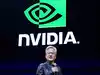
US senators warn Nvidia CEO about upcoming China trip
The letter from Republican Senator Jim Banks and Democratic Senator Elizabeth Warren asked Huang to also abstain from meeting with representatives of companies that are working with the People's Republic of China's military or intelligence bodies. The senators also asked Huang to refrain from meeting with entities named on the U.S. restricted export list.
US lawmakers unveil Bipartisan 'No Adversarial AI Act' to block Chinese-Controlled AI from federal systems
US lawmakers have introduced the bipartisan No Adversarial AI Act to block federal agencies from using AI developed by foreign adversaries like China. The bill aims to protect national security, prevent data leaks, and ensure only trusted AI technologies are used in government systems.

President Trump signs Take It Down Act, addressing nonconsensual deepfakes. What is it?
President Trump signed the Take It Down Act, a bipartisan law targeting non-consensual intimate imagery and deepfakes. Introduced by Senators Cruz and Klobuchar, it mandates swift removal of such content by websites within 48 hours. While supported by many, including Melania Trump and Meta, critics raise concerns about potential censorship and First Amendment infringements due to the law's broad language.

US lawmaker targets Nvidia chip smuggling to China with new bill
A US lawmaker plans to propose legislation requiring location tracking of AI chips like Nvidia’s to curb smuggling into China, violating export controls. The bill seeks to mandate chip verification and restrict unauthorised use, with bipartisan backing. Experts say the technology exists but is not yet widely implemented.

US Congressman Ro Khanna highlights 'bipartisan' India-US ties, points to 'regional challenges' due to China
Prime Minister Modi will meet President Trump to strengthen US-India relations. The focus will be on military cooperation, challenges from China's regional expansion, and collaboration in scientific research and renewable energy. PM Modi is currently in France, where he will attend the AI Action Summit and visit Marseille to honor historical ties and review significant partnerships with global leaders.
Did President Joe Biden really wear a Trump 2024 hat, or is the video fake?
An image has been going viral that shows, US President Joe Biden wearing a Trump 2024 campaign hat and voters are confused about whether the image is fake or real.
US House forms AI task force as legislative push stalls
The U.S. House forms a bipartisan task force to explore AI legislation and propose regulatory standards. Leading AI companies join a safe AI deployment consortium. The task force addresses AI governance, transparency, accountability, public trust, job displacement, election interference, secure AI research funding, ethical AI development, AI education, and international AI regulations.
Load More

