
BIOTECHNOLOGY IN SPACE EXPLORATION
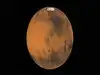
Genetically modified microbe could help make Mars habitable, researchers say
At Pioneer Labs, a biotech startup based in Emeryville, Calif., researchers have engineered a bacterial strain that can grow under simulated Martian conditions. The microorganism, dubbed sPL.001, can degrade toxic compounds in Martian soil analogs and produce bioplastics that could be used in future space settlements.

When Employees Are Held Accountable for AI-Generated Decisions
Organizations are rushing to embed AI into core decisions, but frontline workers are left to explain outputs they neither created nor fully understand. In a multi-year field study spanning banking, recruitment, and biotechnology, researchers found that employees rarely relay AI results verbatim; they mask, amplify, or complement them depending on how the AI has been implemented. These hidden practices shape whether AI is trusted, resisted, or quietly subverted—and where professional risk lands. To minimize risk while using AI, companies need to help workers develop new interpretive roles, maintain critical scrutiny, and turn explainability from a compliance exercise into a source of learning and better decisions across the enterprise.
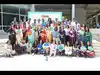
Reframe 2026 by Breakthrough puts gender norms at the centre of India’s workforce conversation
Breakthrough’s three-day summit in New Delhi brought together 70+ speakers and 400+ attendees to explore what it will take for women to enter, stay and thrive in the workforce

'Don't teach children everything...': Actor R Madhavan shares an IIT-Delhi scholar's research on academic achievement and learning
R Madhavan shared a video highlighting Sugata Mitra’s 1999 “hole in the wall” experiment, which explored children’s ability to learn independently. Children taught themselves computer skills and later studied genetics using internet resources, scoring 30% without formal instruction. With encouragement from an adult who did not know genetics, their scores rose to 50%. The experiment suggests children may learn more when given access to resources, freedom to explore and supportive encouragement instead of immediate answers.

India, Germany explore cooperation in quantum communication, space and deep-tech innovation
India and Germany on Tuesday explored expanded cooperation in quantum communication, photonics, quantum satellite communication, space technologies and other frontier areas of deep-tech innovation, during a high-level meeting between visiting German delegation and Union Minister of State (Independent Charge) for Science & Technology Jitendra Singh.

Why did four mice join Chinese astronauts on the latest space station mission? Meet China’s newest space travelers - Two males and two females chosen from 300 after rigorous 60-day training
China's Tiangong space station is hosting an unprecedented experiment. Four mice are on board with three astronauts to study microgravity's impact on mammalian behavior and stress. This mission is a significant step for China's space life-science research. The astronauts will conduct numerous experiments during their six-month stay, contributing to future long-duration space travel.
- Go To Page 1

Bad weather pushes astronaut Shubhanshu Shukla's Axiom-4 launch date by a day, lift-off now set for June 11
ISRO announced the Axiom-4 mission, featuring Indian Gaganyatri Shubhanshu Shukla, has been postponed to June 11, 2025, at 5:30 pm IST due to adverse weather. This mission marks India's return to human spaceflight after four decades, with Shukla following Rakesh Sharma.

Indian astronaut Shubhanshu Shukla to grow crops, study water bears at space station next month
Indian astronaut Shubhanshu Shukla will conduct seven experiments at the International Space Station during the Axiom Mission-4. These experiments, in collaboration with NASA, ESA, and others, will study water bears' resilience, microgravity's impact on algae and muscle regeneration, and the feasibility of growing crops in space.

India, US call for more collaboration in space exploration; launch new innovation bridge
Prime Minister Modi and President Trump have hailed 2025 as a landmark year for US-India civil space cooperation. They discussed enhancing collaboration in space exploration, including human spaceflight and technology sharing. They also announced initiatives such as the launch of Indian astronaut to ISS and the US-India TRUST initiative to foster critical technology applications.

Nostradamus' 2025 prediction: Will the 'earth shake' and 'rivers overflow'?
The 16th-century French astrologer Nostradamus has captivated imaginations with his cryptic quatrains, often linked to significant historical events. As 2025 approaches, his prophecies offer insights into themes ranging from natural disasters to technological breakthroughs and geopolitical shifts. While interpretations vary, this article explores Nostradamus’s predictions for 2025, including warnings about climate catastrophes, global conflicts, and advancements in space and medicine, offering a compelling look at how his visions align with modern challenges.
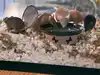
Can humans reproduce in Space? Groundbreaking research says mice could hold the key to human survival
Scientists are exploring the possibilities of human reproduction in space to prepare for future interplanetary colonisation. Japanese researchers are examining freeze-dried mouse sperm stored on the International Space Station (ISS) to assess its viability in space. This research, led by Professor Teruhiko Wakayama, aims to safeguard Earth’s genetic diversity against potential catastrophes and establish a foundation for extraterrestrial reproduction. With advancements in space missions like NASA’s Artemis programme and SpaceX’s Mars ambitions, understanding reproduction in space could become critical for sustaining life beyond Earth.

By 2035, India will set up its own space station and set foot on moon by 2040: Union Minister Jitendra Singh
India is poised to become a leader in space and technology with plans to establish the Bharat Antariksha Station by 2035 and land an astronaut on the Moon by 2040. Minister Jitendra Singh shared details on the Gaganyaan human spaceflight mission, the Deep Sea Mission, and India’s growing achievements in biotechnology and satellite launches. These initiatives, backed by Prime Minister Modi, highlight India’s commitment to becoming a global scientific powerhouse by 2047.

'A 4-day drive from Delhi to Mars’: Why this cold desert in India is becoming a training ground for Martian experiments
Ladakh’s harsh and unique environment is now central to India’s analogue space research, replicating conditions on Mars and the Moon. With ISRO launching its first analogue mission in Leh and collaborations involving academic institutions, Ladakh could emerge as a global player in space simulation. Its high-altitude deserts, low oxygen levels, and extreme temperatures are driving cutting-edge research into astrobiology, habitat design, and sustainability technologies, with potential applications both in space exploration and on Earth.

Adjacencies to the resume: Hiring leaders for emerging sectors
When steering an organization in an emerging sector without precedents, leaders should define key success factors per role. Skills may come from adjacent industries, drawing examples from telecom, edtech, and healthcare sectors, illustrating adaptable skills for renewable energy, e-commerce, space tech, and EV industries.

US-India Business Council launches AI task force with Meta as co-chair
The US-India Business Council's AI Task Force, co-chaired by Meta, drives cross-sector collaboration in AI. Infosys, UPS, BNY Mellon join the AI Board Advisory Committee to enhance innovation and collaboration, emphasizing responsible AI rollout and strategic industry alignment.

Goal to make India hub for scientific learning: PM Modi
Narendra Modi envisions India as a key scientific learning center by embracing global practices. The 'A Decade of Science' report, released by Jitendra Singh, highlights achievements in diverse fields, emphasizing the importance of education reforms and innovative tech solutions.

India, US NSAs explore ICET meet before Lok Sabha polls
India and the US plan to review the Initiative for Critical and Emerging Technology (iCET). The Quad members are considering an in-person summit in India after the US elections. Discussions have focused on collaborations in various fields to boost industry competitiveness.
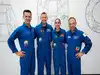
NASA’s SpaceX Crew-7 Mission: Who are among the crew members and what will they do? Here’s everything you may want to know about the upcoming launch
By conducting a multitude of scientific experiments and technology demonstrations, NASA’s SpaceX Crew-7 mission aims to contribute to the advancement of space exploration and bring tangible benefits to humanity back on Earth.
Chinese astronauts set up new lab on space station
Astronauts entered the new lab module of China's space station for the first time

China ramps up tech commitment in 5-year plan, eyes 7% boost in R&D spend
The ramp-up highlights the country's commitment to advancing in the tech sector, as the country increasingly clashes with the United States and other countries over technology policy.
India to launch deep sea mission in 3-4 months: MoES official
The ministry's secretary, M Rajeevan, said required approvals are being obtained for the "futuristic and game-changing" mission, and it is likely to be launched in the next 3-4 months.

Delhi govt kicks off India's biggest land monetisation exercise, eyeing revenue of Rs 6,000 cr
The Delhi State Industrial and Infrastructure Development Corporation (DSIIDC) has prepared the monetisation plan and is expected to invite tenders in a month, officials in the know said. It expects these industrial areas to create more than 2 million jobs in the first phase.

India, Israeli air force officials explore new opportunities for cooperation
Top officials of the Indian and Israeli air force met for a review of the ongoing procurement process while also exploring new opportunities for cooperation.

In tribute to APJ Abdul Kalam, NASA names new species after him
"The name of the bacterium is Solibacillus kalamii, the species name is after Dr Abdul Kalam and genus name is Solibacillus which is a spore forming bacteria," said a senior research scientist.

Rs 37,435 crore earmarked for scientific ministries: FM Arun Jaitley
Last year, the Departments of Space and Atomic Energy, Ministry of Science and Technology and Ministry of Earth Sciences were together earmarked Rs 32,030.72 crore.

PM Narendra Modi meets Indian diamond traders from Antwerp
While stating that diamonds remain India's historic link with Belgium, Prime Minister Narendra Modi today invited the key European nation's business leaders.

Parkash Singh Badal okays scheme to inculcate scientific spirit among students
Punjab government will organise excursion of schools students to Pushpa Gujral Science City in Kapurthala at its own expense.

Research & innovation environment changing in India: Harsh Vardhan
Speaking at 'Bharat Ko Maano' session at the Youth Pravasi Bharatiya Divas in Gandhinagar, Minister for Science and Technology also propagated the Make in India concept.
Russia seeks enhanced economic ties with India
Russia has said the public-private partnership model would hold the key to success in enhancing engagement between the two countries.
Load More

