
BEIJING TECHNOLOGY FIRMS

AI crash, China's Taiwan ambitions, Iran war fallout, Trump's ‘angry bird’ presidency and more: The Economist's 10 predictions for 2027 explained
Predictions for 2027: The Economist's 2027 predictions point to a turbulent year, with Donald Trump expected to become more confrontational, tensions over Taiwan raising concerns, and AI companies facing crash risks. The report also highlights the Iran war's fallout, France's political future, rising government debt, weight-loss drugs and the changing space industry.
Who is Guo Wengui? Why the jailed Chinese billionaire's $67.5 million NYC apartment sold for just $8 million - Inside the alleged Chinese spy's controversial rise and fall
Guo Wengui's Manhattan apartment, originally purchased for $67.5 million, has sold for only $8 million. This sale represents one of the largest financial losses in New York City real estate history. Guo, a controversial figure, has faced significant legal troubles resulting in a 30-year prison sentence. The buyer, Diesel Peltz, is the son of billionaire Nelson Peltz and sees potential in the property.

SpaceX's Cursor weighs phasing out Chinese AI models over geopolitical risk, CNBC reports
SpaceX's AI platform Cursor is reportedly considering discontinuing Chinese AI models because of geopolitical risks. This decision follows a congressional investigation into the integration of such models into American technology. Companies like Airbnb and DoorDash have also been part of the inquiry regarding their AI practices. Meanwhile, the Trump administration is contemplating requiring public disclosures about the use of Chinese AI models.

TSMC tightens China AI chip curbs as new US rules close manufacturing loophole, sources say
The move could close one of the last remaining routes for Chinese companies to produce powerful AI processors, complicating Beijing's efforts to develop domestic alternatives to chips designed by Nvidia and manufactured by TSMC.

TSMC tightens China AI chip curbs as new US rules close manufacturing loophole, sources say
TSMC has imposed stricter limits on Chinese chip designers, suspending advanced manufacturing orders and restricting processes. Chinese firms must now rely on older technology as they lose access to advanced chips. These measures follow new US regulations that eliminated existing compliance routes for Chinese companies. Affected orders will face increased scrutiny concerning their operational locations and ownership structures.
Hong Kong stocks sink nearly 2% to four-month low as US-China trade tensions escalate
Asian markets came under pressure as renewed US-China trade and technology tensions rattled investor sentiment. Hong Kong's Hang Seng Index plunged to a four-month low, while mainland Chinese equities extended losses amid concerns over tighter US semiconductor restrictions and further Fed rate hikes.
- Go To Page 1
Nvidia succession worries weigh on shares despite strong outlook
Nvidia's stronger-than-expected revenue outlook has offered temporary relief to the AI trade, but uncertainty over its leadership transition and regulatory scrutiny continue to weigh on investor sentiment. The upcoming Anthropic IPO is also emerging as a key test of appetite for AI stocks.
China's Xi calls for tearing down trade, investment barriers at APEC summit
Chinese President Xi Jinping called for removing trade barriers to improve the Asia-Pacific economy during the APEC CEO Summit. He emphasized the importance of free trade and international cooperation, including advancements in artificial intelligence. Additionally, Xi's remarks came ahead of a trilateral summit with leaders from Russia and the United States in Shenzhen. These diplomatic engagements are taking place amid ongoing tensions over trade and technology supply chains.
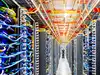
Trump's China data center curb advances despite Amazon, Google, Meta lobbying
Reuters reported in August that the Federal Communications Commission was seeking to ban US imports of new models of Chinese optical transceivers, which allow data to travel over fiber-optic cables at the speed of light within data centers, over national security concerns.
US AI chip curbs threaten Southeast Asia data centre boom, shares slump
The new rule restricts shipments of advanced chips to the region's major economies such as Malaysia, Singapore and Thailand, which some Chinese companies have used to access computing power to train AI models. It also imposes new requirements on overseas data centres that supply "significant volumes of computing power" to firms headquartered in China.
US tightens AI chip curbs on China, targets overseas data centres ahead of Trump-Xi talks
The Trump administration has tightened export controls to restrict China's access to advanced AI chips, targeting overseas data centres in countries including Singapore, Thailand and Malaysia. The move comes amid scrutiny over alleged chip diversion through third-party facilities and ahead of Donald Trump's meeting with Chinese President Xi Jinping.
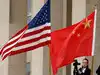
China has 'decisively surpassed' US in most manufacturing sectors, House Committee report warns
Titled "Rigging the Game: How China Undermined Western Manufacturing and Helped Hollow Out American Industry," the report examines China's influence across biomanufacturing, aerospace, semiconductors and machine tools. According to TET, it argues that Beijing directs capital, technology and market share towards strategic industries while using government-backed investments, regulations and state-owned buyers to weaken foreign competitors.
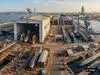
India's underwater firepower to get Rs 1 lakh crore boost soon as German and French submarine project await final clearence
India is moving closer to a major expansion of its submarine fleet, with two pending acquisition proposals worth an estimated Rs 1.11 lakh crore awaiting final government approval. The projects include an approximately Rs 75,000-crore German submarine programme and a Rs 36,000-crore proposal for three additional Scorpene-class submarines, Defence Secretary Rajesh Kumar Singh said.

Inside China's drive to build an AI-native generation
Rare access granted to Reuters at the $39,000-a-year Beijing New Talent Academy offered a window into China's push to weave AI into education. The school, which serves more than 2,000 students, has built its own digital innovation curriculum covering AI, robotics and programming, and developed a classroom AI model incorporating features from popular Chinese systems.

Jensen Huang exit and US scrutiny imperil $3 billion in Chinese AI projects reliant on Nvidia
The projects, stretching from China's wealthy coastal technology hubs to remote western provinces, reveal the scale of continuing demand for Nvidia hardware even as Washington seeks to curb Beijing's access to the technology powering the global artificial-intelligence boom.

Billions in Nvidia chips, empty offices: The mystery of Megaspeed and Alice Huang, the alleged Chinese spy linked to Jensen Huang
Alice Huang, under investigation for espionage, is said to have associations with Megaspeed, a rising player in Nvidia chip dealings. The company has drawn attention for its financial growth over the past year, yet its ties to Chinese tech giants like Alibaba have raised red flags. Due to uncertain details about her links to Megaspeed, Huang has faced travel constraints, spotlighting serious issues regarding export laws and technology transfers.

Spies and silicon chips: Alice Huang's tangled corporate web
Alice Huang sits in the middle of a corporate web, connected to myriad shell companies, investment houses and major Chinese technology firms. Corporate records filed in Hong Kong list her as a director of Nanjing Lingxing Technology, which operates the popular T3 ride hailing platform in China.

Jensen Huang exit and US scrutiny imperil $3 billion in Chinese AI projects reliant on Nvidia
Despite US export restrictions impacting Nvidia, demand for its processors in China persists across numerous projects. Reports indicate over $3 billion in Chinese projects are centered around Nvidia's restricted chips. While the company claims it is excluded from the market, investigations reveal ongoing procurement from various sectors.

Hormones guiding history? Even with Jensen Huang resigning from Nvidia, the chip landscape will be irrevocably changed
The article argues that allegations of Chinese espionage involving former Nvidia CEO Jensen Huang need to be examined for their wider political, military and technological implications. It questions whether the Trump administration will fully investigate the matter, given Huang’s reported political connections and the risk of straining ties with China, which controls over 80% of processed rare earth supplies.

China is the biggest loser from Jensen Huang’s downfall
Jensen Huang’s reported links to a suspected Chinese spy and concerns over Nvidia chips reaching Chinese companies could trigger tighter US export controls, putting further pressure on China’s AI industry.

China's Singles Day shopping festival puts AI selling power to the test
If you are looking for evidence of how enthusiastically China is adopting AI, look no further than the country's premier month-long Singles Day shopping festival.
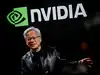
Nvidia scandal rocks tech world Web Summit
Allegations of Chinese spying on Nvidia dominated a top world tech conference on Tuesday, with some executives seeing potential opportunities in the turmoil at the US artificial intelligence chip giant. Chinese technology executives attending the summit highlighted emerging alternatives to Nvidia.

'We work for America, not the global order': Marco Rubio asserts US' 1st stance on China and trilateral engagement
Addressing the core friction between Washington and Beijing, Secretary Rubio emphasised that major power competition is an inevitable reality driven by competing national systems, on the sidelines of the G7 Foreign Ministers Meeting held in Paris, France.
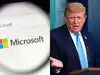
Microsoft presses Trump to scuttle expected ban on Chinese data center technology: Report
Microsoft is lobbying against a proposed ban on Chinese optical transceivers essential for artificial intelligence data centers. The Trump administration's decision could significantly impact the speed of data center development in the US. Industry groups have expressed concerns about potential supply chain disruptions and competitive disadvantages. The Federal Communications Commission is currently deliberating on the implications of this ban.

Microsoft presses President Trump to scuttle expected ban on Chinese data centre technology
Reuters reported in August that the Trump administration wants to ban US imports of new models of Chinese optical transceivers, which allow data to travel over fiber-optic cables at the speed of light within data centers. The concern is that they could be used by Beijing to steal data, install malware or disrupt service at US data centers.
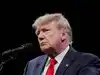
Kiss your wife goodnight: Donald Trump says he threatened to arrest unnamed top AI executive
US President Donald Trump revealed he issued a serious threat to an unnamed AI executive regarding security issues. After receiving intelligence about risk from an AI firm, he intervened directly with a warning of imminent arrest. Trump emphasized the need for American technological dominance in the face of competition from China and expressed a willingness to work with Democrats on regulations.

China’s high-tech ports push raises global trade ambitions, sparks security concerns
China is expanding its global maritime influence through AI-powered automated ports, smart shipping technologies and digital infrastructure. While these innovations promise greater efficiency, Western governments fear growing dependence on Chinese systems could create security vulnerabilities, geopolitical leverage and risks to critical global supply chains and international trade networks

Moonshot AI rents Nvidia’s top AI chips in China, documents show
Documents indicate that Moonshot AI possibly accessed advanced Nvidia chips despite US export restrictions and related investigations. The servers were reportedly rented from Super Micro Computer Inc. with significant financial backing from Lingmeixin Technology Co.
Spy targeting Nvidia CEO was alleged China intelligence service recruit: NYT
The Chinese businesswoman, with whom Nvidia's CEO Jensen Huang had alleged ties, was recruited as a spy for China’s Ministry of State Security, The New York Times reported, citing a memo circulated among policymakers in the Trump administration.
Load More

