
BEIJING INVESTMENT REGULATIONS

Drugmakers tap China AI app boom to reach doctors as crackdown upends marketing
As scrutiny intensifies, Chinese pharmaceutical companies are shifting gears toward digital marketing initiatives. Traditional face-to-face communications are waning, prompting the industry to embrace AI-fueled applications for connecting with healthcare providers. These tools facilitate compliant relationships, sparking partnerships among health-tech firms to disseminate clinical information through digital channels. This marks a pivotal change in marketing dynamics within the pharmaceutical landscape.

UPI sees Diwali boom; AI cracks Captcha
Diwali spending fuelled a surge in UPI transactions, with both payment volumes and values rising. This and more in today’s ETtech Top 5.

Tech investor SoftBank Group logs $7 bn quarterly net loss
The company's profits routinely see wild fluctuations linked to the volatile value of global technology stocks and its changing portfolio of investments and acquisitions.
Tech firms claw back some losses after midterms rout, eyes on Nvidia
Tech firms rose Monday to claw back some of last week's painful losses fuelled by AI regulation worries, though traders were keeping a wary eye on a probe into Nvidia boss Jensen Huang amid claims of an affair with a Chinese spy. The executive, Alice Huang -- also known as Huang Le, and no relation to 63-year-old Taiwanese-born Jensen -- developed a close relationship with the Nvidia boss, the Times said.
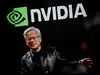
Nvidia opens probe into CEO Jensen Huang over affair with woman suspected of spying for China
Nvidia has launched an independent probe into CEO Jensen Huang over an affair with a Chinese executive suspected by US intelligence of working for Beijing. Huang admitted to being unfaithful and apologised. The investigation will examine potential national security risks and possible exposure of company secrets.
China blocks SoftBank's $5.4 billion acquisition of ABB Robotics
China has blocked SoftBank’s $5.4 billion acquisition of ABB’s robotics business, disrupting the Japanese group’s AI-powered robotics expansion. The intervention highlights Beijing’s growing scrutiny of cross-border deals involving strategically important technologies.
- Go To Page 1
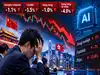
China, Hong Kong stocks fall as US tech rout sparks AI bubble fears
Chinese and Hong Kong stocks took a hit as American tech shares slumped overnight, fueling worries about the durability of the artificial intelligence surge. This uncertainty cast a shadow over investor confidence across Asia. Nevertheless, the Chinese mainland market saw some recovery driven by bargain hunters supported by government measures, though analysts caution that tech stocks in China are still at risk from global market changes.

From Iran to trade, how the US midterms impact the rest of the world
US Democrats' recent midterm election victories could influence global relations, especially concerning Iran and Israel. The potential for a peace deal with Iran seems viable as US voters oppose prolonged conflicts. In Ukraine, Democrats may propose increased financial and military aid, which could face delays. Additionally, Asian countries may reconsider investment pledges to avoid tariffs in light of these outcomes.

Chinese chipmaker YMTC puts IPO on hold as weaker markets weigh, sources say
That process has been put on hold due to "various factors", according to an internal note YMTC sent to its staff and seen by Reuters. It did not elaborate on the factors. The delay, which two of the people said could last several months, has not been reported previously.

China to expand global access to yuan assets, promote Hong Kong as offshore hub
China plans to expand global access to yuan-denominated assets and strengthen Hong Kong's role as an offshore yuan hub. Meanwhile, regulators flagged risks from surging AI investments, warning of rising leverage, higher borrowing costs and financial instability.
China's new export curbs draw a line around its AI crown jewels
The draft rules, released on October 16, distinguish between foreign customers using Chinese AI services and foreign companies obtaining the models, data or expertise needed to operate or reproduce them independently.

China's new export curbs draw a line around its AI crown jewels
The draft rules, released on October 16, distinguish between foreign customers using Chinese AI services and foreign companies obtaining the models, data or expertise needed to operate or reproduce them independently.

In China, the AI bubble has already burst
While global tech stocks teeter, in China they have already crashed as lofty valuations collapse under worries about AI demand and curbs on Chinese exports.
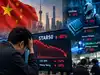
In China, the AI bubble has already burst
China's technology sector is experiencing a dramatic decline, leading to extensive financial repercussions for numerous industries. The STAR50 index's sharp drop has shaken investor confidence considerably. Retail investors who initially placed faith in state-supported tech companies are now grappling with significant losses. In response to this turbulence, many are gravitating towards safer investment options, as experts caution that these selloffs may impede future fundraising for tech enterprises.
Analysis: In China, the AI bubble has already burst
Chinese tech stocks, especially in AI and semiconductors, have experienced a dramatic decline in value recently. The mainland STAR50 index of these sectors has dropped by 40% in four months, leading to substantial market losses. Investors are increasingly turning to safer assets as frustration mounts over fading government support for tech investments. Additionally, many investors are hesitant to purchase shares until valuations reach more acceptable levels.
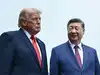
As the US and China form AI blocs, countries are increasingly torn between them
Countries like Kazakhstan are trying to balance between U.S. and China AI initiatives for technological gains. Indonesia has expressed interest in benefiting from both AI superpowers while pursuing its technological agenda. Some nations are exploring relationships with both blocs without fully committing to either. China's investments in developing countries are increasing, enhancing their own AI capabilities.
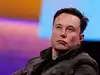
Global Market: Why China could complicate Musk’s Tesla-SpaceX merger plans
Elon Musk’s proposed Tesla–SpaceX merger faces potential regulatory hurdles in the US and China over national security, sensitive data and technology sharing. Tesla’s dependence on Chinese manufacturing and revenue complicates efforts to integrate SpaceX’s defence operations.

Global Market: China's Lingjun Investment attracts $300 million from overseas investors
China’s Lingjun Investment has raised at least $300 million from US and Southeast Asian investors as it resumes overseas fundraising. Strong fund returns and AI-driven interest support growth, while regulatory scrutiny makes governance and risk management critical.
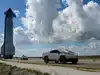
How a merged SpaceX-Tesla might navigate its China problem
Elon Musk's proposed merger of Tesla and SpaceX may encounter significant hurdles from US and Chinese regulators. Concerns about national security and technology sharing complicate the merger discussions. Tesla's reliance on China for manufacturing and SpaceX's defense contracts raise potential risks. Analysts suggest creating a firewall around Tesla's Chinese operations as a possible solution. However, divesting Tesla's China operations could prove challenging, considering the deep integration with local suppliers.

Europe’s last penicillin plant faces a bitter fight against China’s cheaper drugs
The Sandoz penicillin plant in Kundl, Austria, is under threat from cheaper Chinese antibiotic production. European healthcare programs benefit from the lower prices, which could jeopardize self-sufficiency. China's share of the EU penicillins market has rapidly increased in recent years. European policymakers are becoming increasingly concerned about reliance on China for essential medicines. The current dynamics highlight the significant trade challenges facing European pharmaceutical manufacturers.

Global Market: China and Hong Kong shares weaken as stable growth eases stimulus bets
China and Hong Kong stocks weakened on Tuesday, joining a broader retreat in the region, after Beijing kept key lending rates unchanged and stronger GDP data dampened

China's trade barriers biggest hurdle in bilateral ties, says Nirmala Sitharaman; flags $100 billion deficit
Nirmala Sitharaman has identified China's constraints on Indian exports as a crucial hindrance to trade advancement. The finance minister reported a staggering trade deficit exceeding $100 billion with China this year, even with improved diplomatic relations. She noted that non-tariff barriers obstruct Indian products, especially generic medicines, from entering China.

Big Tech wants to build more AI data centres across America. Why local communities are pushing back against the costs of the AI revolution
Cities across America are imposing temporary moratoriums on data centre approvals to address infrastructural concerns. Local governments are assessing the impacts of these projects on electricity, water, and public resources. Environmental lawsuits are complicating the development of AI infrastructure further, leading to delays and increased costs. Some technology companies are moving towards greater transparency with local communities for better engagement.
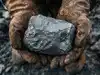
The US has $100 billion to break China’s rare-earth grip. Can it stop Beijing from holding America’s supply chain hostage?
The United States can access up to $100 billion in loans for developing its critical minerals industry. Despite this financial resource, it struggles to compete with China’s established dominance in rare earth processing and supply chains. Creating processing facilities and refining capacity requires long-term investments and strategic planning, which many private investors find unattractive.
Global Market: China tightens scrutiny of humanoid robot IPOs amid valuation concerns
China is slowing humanoid-robot IPO plans as regulators scrutinise soaring valuations and government-linked revenue, pushing companies to demonstrate sustainable commercial demand and stronger evidence of real-world deployment.

China slows humanoid robot IPO rush as hype outruns reality
Chinese regulators are putting the brakes on a rush of humanoid-robot companies seeking listings, people familiar with the matter said, as they scrutinise whether soaring valuations and revenue tied to state-backed projects reflect commercial demand.
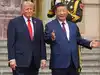
A Xi-Trump summit deal can throw US carmakers under the China bus
US automakers, suppliers and dealers are lobbying the Trump administration to keep Chinese carmakers out of the American market ahead of President Donald Trump’s meeting with Chinese President Xi Jinping. The push follows Trump’s comments that he would allow Chinese companies to build vehicles in the US if they employed American workers, raising concerns that Washington could offer market access as part of a broader trade deal. Industry groups representing major automakers have urged the administration to bar Chinese firms from selling, importing or manufacturing vehicles in the US, citing economic and national security risks.

Global Market: China broadens Yuan FX clearing in push for global currency use
China has expanded yuan foreign-exchange clearing to include the Singapore dollar, New Zealand dollar and Thai baht, as Beijing seeks to widen the currency’s international use. The move strengthens clearing infrastructure for yuan transactions, supports greater liquidity and facilitates direct trading and settlement with a broader range of global partners.
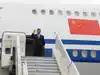
Xi Jinping India visit: What we know about China’s Boeing 747-8I used for transporting its top leader
China’s top leadership travels on a little-known network of military-managed aircraft that includes a specially converted Boeing 747-8I used for President Xi Jinping’s long-haul international journeys. The aircraft, registered B-2479 and carrying Air China branding, is believed to have VIP facilities but has never been officially photographed inside. China also operates several other aircraft for senior leaders and state officials.
Load More

