
BEHAVIOUR TRAITS

SS Rajamouli once called Prabhas ‘too lazy’ to get married; Baahubali star admitted, ‘I can’t meet people...’
Prabhas' marriage plans have often sparked curiosity, with SS Rajamouli once joking that the actor was “too lazy” to get married. The Baahubali star has also admitted that he is shy and finds it difficult to meet people. In an interview with India Today Digital, he said he understands fans' concern about his wedding.

PMS Talk: How Rs 50 lakh invested in Karma Capital in 2006 grew to Rs 5.4 crore
In this edition of ETMarkets PMS Talk, the co-founders discuss the lessons from their 20-year investment journey, how they identify companies before their growth stories become market favourites, and why valuation discipline, management quality and capital protection matter as much as returns. They also share their outlook on India's healthcare and auto component sectors, and explain what investors should evaluate beyond CAGR when choosing a PMS.
A study says your love of true crime podcasts may be about curiosity and not a negative personality
You unwind with a crime podcast, while someone else wonders how you can enjoy such disturbing stories. Interest in threatening subjects can reflect curiosity or a wish to understand danger. Murder mysteries may also appeal to our desire to solve unanswered questions.

Bengaluru techie, an IIT-Roorkee graduate, spots one inherited trait in his 8-month-old daughter that leaves him worried: ‘I hope she does not get my anxiety’
An IIT-Roorkee graduate working as a Bengaluru techie reflected on parental influence after a friend met his parents and recognised the roots of his anxiety. The father said he already sees his personality in his eight-month-old daughter, Rumi, from her determination to her sleeping position. However, he worries she may inherit his anxiety and hopes she develops the calmness of her mother, Piyusha, instead. His post sparked reflection on inherited traits and parenting.

In the shadow of WWII, Rockefeller poured millions into a Maine experiment that spent years asking a disturbing question: Could intelligence be bred?
In post-war America, the Rockefeller Foundation funded an ambitious experiment to study canine intelligence through selective breeding. More than 500 puppies from various breeds were observed to better understand their hereditary traits. Researchers found no evidence of a universally superior dog, as abilities varied significantly among individuals. Isolation experiments showed a critical socialisation period for puppies, illustrating the importance of early experiences on behaviour.

China's AI agents can lie and scheme - just like their US rivals
Reuters examined more than 200 documents, ranging from university research papers to technical reports, and identified at least 20 studies or evaluations since 2025 describing cases where agents displayed behaviour such as deception, replication and challenging boundaries that AI experts described as building blocks for a breakout and which could become harder for humans to control as systems advance.
- Go To Page 1

It takes just 100 milliseconds to judge a stranger’s face. Then why Princeton psychologists warn against trusting it too much
A Princeton study found that people can form impressions of a stranger’s trustworthiness, competence, attractiveness and other traits after seeing a face for just 100 milliseconds. Interestingly, looking at the same face for longer did not significantly change how closely those judgments matched those made without a time limit, although it often increased confidence. Later research found that trustworthiness impressions can emerge even faster.

A planet 63 light-years away is sending repeating radio bursts, and scientists can read them for the first time. Here’s what it reveals about the alien world
Astronomers detected repeating radio bursts from exoplanet Beta Pictoris b. These emissions originate from powerful auroras on the distant world. The signals provide a rare direct measurement of the planet's magnetic field. Scientists calculated Beta Pictoris b possesses a magnetic field stronger than Earth's. This discovery offers a new method to study exoplanet magnetic environments.

Kindness can be a manipulation tactic: 2 signs to look for when someone is using generosity to control your behaviour
Kindness is usually associated with trust, warmth and genuine care, but there can be situations where it serves another purpose. Certain seemingly thoughtful behaviours can subtly influence how people think, feel and respond without making the manipulation obvious. Understanding what to watch for can help reveal when a person's generosity or affection may not be as straightforward as it appears.

Built wealth by taking risks? Managing it requires a new mindset
People generally get rich because of concentration, relentless pursuit of one thing, and the confidence to go all-in when most others would hesitate. On the other hand, managing a large pool of existing wealth requires something diametrically opposite— diversification, instead of concentration.

Warren Buffett leaves behind an 'enemy list' for every investor
After six decades at the helm, Warren Buffett has stepped down as chairman of Berkshire Hathaway. Celebrated for his distinct investment philosophy, he underscored the importance of managing emotional impulses like fear and greed, which often plague the financial markets. He also warned about the perils of impulsiveness, herd mentality, and ego that can negatively impact investment choices.
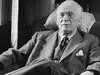
Life changing quote of the day by Carl Jung: "Psychological rule says that when an inner situation is not made conscious, it happens outside, as fate." Thought-provoking lesson on self-awareness, unconscious patterns, personal growth and why some events may feel destined
Carl Jung’s powerful quote explores the connection between the unconscious mind and the experiences people encounter in everyday life. The thought-provoking statement offers a deeper perspective on self-awareness, recurring patterns, personal growth and the hidden forces that can influence how people understand their lives and choices.

Psychology says men who don’t use face wash or moisturiser may value simplicity more than self-care rituals
For some men, beauty and grooming products may still carry cultural associations with femininity. Because of these learned ideas about masculinity, using multiple facial-care products can sometimes seem excessive, overly focused on appearance or at odds with the way they have come to define masculine identity.

Psychology says people who color just a few streaks of their hair aren't seeking a total transformation: What this behavior reveals?
Psychology says people who color just a few streaks of their hair aren't always seeking a total transformation. The choice can reflect controlled individuality, self-expression, autonomy and identity exploration. Small hair changes can allow people to test a new look while staying within social or workplace boundaries. The behavior can also provide a mood change and help people explore creativity without making a major change to their appearance.

Psychology says people who constantly adjust their office chair may be highly sensitive to their physical environment
Some people may simply be more sensitive to subtle changes in physical comfort and bodily sensations. This can be related to interoception and heightened body awareness, but the way someone sits or adjusts their chair alone cannot reliably reveal or diagnose anything about their personality or psychological state.

Psychology says people who feel tired all day may be carrying more than just sleep debt
Psychology and sleep science suggest that feeling tired during the day depends on more than simply counting the hours spent asleep. Factors such as sleep pressure, circadian rhythms, mental exhaustion, ongoing stress and how restorative the sleep was can all shape a person’s energy levels throughout the day.

Not introvert or extrovert: New ‘Otrovert’ personality type is about feeling like an outsider, but there's a catch
The emerging personality type known as 'otrovert' refers to individuals who navigate social settings with ease, yet maintain a distinct psychological separation from any group affiliation. Unlike traditional categories like introverts or extroverts, otroverts do not revolve around social energy levels. They often prioritize independent thoughts and unique interests over conformity, providing a fresh perspective on those who feel like outsiders in social circles.
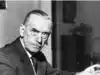
Quote of the day by Thomas Mann: ‘Tolerance becomes a crime when applied to evil.’ Life lessons on limits of tolerance and importance of standing up for what's right from German literary icon
Tolerance is a wonderful virtue to have. Tolerance ultimately enables people from various walks of life and socio-economic and cultural backgrounds to live in harmony and also helps us respect and acknowledge differences. However, author Thomas Mann once warned, like anything, excessive tolerance, especially when it shields harmful behaviours in others, can become a hindrance and should never be tolerated.

Psychology says people who can’t stand or sit straight and always lean on walls may be seeking more than just comfort
Social discomfort can influence posture and nonverbal behaviour, and research has identified differences in postural responses among people with social anxiety. However, leaning against a wall by itself is not evidence of anxiety.

Quote of the day by Sean Connery: 'I take the good with the bad. I can’t love people in slices.' Life lessons from motivational quote on radical acceptance, perfectionism, lasting loyalty, humility, true love and deep relationships
Quote of the day by Sean Connery explores a line from his portrayal of King Arthur in First Knight: “I take the good with the bad. I can’t love people in slices.” The saying focuses on accepting people as whole individuals. It also offers lessons about love, loyalty, perfectionism, humility, relationships and accepting human flaws without choosing only the parts that are convenient.

Psychopaths do not look like movie villains, they could be next to you: 5 subtle signs psychologists say can reveal psychopathic traits
Psychopaths do not always fit the frightening image often shown in films and may appear charming, confident or completely ordinary. Psychologists say psychopathic traits are better understood through repeated patterns of behaviour than appearance alone. From unusual facial expressions and a mismatch between words and emotions to superficial charm, lack of genuine guilt and manipulative behaviour, experts have identified several subtle signs worth noticing.

Are you born with your personality? Scientists have uncovered genetic clues to the traits that may shape who you become
New research reveals genetic variants influence personality traits like extraversion and conscientiousness. These genetic associations are spread across the genome and have small individual effects. Personality develops through a combination of genetics, family, and life experiences. The study found genetic links between personality and health outcomes like substance use. Understanding personality requires considering both biology and environmental influences.

Quote of the day by Carl Jung: “Everything that irritates us about others can lead us to an understanding of ourselves” A lesson on why, when someone strongly irritates you, pausing before judging them can help you understand what your reaction may reveal about your own insecurities, fears or unresolved emotions
Quote of the day by Carl Jung: Intense irritation towards others can offer valuable self-understanding. Carl Jung believed these strong reactions signal hidden fears and insecurities within us. Recognizing personal triggers helps distinguish genuine problems from emotional responses. This perspective encourages introspection rather than immediate blame in relationships. Understanding our own patterns leads to calmer and clearer interactions with people.

5 'bad habits' that highly intelligent people have: Psychology says these behaviours of sharp minds get misunderstood by society
Some habits can make a person appear distant, rude or difficult to others, but psychology suggests that appearances do not always tell the full story. Certain behaviours commonly associated with highly intelligent people may be misunderstood because they reflect the way some minds respond to their surroundings, conversations and everyday situations. These habits can sometimes create social friction, even when there is no intention to offend or ignore others.

Psychologists say people who love spending time alone aren't necessarily introverts, they may have a stronger sense of autonomy
People who genuinely enjoy spending time alone are not necessarily introverts, psychologists say. Research suggests that a preference for solitude may instead be linked to a strong sense of autonomy, where people feel comfortable making their own choices, following their interests and spending time without needing constant social approval. For some, alone time can also help them process emotions, think clearly and recover from overstimulation. The key difference is that chosen solitude can feel peaceful and fulfilling, while loneliness is usually linked to wanting connection but not having it.

Do you have food neophobia? You may be at higher risk of type 2 diabetes
The fear of new foods may lower the quality of a person's dietary intake.

Chatbots, automation greet candidates scouting for jobs
Companies are adopting new implicit hiring ways like using chatbots to conduct text interviews or taking the help of virtual reality to help them choose candidates.
Turns out, IQ is the key to success and not a great personality
People with higher IQ display 'significantly higher' levels of cooperation.

Why the third date matters, and how not to mess it up
There are a million tips for the first date, but it’s the third one that really matters.
Load More

