
BCE

Bengaluru couple lives in a mud house that runs on zero LPG, no modern fridge, and electricity bill of just 100. Their house is built of a material Indians have used to make homes for 5,000 years
A couple from Bengaluru, Reva and Ranjan Malik, reside in a 770-square-foot earthen home constructed without cement. Even with its conventional design, their house functions without an LPG cylinder or city water service, and monthly electricity costs stay under ₹100. Their home exemplifies how eco-friendly building materials and sustainable methods enable efficient resource use for living.
‘Moved’ by Greece's quest to reacquire ‘stolen sculptures of the Parthenon,’ a Chilean engineer brought a marble to officials; archaeologists find it belonged to an even older temple razed by Persians
Enrico Tosti-Croce unearthed a marble fragment believed to originate from the Parthenon, a relic from his father. With the ongoing debate surrounding the Parthenon Marbles affecting his decision, he chose to return the stone to Greece. Upon closer inspection, it was revealed to belong to the Hekatompedon instead. Tosti-Croce felt fulfilled to restore the marble, which was met with gratitude from the Greek Ministry of Culture in a heartfelt letter.

Zerodha co-founders Nithin and Nikhil Kamath’s mother, Revathi, goes viral for her ragi mudde. This yummy dish is made of a millet Indians have been eating for 4,000 years, has more calcium than milk
Revathi Kamath, mum to entrepreneurs Nithin and Nikhil Kamath, was recently thanked by a Facebook user from Bengaluru for treating her to a delicious meal consisting of ragi mudde. According to Sadhguru, ragi is a nutritional powerhouse that can lower blood sugar and also improve digestive system.
An Egyptian farmer found a mysterious pink stone in his field — it led archaeologists to two giant statues of Ramses II buried for centuries
Archaeologists found ancient statue fragments related to Ramses II in the Nile Delta region of Egypt. The discovery was triggered by farmer Khaled al-Shahat, who informed authorities about a unique pink stone. Excavations revealed monumental statues and inscriptions that allow further exploration of the site's history. This area previously linked to a temple dedicated to Isis provides new insights into Ramses II's building practices.

Karwa Chauth and Viewing History Through a Sieve
Sieves hold a remarkable place in the culinary history of various civilizations, showcasing their significance beyond mere food preparation. Despite modern kitchen innovations, these tools retain cultural importance, especially in rituals such as Karwa Chauth. This article explores the symbolism of sieves in the reign of Queen Elizabeth I, highlighting their associations with wisdom and purity, along with tracing their ancient roots in Egyptian food practices.

India, Canada sign commercial deals as both aim to seal trade pact by 2026
India and Canada have signed commercial agreements aimed at strengthening trade relations and enhancing economic cooperation. Minister of International Trade Maninder Sidhu emphasized collaboration opportunities in various sectors like artificial intelligence and digital innovation. The proposed Comprehensive Economic Partnership Agreement seeks to be concluded by the end of 2026. Current bilateral trade is projected to increase significantly following these agreements.

'India's dynamic market': Canada Trade Minister Sidhu highlights opportunities for Canadian firms
Canadian International Trade Minister Maninder Sidhu has highlighted opportunities for Canadian companies in India's "dynamic market", identifying artificial intelligence, quantum computing, aviation infrastructure, digital innovation, sustainability and smart mobility as key areas for bilateral cooperation.
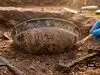
How 5 symbols on an ancient bowl found near Salem may change what we know about India's writing history
An archaeological excavation at Thelunganur near Salem, Tamil Nadu, has uncovered a 3,200-year-old bowl bearing five graffiti symbols, potentially offering clues to early writing systems. The site has also yielded iron weapons, a possible steel sword and skeletal remains, helping researchers study Iron Age life and the origins of Tamil-Brahmi.

Great civilisations: Built on trade, but wary of traders
China ranked people in four groups: scholar, farmer, artisan, merchant. Shi, nong, gong, shang. The idea is old, found in the Guanzi. The scholar governs. Farmer grows food. Artisan makes things. The merchant makes nothing. He buys low, sells high and keeps the difference. So, he goes to the bottom. The first Han emperor, Gaozu, took this seriously. Sima Qian tells us he banned merchants from wearing silk and from riding in carriages. He taxed them hard. Made them look poor, even if they were rich. Then the state ran short of money.

Socrates on human attraction and love: ‘Beauty is the bait which with delight allures man to...'
Why are we so easily drawn to beauty? Greek philosopher Socrates offers an interesting take on attraction, suggesting beauty can draw people together and play a role in relationships, love and the continuation of the human race.
Quote of the day by Socrates: 'Love is always poor, and anything but fair, as the many imagine; it is rough and has no shoes...' - Love lessons on desire and why humans want what they do not have by the ancient Greek philosopher
Socrates’ description of Love in Plato’s The Symposium turns a familiar idea of romance on its head. Instead of presenting Love as beautiful, gentle and complete, he describes it as poor, rough and homeless. The unusual image comes from a lesson Socrates says he learned from Diotima, who explains Love’s nature through the contrasting forces of Plenty and Poverty.
BRICS khichdi simmering in the global pot
BRICS is an alliance gaining traction among diverse nations with varying political ideologies and interests. Historical references to khichdi highlight its adaptability to numerous culinary preferences, paralleling BRICS' heterogeneous nature. However, internal disagreements, particularly between China and India, pose challenges to unity within this coalition. As additional nations express interest in joining, BRICS may expand its influence on global affairs.
Quote of the day by Aristotle: 'Think as the wise men think, but talk like the simple people do.' Life lessons from inspiring quote on clear connection, true intelligence, deep thinking and clarity
Quote of the day by Aristotle, “Think as the wise men think, but talk like the simple people do,” explains why deep thinking and simple communication matter. The saying connects intelligence with clarity and asks people to avoid difficult language when plain words can explain an idea. Aristotle’s words also highlight wisdom, logic, humility, human connection, useful communication, and the value of making complex thoughts easier for others to understand.

Poompuhar, a 2,000-year-old port city built by the Cholas was lost beneath the sea; new study finds ancient Tamils had trade links with Persian Gulf and Iran
Poompuhar: Underwater exploration at Poompuhar, a 2,000 year old Chola port city, has found over 200 potsherds and the first torpedo jars linked to Persian Gulf trade dating to the 3rd century BCE. Glazed Iranian pottery, Gangetic ware, and a 40m stone structure add proof of erosion and tsunamis burying this ancient Tamil trading hub.

In 30 BCE, Cleopatra died and vanished into a missing royal tomb. 2,056 years later, archaeologists still debate its location despite searches across Egypt
Cleopatra VII, often described as the last queen of Egypt, remains one of ancient history’s most recognizable figures, but the location of her tomb continues to be a mystery. Cleopatra died in 30 B.C. after her defeat at the Battle of Actium alongside Mark Antony, with whom she was purportedly buried. Some researchers believe their tomb was in Alexandria, Cleopatra’s capital and a former cultural center of the Mediterranean world, before a tsunami swept through the city in 365 A.D. Others suspect a location in the Nile Delta, possibly a temple dedicated to Isis and Osiris, leaving the ancient burial mystery unresolved.
A 2011 study analyzing satellite imagery in Jordan identified more than 1,000 giant stone "wheels"; field archaeology later showed some were prehistoric burial or ritual structures
A remarkable archaeological find has surfaced in Jordan's deserts, with the discovery of thousands of ancient stone structures known as wheels. These formations, resembling stone circles with distinct spokes visible from an aerial viewpoint, are believed to be several millennia old, possibly older than the Great Pyramid itself. Intriguingly, some wheels contained burial cairns, indicating they may have served ritualistic or commemorative functions for ancient civilizations.
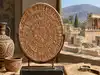
In 1908, Luigi Pernier found Crete’s Phaistos Disc with 241 stamped signs. 118 years later, its 45-symbol script remains undeciphered despite more than a century of study
The Phaistos Disc is one of the most enigmatic artefacts associated with the Minoan civilization. Discovered by Italian archaeologist Luigi Pernier at Phaistos on July 3, 1908, the 16-centimeter clay disc carries an unusual spiral inscription stamped on both sides. Its signs include images of people, birds, plants and ships, while archaeological research has identified similarities between some symbols and motifs found on Phaistian pottery and sealings. Studies have placed the disc around the beginning of the Neopalatial period, approximately 1750 BCE, although an earlier date cannot be ruled out.

Meta data center boosts Alberta appeal for hyperscalers, Capital Power says
Meta's plan to build a C$13 billion ($9 billion) data center in Alberta has boosted the Canadian province's appeal for hyperscalers, who see it as a vote of confidence in the government's AI strategy, the CEO of Capital Power said.

Quote of the Day by Plato: ‘Be kind, for everyone you meet is fighting a harder battle’ - Aristotle’s teacher on the ancient wisdom of giving people the benefit of the doubt
Quote of the Day: Strangers' impatience and friends' silence can feel personal without knowing their struggles. Plato's wisdom suggests kindness begins with humility and acknowledging unseen battles. People often face invisible difficulties which shape their outward behavior and reactions. This understanding encourages patience and resisting quick judgments in daily interactions. Kindness offers a simple yet profound way to connect with others more meaningfully.
Load More


