
BACTERIA VIRULENCE

Russia Plague Explained: What do we know so far about the institute lab worker’s death?
A laboratory worker at Russia’s Irkutsk Anti-Plague Research Institute died after developing an unidentified form of pneumonia, triggering precautionary quarantine measures and social media speculation. Authorities have said there is no evidence she died of plague or that anyone she contacted was infected, while tests have so far found no plague cases linked to her.

How Russia and the world are responding to possible case of pneumonic plague after lab worker dies
The World Health Organisation has confirmed that Russian authorities reported no cases of plague in Siberia. A laboratory worker at the Irkutsk Anti-Plague Research Institute recently died from pneumonia. Investigations revealed she had a typical acute respiratory viral infection and not pneumonic plague. Russian officials have completed contact tracing and concluded that the epidemiological situation remains stable. US officials are advising Russia to share more information about the ongoing investigation.

Russia pneumonic plague revives fears of COVID-19: What are chances of virulent disease becoming another worldwide pandemic? Read Experts' opinions
Russia pneumonic plague: The woman died at a hospital in Shelekhov, a town just outside the city of Irkutsk, and its mayor said the hospital was placed under quarantine. The top officials from Russia’s national public health watchdog traveled to the region on Friday.

Russia plague news: What to know about the disease and which countries have been affected as lab worker dies in Siberia?
At the Irkutsk Anti-Plague Research Institute, a tragic incident led to the death of a 28-year-old woman, suspected to have contracted pneumonic plague from live bacteria. This alarming development has prompted local health authorities to place nearly 200 individuals who interacted with her under medical observation. While the exact cause of death remains unconfirmed, hospitals are implementing necessary quarantine measures as investigations continue in light of fluctuating global plague cases.

In 2006, NASA grew Salmonella in space; the bacteria returned more virulent than genetically identical germs cultivated on Earth
In a striking discovery, researchers found that Salmonella bacteria cultivated in space exhibited a heightened level of aggression, proving to be three times more hazardous than those on Earth. The unique microgravity environment mimics human digestive processes, providing insights into how these pathogens evolve. This vital research is poised to enhance the development of effective vaccines and treatments for various infections, marking a leap forward in medical science.

Climate change could undermine progress in reducing waterborne diseases, study finds
Climate change is altering conditions for waterborne disease spread globally. Extreme weather events threaten progress made in reducing these deadly infections. Warmer temperatures promote bacterial growth, while droughts concentrate microbes in available water. Public health responses must adapt to pathogen-specific needs and changing environments. Investing in resilient infrastructure and surveillance is crucial for future control.
- Go To Page 1

Bacteria capable of storing memories and passing them to later generations, claims study
The discovery relates to a common chemical element bacterial cells can use to form and pass along these memories to their progeny the researchers said.
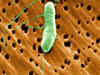
Rare flesh-eating bacteria vibrio vulnificus claims 3 lives in New York, know causes, symptoms and precautions
The latest occurrence of an individual's demise in Suffolk County has been connected to the aggressive vibrio vulnificus bacterium, signifying the third loss of life in the area in a brief duration.

Why are animal-to-human diseases on the rise?
A zoonosis (plural zoonoses) is a disease or infection transmitted from vertebrate animals to people, and vice versa. The pathogens involved can be bacteria, viruses or parasites.

Vaccines could affect how the coronavirus evolves - but that's no reason to skip your shot
In 2015, my collaborators and I published a scientific paper about a chicken virus you have likely never heard of. At the time, it got some media attention and has been cited by other scientists in the years since.

Global travellers more likely to pick up virulent strains of drug-resistant bacteria
Up to 80% of travellers returning from high-risk regions are colonised by MDR-GN bacteria.
Pathogens thrive on body's tissue-repair mechanism
New York, Sep 18 (IANS) Pathogens in the intestinal tract can manipulate mammalian cells to get the oxygen thed need and thereby cause harm to the intestinal lining, a study has found.

Indian scientists provide new insights for tuberculosis drug discovery
The TB bacterium is cunning and is able to survive according to the researchers due to its ability to sense and adapt to its host's environment.

E-cigarette vapour can kill lung cells: Scientist
E-cigarette vapour is not benign and inhaling high doses daily can kill lung cells, causing inflammatory diseases.

Plague has infected humans since Bronze Age: Study
The study showed by using ancient DNA that plague has been endemic in human populations for more than twice as long as previously thought.

Our mouth naturally fights dental cavities, new study reveals
Salivary mucins - key components of mucus found in mouth - actively protect our teeth from the cavity-causing bacterium, a new study has found.

E-cigarettes help deadly bacteria to thrive
Alexander said that one possible contribution to the increased virulence of MRSA was the rapid change in pH induced by e-cigarette vapour.
Load More

