BACTERIA POLLUTION
IIT Indore reveals severe pollution in drain leading into Kshipra river ahead of Simhastha 2028 pilgrimage
IIT Indore conducted an investigation revealing significant pollution levels in Nagdhaman Nala, which impacts Kshipra river water quality. The study identified a lack of oxygen and high levels of faecal bacteria in the water. Experts expressed concerns regarding the water's unfit status for recreational use ahead of Simhastha 2028. Madhya Pradesh government has not taken necessary actions to address these pollution levels despite growing environmental concerns.

Big tech, green groups in talks over data center guardrails
The "Responsible Data Center Collaborative" counts Google, Meta, Microsoft, Oracle, Amazon, Nvidia and Anthropic among its members, alongside environmental stalwarts the Natural Resources Defense Council (NRDC), World Wildlife Fund (WWF) and Sierra Club.

Scientists mixed just 3% volcanic ash into forest soil in a UC San Diego experiment; coleus plants grew roughly three times as much as plants in untreated soil
At UC San Diego, researchers have made an exciting discovery: adding volcanic ash to soil can significantly enhance plant growth. Their study revealed that incorporating just 3% basaltic ash not only boosts the biomass of coleus plants but also positively influences beneficial soil microbes. This finding showcases volcanic ash as a viable solution for rejuvenating poor agricultural soils, making it an effective tool for sustainable practices and carbon capture initiatives.

‘Life goes on’: Scientists describe how ‘zombie’ bacteria keep pumping DNA after death
Researchers at Aarhus University have made a fascinating discovery: even after bacteria die, they retain the ability to generate DNA. This phenomenon is powered by bacteriophages that rest inside the dead cells, awaiting activation. Using artificial DNA, scientists successfully demonstrated that the bacteria could indeed synthesize new genetic material and manipulate the DNA type produced. This knowledge paves the way for innovative uses in environmental biotechnology and bioenergy production.

Goodbye to sunrise for 4 months: Scientists are living on Arctic ice to discover what lives beneath it; you won't believe what they saw
A team of twelve ambitious researchers is embarking on a remarkable four-month journey into the depths of the Arctic, devoid of sunlight. Their mission focuses on studying resilient marine organisms that thrive in perpetual darkness and freezing temperatures. The Tara Polar Station, drifting alongside sea ice, provides them with a unique vantage point to explore the frigid ocean ecosystem.

In WWII, one Scottish island became a secret British bioweapon site, stayed toxic for 50 years. Now it is a popular tourist spot
A picturesque island in the Scottish Highlands, degenerated into a contaminated wasteland during the Second World War. The British government selected the Gruinard Island as testing grounds for biological weapons during the Second World War. In 1942, Wonston Churchill ordered scientists t Porton Down to develop a biological weapon for Britain using the bacterium Bacillus anthracis.

In 2019, New York restaurants turned discarded oyster shells into a unusual plan to rebuild the city’s historic reefs
In 2019, New York restaurants were taking part in an unusual environmental effort: recycling discarded oyster shells for use in rebuilding New York Harbor's historic oyster reefs. The Billion Oyster Project was collecting shells, raising baby oysters and working with students and volunteers as part of its goal to restore 1 billion oysters by 2035.

In 2017, Louisiana helped repair septic systems threatening the Amite River. 7 years later, 805 systems were fixed and 46.9 miles were removed from the bacteria list
Significant strides in water quality have stemmed from proactive home septic system inspections and educational initiatives. The Amite River now aligns with primary contact recreation standards, a remarkable turnaround following years of pollution. Capital RC&D has carried out extensive inspections and repairs, resulting in reduced bacteria levels and the delisting of a river segment. Regular inspections are set to uphold these improvements in the watershed for the future.

In 1995, North Dakota's Richland County SCD began monitoring Antelope Creek for bacteria. 10 years later, a watershed project tackled septic, livestock and farm sources to cut bacteria
Antelope Creek and Wild Rice River saw reduced bacteria levels after conservation efforts. Best management practices addressed animal feeding operations and failing septic systems. These efforts included septic repairs, well decommissioning, and livestock facilities. Water quality data showed declining bacteria trends over two decades. This indicates progress toward restoring recreational uses in the waterways.

In 2006, Virginia flagged the Rapidan River for failing swimming standards. 18 years later, DEQ removed it from the impaired list after BMPs restored water quality
Rapidan River water quality in Virginia has finally turned a corner after nearly two decades of concern. A section once flagged for failing swimming standards is now off the state’s impaired-waters list. Virginia DEQ made the change after monitoring showed bacteria levels had improved. Years of best management practices helped reduce pollution entering the river. The result offers a rare example of long-term water restoration working.

In 2002, Idaho listed the South Fork Palouse River as bacteria-impaired after livestock grazing. 14 years later, restoration helped remove it from the 2016 impaired list
The South Fork Palouse River restoration began with a problem Idaho could not ignore. In 2002, the river was listed as bacteria-impaired, with livestock grazing among the identified sources. Fourteen years later, its water showed a different picture. Restoration work helped reduce E. coli levels enough for Idaho to remove that impairment in 2016. The story shows how practical conservation can slowly change a troubled river.
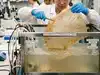
Living Supermaterial: What is the new plastic alternative scientists have created that is stronger, smarter, & fully biodegradable?
Living Supermaterial: Indian scientists have developed a novel bacteria-grown cellulose material that could serve as a sustainable alternative to conventional plastics. The material is strong, flexible, and fully biodegradable, making it suitable for a range of potential applications. Its production process is also designed to be scalable, raising the possibility of industrial use in the future. This innovation represents an important step toward reducing plastic pollution and advancing greener manufacturing technologies.

Ganga: The world's only freshwater river with a remarkable 50 times faster elimination of germs, says expert
Dr. Ajay Sonkar's study reveals that the Ganga river remains germ-free despite massive footfalls during Mahakumbh. This is attributed to 1,100 types of bacteriophages in its water that eliminate harmful bacteria instantly. These phages, smaller than bacteria, target and destroy harmful germs while preserving beneficial ones, highlighting Ganga's unique self-purification ability.

'Religion is important, but': Doctor warns after patient develops severe lung infection from Mahakumbh dip
High faecal bacteria in Ganga at Prayagraj raises health concerns during Mahakumbh. A woman developed a severe lung infection after taking a dip. Faecal coliform levels in the river exceed safe bathing levels. Report suggests contamination by sewage and animal waste, heightening risks of waterborne diseases. Similar concerns exist for the Yamuna river.

Breathing clean air is the need of the hour, says Molekule President
Dilip Goswami feels air purifiers have become a necessity for Indian consumers.

After son's struggle with Asthma, NRI invents first air purifier that kills toxins
Months after Yogi Goswami migrated from his hometown Delhi to the US for a career in solar energy, he found his baby son Dilip struggling with asthma.

3 Indian Pharma cos breeding drug-resistant Bacteria: Report
The investigation revealed that out of the 34 sites tested across India and China, 16 were found to be harbouring bacteria resistant to antibiotics.
Load More