
AUTONOMOUS DRIVING
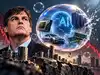
Was Michael Burry right about the AI bubble? Wall Street loses $2 trillion as AI and chip stocks plunge: Why are Tesla, Palantir, AMD, Broadcom and SanDisk crashing?
Michael Burry's warning about an AI bubble is back in focus as Wall Street loses more than $2 trillion in market value. On Thursday, November 5, AMD shares plunged around 12%, SanDisk fell 14%, Micron dropped 10%, while Nvidia lost nearly 7%. Tesla and Palantir also fell 9% and 8%, respectively. The sell-off spread across chipmakers, memory companies and AI infrastructure stocks. The Dow fell 2.36%, the S&P 500 dropped 3.11%, and the Nasdaq sank 4.20%, as investors questioned whether massive AI investments can deliver enough returns.
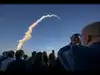
NASA's Artemis II rocket punched 3,100-mile-long holes in Earth's atmosphere, disrupted GPS signals: Study
NASA's Artemis II mission created large disturbances in the ionosphere that disrupted GPS signals across the United States. These disturbances were significantly more intense than those from prior rocket launches, causing potential issues for technologies reliant on precise positioning. Researchers noted that even minor positioning errors could impact autonomous vehicles, which rely on GPS data. The mission set new records for human distance from Earth during a lunar flyby.

AI will level the playing field for SMBs competing with larger businesses: Oracle NetSuite’s Amit Suxena
Suxena said that a massive technological revolution is underway and these are exciting times for new businesses, start-ups, and companies looking to expand.
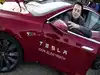
Big Tech barely moved after the midterms, but Tesla and SpaceX fell up to 5%, and even Tesla missed the solar rally: Did Elon Musk’s big bet on Republicans just backfire?
Tesla and SpaceX shares fell in premarket trading on Wednesday, Nov. 4: Today’s US stock futures pointed to a strong Wall Street opening, with Dow futures up nearly 800 points and S&P 500 and Nasdaq futures also in the green. However, Tesla and SpaceX moved in the opposite direction, falling more than 5% and nearly 8%, respectively, in premarket trading after the Democratic midterm victory. Alphabet, Meta and Microsoft gained, while Nvidia slipped slightly.
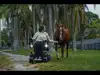
TIME’s Best Inventions of 2026: This wheelchair drives like a self-driving car, with sensors, voice commands, and collision avoidance
The Strutt ev¹ stands out as a revolutionary invention, featuring an intelligent co-pilot navigation system that empowers users with unmatched independence. This electric wheelchair operates autonomously and adapts to diverse settings. Equipped with state-of-the-art robotics, sensors, and voice-activated controls, it offers unparalleled accessibility. Priced at $7,499, the Strutt ev¹ is available online, complemented by a test drive option.
U.S. and Japanese Companies Struggle with Different Parts of AI Adoption—and Offer Different Lessons for Making It Work
Companies in both the U.S. and Japan are struggling to deploy AI, but often in very different ways. In the U.S., deployment is wide but shallow, meaning companies struggle to create real value with AI. In Japan, deployment has moved slowly, but where it has happened, it’s often deep and fruitful. Understanding what’s happening in both contexts offers important lessons for companies trying to develop an AI strategy and demonstrate ROI on their AI investments.
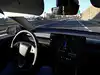
Tesla misled South Korean customers about automated-driving tech, consumer group alleges
Tesla has marketed Full Self-Driving (Supervised) software to prospective buyers in South Korea for years, often collecting lump-sum payments of 9.043 million won ($6,726).
Tesla misled South Korean customers about automated-driving tech, consumer group alleges
Tesla is facing a consumer complaint in South Korea over allegedly misleading customers by selling its Full Self-Driving (FSD) software to buyers whose vehicles cannot legally use it. The software, which was sold for a one-time payment of 9.043 million won ($6,726), is compatible with only about 20% of Tesla cars registered in the country, mainly US-made models.
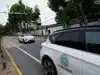
China's Baidu launches AI model simulating road environment for robotaxis
Apollo World can generate "up to 100,000 km" (62,000 miles) of simulated driving daily, equivalent to about three years of real-world testing by a safety-driver-equipped autonomous vehicle, Baidu said. The system is capable of producing real-time multimodal data streams, such as camera and lidar observations, enabling self-driving systems to directly sense and navigate simulated environments.

Fintechs fortify cyber defences; Logistics cos in the speed lane
Happy Monday! Fintechs are stepping up security as AI-powered cyberattacks become more sophisticated. This and more in today’s ETtech Morning Dispatch.
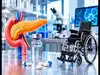
UC innovations make TIME’s Best Inventions of 2026: How a pancreatic cancer drug and smarter wheelchair are changing lives?
From a pancreatic cancer drug that targets KRAS mutations to a smarter power wheelchair, University of California research is reaching beyond laboratories. Daraxonrasib, developed from discoveries at UCSF, received FDA approval in August. Meanwhile, UC Berkeley alumnus Tony Hong’s Strutt ev¹ uses sensors and voice controls to make everyday mobility easier.
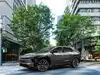
Waymo in Japan: Driverless taxis launch planned for 2027 with Toyota partnership, local bZ4X EVs to be fitted with self-driving technology; UK expansion next
Toyota Waymo partnership: Toyota and Waymo will begin testing a fleet of autonomous bZ4X electric vehicles in Japan in 2027, with expansion to the UK and other markets planned later. Toyota will manufacture and equip the vehicles at its Aichi plant, while Waymo will provide its fully autonomous driving technology.

Research: How AI Agents Broaden the Scope of Knowledge Work
AI agents don’t just speed up knowledge work; they change its nature. In a field study of Perplexity’s conversational assistant and autonomous agent, researchers found that not only did the agent perform more autonomous work, cut task time, lowered cost, and left users more satisfied, but it also expanded the scope of work people attempted—crossing occupational boundaries, tackling more complex, multi-step projects, and generating tasks that rarely appeared with a standard assistant. As workers shift from operators to supervisors, leaders must redesign roles, workflows, and oversight to harness agents’ potential while governing their expanded autonomy.
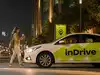
inDrive taps Pony.ai and Nvidia to test robotaxis in one of the world's coldest capitals
The ride-hailing company will explore driverless rides in Kazakhstan without building its own self-driving technology, as platforms increasingly leave the technology to partners and focus on connecting riders with cars.
Tesla drops as spending pullback clouds AI, robotics ambitions
Tesla shares took a hit after the company adjusted its capital spending forecast downward for 2026, raising eyebrows about the future of Elon Musk’s AI and robotics projects. Despite this, Tesla showed unexpected positive free cash flow due to lower-than-anticipated expenditures in Q3. Analysts foresee increased spending in upcoming years for major initiatives, yet investors tread carefully, particularly as they watch for developments in Tesla's relationship with SpaceX.
Tesla aims to sell Cybercab robotaxis by end of year despite federal probe
Tesla is aiming to start selling its Cybercab robotaxis to the public by the end of this year, its engineering chief said on Wednesday, even as the US auto safety agency probes the vehicles that come without manual controls which federal regulations
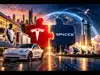
Musk's mother of all mergers will birth a $3.5 trillion tech monster
Elon Musk is considering merging Tesla and SpaceX, with both companies forming committees to evaluate the proposal. This merger could enhance their collaboration in artificial intelligence and robotics, as both companies have overlapping interests. While Tesla may gain from SpaceX’s rocket-launch capabilities, there are concerns about financial risks and governance issues. Investors are skeptical, particularly regarding the potential burden on Tesla's existing operations.
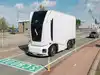
Einride expands Nvidia partnership to deploy AI reasoning model for self-driving trucks
Self-driving truck company Einride said on Wednesday it would broaden its partnership with Nvidia by testing the chipmaker's AI reasoning model, Alpamayo, in its self-driving vehicles, aiming to speed up the expansion of autonomous freight services while lowering development costs

Foxconn buys $727 million stake in Mitsubishi EV parts biz
Mitsubishi will contribute technology in electric powertrains, autonomous driving and in-car intelligence for EV platforms developed by Foxconn, the companies said Monday during a news conference in Tokyo.
Load More


