
AURORAL RADIO EMISSION
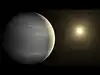
For the first time in astronomy, scientists detect radio signal from a young planet
Astronomers have discovered notable radio signals originating from the exoplanet Beta Pictoris b, located 64 light-years away from our solar system. These signals hint at an unexpectedly robust magnetic field surrounding the planet. The MeerKAT radio telescope network in South Africa facilitated this groundbreaking observation, revealing fluctuating intensities and timings of the signals related to the planet's rotation, thereby marking a pivotal step forward in exoplanetary magnetic field studies.
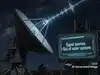
Mysterious radio bursts detected 63 light-years from Earth, well beyond our solar system: What scientists discovered about its source
A newly reported radio signature from Beta Pictoris b is giving astronomers a rare way to investigate the magnetic environment of a planet beyond our solar system. Observations with South Africa’s MeerKAT array identified recurring auroral radio bursts at the planet’s location, rather than its host star. The research also provides the first direct measurement of an exoplanet’s magnetic field strength.
Strange radio signals detected from exoplanet almost 63 light-years from Earth
Researchers have observed unusual radio signals from Beta Pictoris b, an exoplanet located 63 light-years away. These signals, detected using the MeerKAT radio telescope, are associated with auroras produced by the planet's magnetic field. The emission identified as electron cyclotron maser radiation indicates a magnetic field strength of approximately 1.25 kG. This discovery marks the first direct localization of auroral radio activity from an exoplanet.
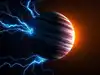
A planet 63 light-years away is sending repeating radio bursts, and scientists can read them for the first time. Here’s what it reveals about the alien world
Astronomers detected repeating radio bursts from exoplanet Beta Pictoris b. These emissions originate from powerful auroras on the distant world. The signals provide a rare direct measurement of the planet's magnetic field. Scientists calculated Beta Pictoris b possesses a magnetic field stronger than Earth's. This discovery offers a new method to study exoplanet magnetic environments.

Those Northern Lights Aren’t Just Pretty, They’re Telling Us Something About Space
Auroras are more than just beautiful lights. Scientists now use three-dimensional maps to understand auroras as monitors of space weather. This helps forecast geomagnetic storms that can affect satellites and technology. Auroras are caused by charged particles from the Sun colliding with Earth's atmosphere. Studying these cosmic dances helps us understand our space environment better.

The May 2024 Superstorm Didn’t Just Glow, It Reshaped the Ionosphere
A powerful G5 geomagnetic storm in May 2024 caused auroras visible globally and significantly altered the ionosphere. This electrically charged atmospheric layer, crucial for radio communication and satellite navigation, experienced dramatic changes in electron density and current systems. The event provided valuable data for refining space weather models and understanding impacts on technology.
- Go To Page 1
Latest forecast for Northern Lights. Know about solar storm that produces stunning scenes in US, UK
The UK Met Office had predicted a 90% chance of the occurrence of Northern Lights on Monday and this did not occur. It is unlikely to occur on Tuesday too.
Load More

