
ATOMIC SPINS
Is Sabrina Pasterski the next Einstein? Meet the physicist who built her own aircraft at 12 and is exploring Einstein’s biggest unanswered questions about gravity
Sabrina Pasterski's journey from building an aircraft as a teenager to studying Einstein's biggest unanswered questions has drawn attention to her work in physics. The MIT graduate now researches quantum gravity, black holes and space-time at Canada's Perimeter Institute. She also leads an $8 million research initiative exploring how gravity and quantum mechanics could fit together.
How 90 Claude Opus 5.5 agents found a 27-year-old compound in 3 days to solve computing's heat problem
More than 90 Claude Opus 5.5 agents spent three days searching for materials that could enable cooler spin-based computing. They identified two room-temperature magnetic semiconductor candidates; YBaMnFeO₅ and KV[Cr(CN)₆]. Chemists synthesized KV[Cr(CN)₆] back in 1999. Its ability to filter electrons by spin while canceling external magnetism sat unnoticed for 27 years.
145 years of physics overturned as sideways Hall effect breakthrough promises to rip apart textbooks & supercharge the next wave of quantum tech
Researchers have overturned a century-old physics rule about magnetic field detection. They engineered a custom quantum material to trigger the Hall effect sideways. This breakthrough allows a single chip to detect magnetic fields in multiple directions. Such innovation could simplify medical imaging and consumer electronics hardware. The discovery opens new dimensions for designing future electronic devices.

Why does a microwave door have a metal mesh? The tiny holes are doing something important
The metal mesh found on microwave doors serves an essential safety role. The small perforations allow for visibility while effectively blocking harmful radiation. This design ingeniously takes into account the differences in wavelengths between microwaves and visible light. Additionally, this mesh keeps microwave energy contained, ensuring efficient cooking, much like the heat-insulating patterns seen in conventional oven doors.

In 1977, NASA placed a gold-plated copper record on each Voyager; it carries 115 images, greetings in 55 languages, and instructions for playing it
In 1977, NASA embarked on a monumental quest by launching the Voyager spacecraft, which was equipped with a Golden Record meant to communicate with extraterrestrial life. Curated by Carl Sagan and his team, this interstellar album features a collection of images and sounds that highlight humanity's greatest moments, intentionally leaving out the chaos of the present.

In 2025, SAXON Q demonstrated a 4-qubit quantum computer running at room temperature in Germany. 2 years later, the startup opened orders for 128-qubit and 512-qubit systems that fit inside ordinary server racks
In 2025, German startup SAXON Q demonstrated a 4-qubit quantum computer that worked at room temperature. Now, the company is moving much further. It has opened orders for 128-qubit and 512-qubit quantum computers designed to fit inside standard server racks. That matters because quantum machines have long depended on complex cooling systems. SAXON Q’s approach could make quantum computing easier to install, access and use in real-world computing environments.
- Go To Page 1

'Saudi Arabia may have uranium enrichment chapter in US deal'
Saudi Arabia could develop uranium enrichment facilities under a proposed nuclear agreement with the United States. This development raises concerns about nuclear proliferation, especially with ongoing tensions surrounding Iran's nuclear program. Previous US administrations also sought similar nuclear deals with the kingdom.
The celestial orchestra
Scientists have observed magnons, or spin waves, at the nanoscale using new microscopes. This discovery could significantly impact the study of magnetism. Researchers found these spin waves dancing together. The magnetism of materials like iron and nickel results from atomic spins. This observation provides a new understanding of atomic behavior. The findings connect to broader philosophical ideas about the universe.

Earth is spinning faster and scientists fear a Y2K-like Doomsday
Earth's accelerating spin is causing concern among scientists due to potential disruptions to global timekeeping systems. July 10 marked the shortest day of the year, and more are expected, potentially requiring a negative leap second by 2035. This unprecedented move could trigger widespread system failures, reminiscent of the Y2K scare, although climate change is temporarily mitigating the speed-up.

July 9 is the shortest day ever in history? Scientists call it 'unprecedented, big deal'
Earth is expected to spin faster in the coming weeks, leading to unusually short days. On July 9, 2025, Earth will experience one of the shortest days ever recorded, with similar events anticipated on July 22 and August 5, 2025. The Moon's position will influence Earth's rotation, shortening each day by 1.3 to 1.51 milliseconds.

Earth is rotating faster, say scientists: What it means and should you worry?
Earth's rotation is speeding up, causing days to shorten by a fraction of a second since 2020. Scientists predict that a leap second might need to be removed in 2029 to align clocks with the planet's faster spin. While the cause remains unclear, researchers are exploring factors within the Earth's core, though this change is not a cause for concern.

24 hours days to end? Expert warns accelartion in earth’s speed can give history’s shortest day soon
Since 2020, Earth's rotation has sped up, causing shorter days. Astrophysicist Graham Jones predicts the next shortest day is around the corner. Days are shorter by milliseconds, but the cause is unknown. Previously, Earth's rotation was slowing. The Moon's orbit and Earth's core may be factors. Scientists are investigating this phenomenon.

Why John Hopfield and Geoffrey Hinton won 2024 Nobel Prize in Physics
John Hopfield and Geoffrey Hinton won the 2024 Nobel Prize in Physics for groundbreaking work on artificial neural networks. Hopfield developed a network for pattern recognition, while Hinton created methods for autonomous data property identification, advancing machine learning fundamental to artificial intelligence.
Nobel Prize 2024 in Physics awarded to John J. Hopfield & Geoffrey E. Hinton
Nobel Physics Prize 2024: The Royal Swedish Academy of Sciences awarded the 2024 Nobel Prize in Physics to John J. Hopfield and Geoffrey E. Hinton for their foundational contributions to machine learning through artificial neural networks. This announcement follows the awarding of the Nobel Prize in Medicine to Victor Ambros and Gary Ruvkun for their discovery of microRNA and its role in gene regulation.

Holy Grail of material science: how did MIT scientists achieve superconductivity? Details here
Superconductivity is a set of physical properties where electrical resistance vanishes and magnetic fields are expelled from the material. Any material exhibiting these properties is a superconductor. The scientists at the Massachusetts Institute of Technology (MIT) have made a breakthrough in the field.

June 29: When our Earth set a new speed record
On June 29 2022, our Earth set a new record. It completed a spin on its axis in 1.59 milliseconds shorter than its normal 24 hours

Iran enriches to 20% with new centrifuges at fortified site
Behrouz Kamalvandi, a spokesman for Iran’s Atomic Energy Organization, said uranium enriched to 20% was collected for the first time from advanced IR-6 centrifuges on Saturday. He said Iran had informed the U.N. nuclear watchdog about the development two weeks ago.

Iran to remove 27 nuclear surveillance cameras: IAEA
On Wednesday, Iran said it shut off two devices the IAEA uses to monitor enrichment at Natanz. Grossi acknowledged that, saying that among the devices being removed was a crucial meter that tracks how high Iran is enriching uranium at Natanz.
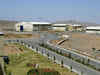
Explained: Iran atomic sites targeted by diplomacy and sabotage
The attack Sunday at Natanz comes as world powers try to negotiate a return by Iran and the U.S. to Tehran's atomic accord. The sabotage threatens to upend those negotiations and further heighten regional tensions across the Mideast.

Every year, government to roll out one Nuclear reactor: DAE
A 700-MW pressurised heavy water reactor at Kakrapar nuclear plant in Gujarat is likely to be commissioned by April, Shri Krishna Gupta, a senior official of the department of atomic energy, said on Tuesday.

Forty years and counting for this scientist's 'eureka' moment; One who shoots photons everyday
A Benguluru-based scientist has been doing a single type of subatomic experiment repeatedly for 40 years. What is he hoping to find out?
New microchip for ingestible 'smart pills' developed
The location of the device can be precisely identified within the body, something that proved challenging with existing devices, researchers said.
Researchers discover 2-D magnet for first time
San Francisco, June 11 (IANS) A team of researchers has for the first time discovered magnetism in the 2-D world of monolayers, or materials that are formed by a single atomic layer.
Researchers push forward quantum computing research
San Francisco, May 21 (IANS) Stanford University electrical engineering Professor Jelena Vuckovic and colleagues at her laboratory are working on new materials that could become the basis for quantum computing.

NASA plans to create 'coolest spot in universe'
CAL's instruments are designed to freeze gas atoms to a mere billionth of a degree above absolute zero - more than 100 million times colder than the depths of space.

Large quantum computers closer to reality
Unlike conventional computers that store data on transistors and hard drives, quantum computers encode data in the quantum states of microscopic objects called qubits.

Scientists develop new method to diagnose malaria
The new method, which uses magnetic fields to detect the parasite's waste products in the blood of infected patients, is fast, reliable and inexpensive.

Diamonds could lead to faster, more powerful computers
Researchers worldwide are working to develop the so-called "spintronics," which could make computers simultaneously faster and more powerful.
Soon, super-fast quantum computers could be a reality
Super-fast quantum computers could soon be a reality, as scientists claim to have generated 10 billion bits of quantum entanglement in silicon.
Load More

