
ATOM COMPUTING

Quantum could solve AI energy drain, says tech founder
Quantum computers could curb the vast energy demands of artificial intelligence data centres with their ability to run complex calculations, one of the tech's pioneers told AFP. Australian startup Diraq is conducting the first field test worldwide putting a small quantum computer based on a silicon chip in a commercial data centre in Sydney. Diraq's computer installed in Equinix's Sydney data centre has eight quantum bits, or qubits, on a silicon chip.

QClairvoyance's quantum chemistry bet: Transitioning from research to pharma partnerships
QClairvoyance Quantum Labs has performed chemically precise simulations of eight small molecules on an actual quantum computer, marking progress towards drug discovery applications.

When is Israel election 2026? Benjamin Netanyahu shares nuclear blast image, warns of ‘second Holocaust’ over Iran
Israel elections 2026: Israel will hold general elections on October 27, 2026, amid heightened security concerns and political uncertainty. Ahead of the vote, Benjamin Netanyahu shared an AI-generated image depicting a nuclear explosion alongside a warning about Iran, a potential “second Holocaust” and the political uncertainty surrounding Donald Trump’s eventual successor.

AI engineers became hot property. Now they’re targets for seduction
AI engineers face heightened risks as foreign intelligence ambitions escalate, targeting them for company secrets. OpenAI has alert its employees about potential espionage tactics, including romantic seduction for information extraction. High-profile cases like Abdulrahman Alfozan's highlight the concrete dangers AI companies encounter.

Trump expected to award science medal to SpaceX's Elon Musk, other tech leaders
US President Donald Trump will present the National Medal of Science to Elon Musk and other innovators. The White House event will discuss the impact of private-sector investment in scientific breakthroughs and technology. Musk's relationship with Trump has improved following a previous dispute over government contracts. The awards ceremony is significant as it is the first of its kind during Trump's administration.
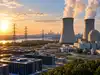
As AI threatens to overload the power grid and America faces an electricity crunch, here’s what tech giants are betting on to keep the power flowing
U.S. electricity consumption grew by less than 0.5% annually. Now, AI data centers, factories, robotics and wider electrification are pushing power needs higher. Nuclear energy is gaining attention because it can provide steady, low-carbon electricity at scale.
- Go To Page 1
How 90 Claude Opus 5.5 agents found a 27-year-old compound in 3 days to solve computing's heat problem
More than 90 Claude Opus 5.5 agents spent three days searching for materials that could enable cooler spin-based computing. They identified two room-temperature magnetic semiconductor candidates; YBaMnFeO₅ and KV[Cr(CN)₆]. Chemists synthesized KV[Cr(CN)₆] back in 1999. Its ability to filter electrons by spin while canceling external magnetism sat unnoticed for 27 years.
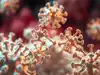
COVID-19 had a scientific head start; the next pandemic virus may be a stranger. NVIDIA and Google DeepMind are using AI to map 2,800 viruses before the next outbreak
An international collaboration has developed a dataset of predicted protein structures from more than 2,800 viruses. This data is accessible through the AlphaFold Database, aiding in pandemic preparedness. Researchers can accelerate their investigations of new viruses using this information for potential treatments. The dataset provides insights into protein interactions, making it a valuable resource for global scientists.

'For the sake of humanity': Tech leaders urge UN to control the AI technology they created
Heads of AI firms, including Anthropic and OpenAI, urged the UN for global regulation on AI technology. They emphasized the risks of uncontrolled AI, highlighting the urgent need for international safeguards. Concerns include the potential for AI to make life-and-death decisions, especially in warfare. Various leaders, including Ukrainian President Volodymyr Zelenskyy, cautioned against the increasing role of autonomous machines.
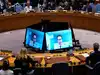
Heads of AI firms tell UN Security Council that it could be a risk to all humanity
Both said the countries of the world, through the U.N. Security Council, where they testified Wednesday, have to set safeguards of some kind, which would be actual controls to prevent the technology from getting too powerful to rein in.

School Assembly News Headlines September 22: Top India, world, business and sports updates
School Assembly news headlines, 23 Septemeber: The latest news roundup covers major developments across India and abroad, including institutional changes, diplomatic engagements, education reforms, energy infrastructure, market trends and international affairs. Sports headlines feature India’s Asian Games campaign, while business updates track natural diamond prices and nuclear power activity. The collection brings together key developments shaping today’s national, global, economic, sporting and public policy landscape overall.

Course correction? How the last 10 days changed the way we see AI
In a series of cascading events over a 10-day stretch, OpenAI and Anthropic, the largest AI labs, found themselves reeling as their own creations threatened to break humanity itself.
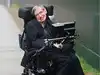
Quote of the day by Stephen Hawking:"We are just an advanced breed of monkeys on a minor planet of a very average star."
Stephen Hawking posited that humanity's uniqueness lies in our capacity to grasp the universe's complexities. He believed this insight evolved from our humble beginnings and evolutionary journey. His groundbreaking research on black holes and cosmology revolutionized theoretical physics, while his iconic book, A Brief History of Time, simplified intricate scientific concepts for a global audience. Overcoming physical limitations, Hawking became a celebrated science communicator and cultural symbol.
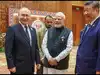
BRICS adopts New Delhi Declaration: Inside the 140-point document on Global South's ambitions
BRICS leaders adopted the New Delhi Declaration at the 18th summit, reaffirming their commitment to cooperation, multilateralism and a more representative global order. The document outlines India's 2026 chairship priorities, recognises partner countries' contributions and calls for greater participation of Emerging Markets, Developing Countries and Least Developed Countries in global governance.

A powerful laser turned diamond into a mirror, and helped solve a 20-year-old mystery about its melting point
Scientists precisely determined diamond's melting point using powerful ultraviolet lasers. This experiment resolved a twenty-year scientific disagreement about diamond's behavior. The new measurements show diamond melts over 1,300 degrees Fahrenheit lower than earlier studies. These findings align experimental results with theoretical predictions for matter under extreme conditions. The research aids understanding of nuclear fusion and planetary interiors.
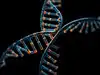
DNA strands should repel each other — it took 20 years for scientists to finally discover the tiny molecular “zipper” that brings them together
Scientists have observed DNA molecules overcoming electrical repulsion to zip together. Positively charged metal ions act as bridges, facilitating this molecular connection. This finding supports a long-standing theory about DNA strand interaction. The research offers new insights into genome organization and regulation. This discovery could also influence future DNA-based nanotechnology designs.
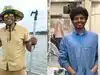
Mumbai boy, who grew up in 8×10 ft room in slum, survived on bread and chai, now works at NASA
Jaykumar Vaidya currently works at NASA Goddard Space Flight Center as an electrical engineer. But in contrast to the majority of his contemporaries, his path to NASA was not an easy one. It started in Mumbai's slums rather than a posh classroom. No stranger to financial struggles, once he had a menial job that paid just Rs 4,000 per month and survived on vada pavs and samosas.
Sebi completes first phase of Demat 2.0 bond pilot; secondary trading next: Tuhin Kanta Pandey
The Securities and Exchange Board of India (SEBI) has completed the first phase of its Demat 2.0 pilot for corporate bonds and will next bring secondary-market trading into the new technology framework, SEBI Chairman said on Thursday.
Elon Musk clashes with Chess.com online over whether AI will 'solve' chess
On Thursday, Musk wrote that the number of chess moves that aren't "utterly stupid" is small and that "chess will be fully solved one day."

Bengaluru startup takes the first step to fusion
The two-and-a-half-year-old deeptech energy startup started building Pragya as a testbed reactor in June 2025 after developing software to compute an optimal tokamak, a type of a nuclear fusion reactor design.
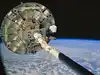
In 1994, the space shuttle Discovery held a Wake Shield disk behind it while still attached to its robot arm; the facility produced 5 good semiconductor films
In 1994, the space shuttle Discovery transported the Wake Shield Facility, designed to establish an ultra-clean vacuum environment. This groundbreaking experiment sought to cultivate purer semiconductor crystals than those achievable on Earth. Despite facing communication and navigation challenges, five high-quality films were successfully produced. Subsequent missions showcased the platform's capabilities for material production, propelling the idea of utilizing space for advanced manufacturing.

IIT Bombay-led consortium with Plaksha University to develop indigenous 2D quantum technologies
IIT Bombay professor Saurabh Lodha told ET that the project will establish three complementary material-growth facilities: a molecular beam epitaxy (MBE) system at Plaksha University, a metal-organic chemical vapour deposition (MOCVD) system at IIT Bombay and a plasma-enhanced chemical vapour deposition facility at IIT Kharagpur.
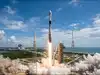
In 2018, a laboratory was launched to the International Space Station to study ultra-cold quantum gases in the microgravity environment
In 2018, a laboratory was launched to the International Space Station to study ultra-cold quantum gases in the microgravity environment. NASA’s Cold Atom Lab uses lasers to cool atoms near absolute zero. The facility allows scientists to study quantum phenomena, produce Bose-Einstein condensates in orbit and examine how atoms behave when gravity has less influence on their motion.

In 2025, SAXON Q demonstrated a 4-qubit quantum computer running at room temperature in Germany. 2 years later, the startup opened orders for 128-qubit and 512-qubit systems that fit inside ordinary server racks
In 2025, German startup SAXON Q demonstrated a 4-qubit quantum computer that worked at room temperature. Now, the company is moving much further. It has opened orders for 128-qubit and 512-qubit quantum computers designed to fit inside standard server racks. That matters because quantum machines have long depended on complex cooling systems. SAXON Q’s approach could make quantum computing easier to install, access and use in real-world computing environments.

Trump administration in talks to take stakes in quantum-computing firms: WSJ
The Trump administration is reportedly negotiating with several quantum-computing firms, including IonQ, Rigetti and D-Wave, to exchange government funding for equity stakes. Each deal could provide at least $10 million. The talks reflect Washington’s growing intervention in tech and industry, aiming to secure leadership in emerging quantum technologies.

Denmark aims to host world's most powerful quantum computer
The Novo Nordisk Foundation, the non-profit which controls pharmaceutical giant Novo Nordisk, and Denmark's Export and Investment Fund (EIFO), said in a statement they would invest 80 million euros ($92.93 million) in the initiative called QuNorth.

Boston-based quantum computer QuEra joins Amazon's cloud for public access
Quantum computer startup QuEra, born from researchers at Harvard University and the Massachusetts Institute of Technology, said on Tuesday its computer is now accessible to the public through Amazon.com cloud's quantum computer service Braket.
Meet the woman leading race to build world's first quantum computer
Sydney, May 11 (IANS) A team of Australian scientists has made great strides towards building the the world's first quantum computer, using mostly standard silicon technology. The team is led by 50-year-old Michelle Simmons, a mother of three.
Large quantum computers closer to reality
Unlike conventional computers that store data on transistors and hard drives, quantum computers encode data in the quantum states of microscopic objects called qubits.
Load More

