
ASTRONOMY AND ASTROPHYSICS

Opening space sector unlocked new avenues for private players, startups: PM Modi
Prime Minister Narendra Modi said opening up India’s space sector to private companies and startups has created new opportunities for young innovators to build rockets and launch satellites. Speaking at the inauguration of the COSMOS-Mysuru Planetarium in Mysuru, he highlighted India’s progress in space exploration, including the Chandrayaan-3 lunar landing, the Aditya-L1 solar mission and its space docking capabilities.
India's first LED dome planetarium with 4.2 crore lights inaugurated in Mysuru; 15-metre dome to relay live planetary data
Prime Minister Narendra Modi inaugurated COSMOS-Mysuru Planetarium, India's first LED dome planetarium, on Friday. Built by the Indian Institute of Astrophysics, the facility features a 15-metre tilted dome with 4.2 crore LEDs, a Sky Theatre and astronomy exhibits. The inauguration came during the Prime Minister's Karnataka visit, which also included major metro and railway launches.
PM Modi in Bengaluru on Nov 13, to launch Rs 15,600 Cr projects, flag Off Goa Vande Bharat
Prime Minister Narendra Modi will visit Karnataka on November 13 to launch and lay the foundation stone for infrastructure, energy, transport and urban development projects worth more than Rs 15,600 crore across Bengaluru and Mysuru.
Interstellar Object 3I/ATLAS: 3I/ATLAS may have come from a star system older than our sun, James Webb Telescope observations suggest
Recent findings from the James Webb Space Telescope have unveiled intriguing chemical signatures surrounding the interstellar object 3I/ATLAS. This comet likely originated in a stellar nursery billions of years prior to the Sun's birth. Its significant methane presence hints at a primordial formation, coupled with low metallicity and high cosmic ray exposure. The uncommon water-ice grains shed light on the icy building blocks of other star systems.
21 years after the discovery of the last dwarf planet, scientists may have found a sixth one beyond Neptune
Vera Rubin Observatory may have identified a new dwarf planet called ED138, hidden beyond Pluto's orbit. Researchers are in the process of assessing ED138's size, a task expected to take several months. This finding is noteworthy as it holds the potential to be recognized as the sixth dwarf planet. Difficulties in locating such remote celestial bodies stemmed from their position in the southern hemisphere.
Astronomers find a ‘ghostly’ star glowing green and another possibly the reddest ever recorded
Astronomers studying 151 stars near Earth found unusual colors in some white dwarfs. One white dwarf appeared green due to its atmospheric composition, while another was identified as the reddest star. The research indicates that a star's color may involve more than just temperature factors. Typically, white dwarfs are white due to their high temperature and density. The findings suggest a diverse range of colors exists among white dwarfs.
- Go To Page 1
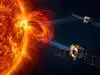
One solar eruption raced at 645 km/sec, another crawled at 145 km/sec: Bengaluru scientists uncover new clues about the Sun
A Bengaluru research team combined observations from India's Aditya-L1 and Europe's Proba-3 to study two solar eruptions. One CME travelled at 645 km per second, while the other moved at 145 km per second. The study also revealed differences in density changes and energy distribution.

Want to do NASA research? 24 new US projects backed by $23 million will let citizen scientists hunt comets, study space weather and explore Earth data — all you need to know
NASA has selected 24 organizations to partake in a new Science Activation portfolio aimed at public engagement. This initiative will provide hands-on opportunities in scientific research across various fields, such as astronomy and Earth sciences. Communities nationwide, particularly underserved groups, will gain access to authentic NASA experiences. Participants can analyze data, conduct experiments, and observe astronomical events through robotic telescopes.

Meet Julian Shapiro, the New York student who found 3 unusual dwarf galaxies and won $25,000
Eighteen-year-old Julian Shapiro discovered three isolated dwarf galaxies that lack ongoing star formation, a puzzling combination for astronomers. His research suggests they could be “backsplash” galaxies that once passed near a massive galaxy, lost star-forming gas and moved outward. The work earned Shapiro a $25,000 Davidson Fellows Scholarship.
This strange world has no star to orbit, yet James Webb has revealed its changing weather from 20 light-years away
Webb telescope observed SIMP 0136, a brown dwarf twenty light-years away. Researchers found its changing appearance stems from temperature and cloud structure. These two factors explain most atmospheric variability observed by the telescope. The brown dwarf's atmosphere exhibits three recurring weather states as it rotates. This new method helps study distant worlds with limited direct observation.
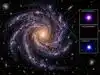
Scientists found 84 strange objects hiding inside six galaxies. Their unusual X-ray emissions could change what we know about the universe
Scientists have discovered 84 unusual “hypersoft X-ray sources” across six galaxies using archival data from NASA’s Chandra X-ray Observatory. The objects produce unusually low-energy X-rays and may emit intense ultraviolet radiation, unlike previously observed X-ray sources. Researchers believe they could be linked to X-ray binary systems and may help investigate the origins of Type Ia supernovae as well as the unexplained ionisation of gas between stars.
In 2019, 11,482 Hubble Asteroid Hunter volunteers helped train an AI that scanned 37,000 Hubble images; the combined effort uncovered 1,701 asteroid trails, including 1,031 unknown objects
Citizen scientists helped astronomers find over one thousand new asteroids. These faint objects were previously missed by earlier surveys and computers. The Hubble Asteroid Hunter project utilized over eleven thousand volunteers worldwide. Their contributions trained an AI model to process many more images efficiently. This discovery offers insights into the solar system's ancient history.
Quote of the day by Carl Sagan: 'For small creatures such as humans the universe is bearable only through love' - A powerful life lesson on why love can make life’s biggest challenges easier to face by the American astronomer & astrophysicist
Carl Sagan’s powerful quote, “For small creatures such as we the vastness is bearable only through love,” reflects on humanity’s place in an enormous and often uncertain universe. The words offer a deeper perspective on love, human connection, loneliness and the search for meaning, while highlighting why relationships can make life feel more meaningful despite the vastness of existence. The quote also reflects Sagan’s lifelong fascination with the cosmos and his belief in making the mysteries of the universe understandable to ordinary people.

Ankoor Warikoo reveals the invaluable lesson he learned after wasting three years as a teenager to get into IIT and failing: 'Nobody asked me...'
Like most Indian youth, Ankur Warikoo too was once determined to get into the hallowed halls of IIT. Taking to X, the entrepreneur-motivational speaker revealed he had once wasted three years of his life as a teenager to get into IIT. However, his efforts proved to be fruitless. And although, at 19, not getting into IIT felt devastating, nobody had asked about it in 25 years.
In 1990, NASA sent a X-ray telescope into space on Space Shuttle Columbia for the first time to perform observations of galactic and extragalactic objects: What was BBXRT?
In 1990, NASA sent a X-ray telescope into space on Space Shuttle Columbia for the first time to perform observations of galactic and extragalactic objects. The Broad Band X-ray Telescope, or BBXRT, flew during the STS-35 mission as part of the ASTRO-1 payload. It studied X-ray sources across a broad energy range and tested focusing X-ray optics in space.

A simple astronomy program led two U.S. high school students to help discover four exoplanets
In an inspiring display of youthful ingenuity, two American high school students have teamed up to publish a groundbreaking scientific paper, unveiling the existence of four new planets. Through their participation in an after-school astronomy mentorship program, they meticulously sifted through NASA's TESS spacecraft data.

Quote of the day by astrophysicist Neil deGrasse Tyson: 'We are stardust brought to life, then empowered by the universe to figure itself out...'
Astrophysicist Neil deGrasse Tyson’s quote of the day reflects on humanity’s cosmic origins and its role in understanding the universe. Drawn from his book Astrophysics for People in a Hurry, the quote explains how humans are made from elements formed in stars and are uniquely capable of studying the universe that created them.

India investing billions of dollars in research ecosystem: PM Modi
Prime Minister Modi highlighted India's significant investments in its research ecosystem and its commitment to international collaboration in science, addressing the International Olympiad on Astronomy and Astrophysics. He emphasized India's accomplishments, including the successful landing near the Moon's south pole and initiatives to promote STEM education, while encouraging young minds to explore the universe and solve real-world problems.

Jayant Narlikar: The man who sifted through stardust
Jayant Narlikar, a renowned Indian scientist, passed away. He was famous for his work in cosmology. Narlikar was also known for his science communication skills. He collaborated with Fred Hoyle on stellar nucleosynthesis. They proposed an alternative to the Big Bang theory. Narlikar established IUCAA, a center for astronomy. He supported the panspermia theory. His contributions to science are significant.

Jayant Narlikar passes away at 87, who was the celebrated astrophysicist, Padma Vibhushan awardee?
Jayant Vishnu Narlikar, a distinguished astrophysicist and science communicator, has died at 87. Globally recognized for his cosmology contributions and alternatives to the Big Bang theory, he founded the Inter-University Centre for Astronomy and Astrophysics (IUCAA). Narlikar received numerous accolades, including the Padma Vibhushan, and was celebrated for popularizing science through books and media.
Indian students bag gold, four silvers at International Olympiad on Astronomy and Astrophysics
Indian students secured one gold and four silver medals at the 17th International Olympiad on Astronomy and Astrophysics in Brazil. Daksh Tayalia from Bengaluru won gold, while Aayush Kuthari, Sanidhya Saraf, Banibrata Majee, and Panini earned silver. India ranked eighth overall. The next IOAA will be hosted in Mumbai next year.
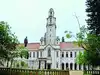
IISc to host the 42nd meeting on astronomy this week in Bengaluru
The Indian Institute of Science (IISc) will host the 42nd meeting of the Astronomical Society of India, with scientific discourses on topics such as the sun, planets, black holes and more. The meeting will also include special events for citizens and school students, and will feature the release of the Astronomy Vision document. About 750 astronomers are expected to attend the meeting, where awards will be given out to recognize contributions to astronomy and astrophysics research.
Professor Somak Raychaudhury appointed Vice-Chancellor of Ashoka University
Pramath Raj Sinha, Chairman, Board of Trustees, said “Professor Raychaudhury brings stellar academic stature and strong administrative experience to Ashoka. Our Founders and Trustees are committed to supporting him as Ashoka pursues its bold research agenda and investment in true interdisciplinary learning.”

ISRO plans to launch India’s second space observatory
The AstroSat-2 mission, which will help in observing distant celestial bodies, is meant to further the study of astronomy and astrophysics.
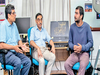
Meet the Indian astrophysicists who discovered the Saraswati Supercluster
Among the major challenges in working in this field in India is the lack of large-scale experimental facilities for scientists.

Infosys Foundation announces Rs6.5 crore endowment to the Inter-University Center of Astronomy and Astrophysics
The IUCAA is an autonomous institution set up by the UGC to promote the nucleation and growth of active groups in astronomy and astrophysics at Indian universities.
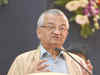
Gravitational waves discovery: Indian scientists' role hailed
Anil Kakodkar today congratulated the team of Indian scientists who contributed to the research on gravitational waves.

ASTROSAT, India's first astronomical mission, set for September 28 launch
"The satellite is scheduled for launch on board the launch vehicle PSLV C-30, on Sept 28 morning 10 am," Director, Public Relations, ISRO told.

India's dedicated astronomy satellite ASTROSAT fully assembled
ASTROSAT, the first dedicated Indian astronomy mission aimed at studying distant celestial objects is now fully assembled, ISRO said.
Load More

