
ASTRONOMY

The much awaited Noida-Greater Noida West metro link, a mega museum and more: Inside the Cabinet's Rs 77,101 crore package
On Wednesday, the Union Cabinet approved significant proposals for infrastructure and business support across India. The government will allocate ₹3,230 crores for the Yuge Yugeen Bharat Museum in New Delhi. A metro rail project linking Noida and Greater Noida will receive ₹2,390 crores for development. Additionally, ₹62,370 crores will be set aside for NBS rates on fertilizers for the Rabi 2026-27 season.
In 2025, over 1,000 volunteers searched telescope images for galaxies that bend light; they helped find 497 possible cosmic lenses
Volunteers from around the world are actively participating in the Space Warps project to analyze galaxy images. They help identify rare gravitational lens candidates using data from the Euclid Space Telescope. This collaboration combines human observations with machine-learning systems for more accurate results. The project emphasizes the importance of citizen science in exploring vast astronomical datasets.
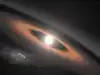
White dwarf WD J1328-1450 has a double debris disc; one ring may be hiding a Pluto-sized survivor
Astronomers have discovered a white dwarf named WD J1328-1450, located 1,600 light-years away, has two separate rings of gaseous planetary debris. Unusual signals detected around the star suggest that two planetary bodies may be maintaining the rings, with the outer object potentially reaching Pluto-like or even Moon-like dimensions. The discovery offers a rare glimpse into what planetary systems may look like after their stars die.

Quote of the day by Carl Sagan: 'We are like butterflies who flutter for a day and think it is forever' - A thought-provoking lesson on human life, mortality and our place in the universe by the American scientist
Carl Sagan’s famous quote from his 1980 book Cosmos compares human life to the brief existence of butterflies, highlighting how small our time on Earth is compared with the vast age of the universe. The American astronomer used his work to explore humanity’s place in the cosmos, the evolution of life and the possibility of extraterrestrial existence. Understand the meaning behind his observation and how his scientific work still shapes our understanding of the universe.
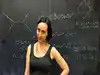
Is Sabrina Pasterski the next Einstein? Meet the physicist who built her own aircraft at 12 and is exploring Einstein’s biggest unanswered questions about gravity
Sabrina Pasterski's journey from building an aircraft as a teenager to studying Einstein's biggest unanswered questions has drawn attention to her work in physics. The MIT graduate now researches quantum gravity, black holes and space-time at Canada's Perimeter Institute. She also leads an $8 million research initiative exploring how gravity and quantum mechanics could fit together.

The Old Farmer’s Almanac has survived for centuries, and its unusual mix of weather forecasts, folklore and gardening advice explains its lasting appeal
Published in 1792, The Old Farmer’s Almanac provides a wealth of information about weather and agriculture. It serves as a reference for gardening advice, recipes, and astronomical data. Originally intended to support farming, it has grown in scope over the years. The publication retains relevance as technology changes how people access information. Its enduring popularity illustrates the lasting interest in traditional sources of knowledge.
- Go To Page 1
Interstellar comet 3I/ATLAS has 13 times more deuterium than a famous Solar System comet, hinting at its 7-billion-year-old origins before Sun was born
Interstellar object 3I/ATLAS may have formed more than 7 billion years before our Sun was born. A new study using NASA's James Webb Space Telescope has uncovered unusual chemical clues that could reveal the comet's ancient origins and the conditions in which it formed. Its deuterium-to-hydrogen ratio was also 13 times higher than that of comet 67P/Churyumov-Gerasimenko.
Interstellar Object 3I/ATLAS: 3I/ATLAS may have come from a star system older than our sun, James Webb Telescope observations suggest
Recent findings from the James Webb Space Telescope have unveiled intriguing chemical signatures surrounding the interstellar object 3I/ATLAS. This comet likely originated in a stellar nursery billions of years prior to the Sun's birth. Its significant methane presence hints at a primordial formation, coupled with low metallicity and high cosmic ray exposure. The uncommon water-ice grains shed light on the icy building blocks of other star systems.

Did comets help start life on Earth? A new study questions the idea and scientists are baffled
Scientists have been researching for a long time whether comets brought important chemicals to early Earth. A new study has examined whether those chemicals could survive the journey. However, the results have raised questions about a familiar idea, but the mystery remains open.

Viral November 2026 solar storm theories: How risky is flying during extreme space weather, and what happened in 2025?
Recent discussions have emerged about the looming threat of a catastrophic solar storm projected for November 13, 2026. Even though past solar storms have impacted air travel, expert consensus indicates no credible proof of this specific forecast. Studies show that solar storms can heighten radiation exposure for passengers and disrupt aircraft systems, particularly on polar routes.
21 years after the discovery of the last dwarf planet, scientists may have found a sixth one beyond Neptune
Vera Rubin Observatory may have identified a new dwarf planet called ED138, hidden beyond Pluto's orbit. Researchers are in the process of assessing ED138's size, a task expected to take several months. This finding is noteworthy as it holds the potential to be recognized as the sixth dwarf planet. Difficulties in locating such remote celestial bodies stemmed from their position in the southern hemisphere.

A Full Moon Before Halloween 2026: Will the Hunter’s Moon Make October’s Spooky Nights Brighter?
The Hunter’s Moon will reach peak illumination on October 26, 2026, just days before Halloween. Discover why October’s Full Moon has its traditional name, how its seasonal history connects to hunting and winter preparations, and why the Moon can appear orange or golden near the horizon. This guide also explains whether Halloween will have a Full Moon and offers practical skywatching tips.
BITS Pilani revamps UG curriculum to prepare students for AI era: Vice Chancellor
BITS Pilani has revamped its undergraduate curriculum to prepare students for a future dominated by artificial intelligence. This innovative approach prioritizes academic flexibility while integrating research and real-world industry applications. Students will engage in various activities that promote both physical and mental well-being, earning a total of 30 Points of Experience. The curriculum now also highlights crucial areas like AI and data science, enhancing practical learning and encouraging interdisciplinary collaborations.

In 1982, NASA engineer George Alcorn invented an imaging spectrometer designed to analyze high-energy sources
George Edward Alcorn's groundbreaking invention of the X-ray imaging spectrometer has revolutionized the field of space exploration, allowing for in-depth analysis of celestial phenomena. This innovative device merges imaging with energy detection, yielding essential data from various X-ray sources. His contributions significantly advanced astronomy, enabling detailed mapping of planetary surfaces and stellar charts. Recognized for his achievements, Alcorn was inducted into the National Inventors Hall of Fame in 2022.

Arjun Prajapati: This 5-year-old with Vadodara roots started reading before turning 2, has an IQ of 141, ranks in the top 2% and has read 3,000 books
Five-year-old Arjun Prajapati has drawn attention for his exceptional learning abilities, scoring 141 on an IQ test and qualifying for Mensa International and Intertel at the age of four. He reportedly began reading independently at 18 months and has explored more than 3,000 books on subjects including mathematics, astronomy, genetics and human physiology. Despite his advanced interests, his parents want him to learn at his own pace and enjoy his childhood without academic pressure.
October Full Moon 2026: When to See the Hunter’s Moon Around the World and Is It a Supermoon?
The Hunter’s Moon lights up the sky on October 26, 2026, bringing October’s Full Moon into view. Find out when it reaches its peak, check global timings and discover the best time to watch it. Learn why it is called the Hunter’s Moon, whether it is a supermoon, what causes its orange glow and what it means in astrology.
Forget the Moon’s south pole: 4 other lunar sites could help humans build a base and prepare for Mars, new report suggests
The southernmost region of the Moon has emerged as a crucial focus for contemporary lunar exploration, particularly in the quest for water ice. Other notable sites, such as Bhabha Crater and Orientale Basin, are also under consideration for study. These areas promise to offer vital information about the Moon's past and feasible locations for human settlement.

India-Pakistan Moon race: With China's help, Pakistan wants to send humans to Moon five years before India
Pakistani astronaut on Moon: Pakistan has set a target of landing on the Moon by 2035 as it expands its space programme through cooperation with China. Planning Minister Ahsan Iqbal announced that Pakistan’s first astronaut is scheduled to embark on a space mission from China on November 25. The partnership also includes a lunar rover project, while India is pursuing its own human spaceflight and Moon exploration goals.
Astronomers find a ‘ghostly’ star glowing green and another possibly the reddest ever recorded
Astronomers studying 151 stars near Earth found unusual colors in some white dwarfs. One white dwarf appeared green due to its atmospheric composition, while another was identified as the reddest star. The research indicates that a star's color may involve more than just temperature factors. Typically, white dwarfs are white due to their high temperature and density. The findings suggest a diverse range of colors exists among white dwarfs.

Because a hailstorm ruined his family’s 15 acres of oats, he couldn’t afford college; in less than two years, Illinois-born self-taught astronomer Clyde Tombaugh discovered Pluto
Clyde Tombaugh, after enduring financial trouble following a damaging hailstorm, sparked his passion for astronomy in 1928. He crafted a telescope and began his quest for Planet X, leading to Pluto's discovery in 1930. Named after the Roman god of the underworld, Tombaugh’s journey continued with academic achievements in astronomy and military service in the US Navy during World War II, while Pluto's status shifted to dwarf planet in 2006.
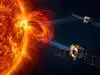
One solar eruption raced at 645 km/sec, another crawled at 145 km/sec: Bengaluru scientists uncover new clues about the Sun
A Bengaluru research team combined observations from India's Aditya-L1 and Europe's Proba-3 to study two solar eruptions. One CME travelled at 645 km per second, while the other moved at 145 km per second. The study also revealed differences in density changes and energy distribution.

US startup plans to sell sunlight at night with help from India's Skyroot Aerospace
Reflect Orbital is revolutionizing nighttime visibility by launching satellites to deliver on-demand sunlight. In collaboration with Skyroot Aerospace, they plan two launches using Vikram rockets. This groundbreaking service promises to aid disaster relief efforts, brighten industrial areas, and improve public events. Recently receiving Federal Communications Commission approval for a demonstration satellite, the initiative sparks discussion on its environmental implications relating to artificial lighting.
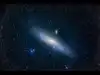
You can see the Andromeda Galaxy without a telescope this week, but you’ll need to escape the city lights
The Andromeda Galaxy, also known as Messier 31 or M31, looks like a faint, blurry patch in the constellation Andromeda. It lies far beyond the Milky Way, the galaxy that is home to our solar system. Andromeda is so far away that the light we see today began its journey toward Earth about 2.5 million years ago.

World Space Week 2026: How the ‘Rocket Revolution’ is changing the cost, speed and future of space travel
World Space Week 2026 will highlight the increasing accessibility of space through the theme 'Rocket Revolution' this October. Celebrations will include events from schools, space agencies, and aerospace companies worldwide. Participants will explore technological changes in rocketry and their significance for future space exploration. Various activities, including model rocket launches, will occur across several countries. The week aims to inspire interest in STEM and promote international cooperation among attendees.
World Space Week 2026: Theme, history, how to celebrate and a special Pokémon twist- here's everything you need to know
World Space Week will occur from October 4 to October 10, 2026, themed 'Rocket Revolution'. This theme highlights advancements in rocket technology and commercial space launches. Events will include exhibitions, talks, and hands-on STEM activities for participants of all ages. A collaboration with Pokémon includes events to engage younger audiences in space exploration. Key astronomical occurrences, like the Draconid meteor shower, will also be observed during this week.

Tattoo that can vanish without being removed: Chemists develop multicolor ink that fades in sunlight and reappears with UV light in seconds
A group of innovative chemists has developed a revolutionary tattoo ink named PhotoTat, which can respond to light exposure by changing colors. This photochromic ink holds promise not only for aesthetic purposes but also for creating medical tattoos that appear only when necessary. As researchers continue to refine its design and ensure safety, this groundbreaking technology may transform societal views on tattoos and their functional uses.

Longest-lasting X-ray flash that took 6 billion years to reach Earth, may have be a result of neutron star merger; study suggests
Astronomers have recorded an extraordinary X-ray flash known as EP250704a, stemming from the collision of two neutron stars that occurred over 6 billion years ago. Observed on July 4, 2025, this ten-minute X-ray emission hints at connections to magnetars, potentially unraveling secrets of the universe’s intense forces and neutron star mergers. Future studies may shed light on the frequency of such collisions producing magnetars.
James Webb Telescope traces radio burst 11 billion light-years away — What can this ancient signal reveal about the early universe?
Astronomers have detected the most distant Fast Radio Burst ever recorded. Known as FRB 20240304B, this brief flash of radio waves traveled roughly 11 billion light-years to reach Earth. That means the signal was sent when the universe was only three billion years old. This discovery more than doubles the previous distance record for a fast radio burst. It gives scientists an unprecedented look back into deep cosmic history.

Trump expected to award science medal to SpaceX's Elon Musk, other tech leaders
US President Donald Trump will present the National Medal of Science to Elon Musk and other innovators. The White House event will discuss the impact of private-sector investment in scientific breakthroughs and technology. Musk's relationship with Trump has improved following a previous dispute over government contracts. The awards ceremony is significant as it is the first of its kind during Trump's administration.
Load More

