
ASTRONAUT BODY MEASUREMENT
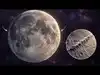
The Moon is shrinking. What happens when its surface can’t take the pressure?
The Moon may look the same from one evening to the next, but its surface records a slow transformation. Multiple researches reveal a different kind of reasons to explain the shrinking and this findings impact not the skywatchers but those who planning a future on the moon.
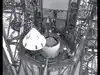
In 1965, NASA unfolded a 96 feet satellite in space to test what could puncture an Apollo spacecraft
NASA’s Pegasus I, launched in 1965, opened wings 96 feet wide in orbit to count hits from particles too small to see. The readings helped engineers understand what could damage spacecraft carrying astronauts. Pegasus I and two more satellites sent back data in the years before the Apollo Moon missions.
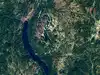
A satellite map revealed a mysterious giant circle that was hiding in Canada for 390 million years. One amateur astronomer finally noticed it
Researchers have identified the Uhackatik impact crater in Quebec, which is about 25 kilometers wide. The crater was discovered by amateur astronomer Joël Lapointe using satellite imagery while looking for camping spots. Geological confirmation came through the discovery of shatter cones, indicating a historical extraterrestrial collision. This discovery sheds light on Earth's geological history and the difficulty of finding ancient impact structures.
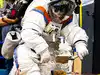
In 2014, NASA astronauts used an ordinary tape measure during six-month ISS missions; the Body Measures data later entered requirements for NASA's xEMU spacesuit
In 2014, astronauts aboard the International Space Station conducted body measurements to study the impact of microgravity on human physiology. This research provided NASA critical insights that shaped the design of future spacesuits. Utilizing basic tools such as tape measures was instrumental in making significant engineering improvements. Ultimately, this work plays a vital role in ensuring safety for astronauts and the success of upcoming lunar missions.
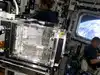
In 2006, NASA launched 75 fruit flies on STS-121 for 13 days; Discovery returned with about 3,000, including a new generation that developed in space
NASA's experiments with fruit flies in zero gravity unveiled significant weaknesses in their immune systems. Observations indicated these flies produced fewer specialized immune cells and exhibited a diminished ability to combat bacteria. Further investigations demonstrated that their responses to fungal infections were also altered in space. These discoveries illuminate potential immune function disruptions among model organisms during spaceflight, raising important concerns for upcoming long-duration human space missions.
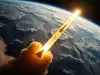
In 1947, the military sent fruit flies 67 miles into space to test radiation risks. 11 years later, NASA was founded in 1958, with animal flights underway in America now
1947 mission was part of a larger American effort to understand whether living organisms could survive the journey into space. Beginning in the mid-1940s, military and scientific teams used captured German V-2 rockets for research after World War II.
- Go To Page 1
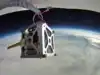
In 2010, NASA launched a 12-pound, loaf-of-bread-sized satellite with two Bacillus populations; radiation exposure reached about 15 times that of the ISS orbit
NASA's O/OREOS mission embarked on an exciting journey to observe how bacteria withstand the rigors of space radiation. The compact satellite, about the size of a loaf of bread, zipped around Earth’s magnetic poles, subjecting dried bacterial spores to intense radiation over several months. While initial germination and growth were sluggish and ultimately showed abnormalities, the mission confirmed that nanosatellites are viable platforms for conducting autonomous biological research in space.
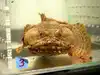
In 1998, NASA sent oyster toadfish into space on Space Shuttle Columbia; over 16 days in orbit, researchers studied how their balance systems adapted to microgravity
In 1998, saltwater toadfish participated in the Columbia's Neurolab mission, offering insights into the effects of microgravity on the nervous system. Their inner ear adaptations revealed how their vestibular system modified its sensitivity in the absence of gravity. Upon returning to Earth, the adjustments mirrored the disorientation experienced by astronauts, further enhancing our understanding of balance and safety in space exploration.
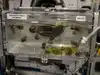
In 2003, researchers found freshwater snails had mated in space; their gravity-sensing statoconia were 50% larger by volume than matched ground controls
Experiments conducted aboard the Space Shuttle demonstrated that pond snails bred in microgravity possessed larger gravity-sensing structures known as statoconia compared to their Earth-reared counterparts. Additionally, swordtail fish embryos showed an increase in otolith size during their development in orbit. Conversely, juvenile fish with pre-formed structures exhibited little change. This research underscores the essential influence of gravity on the development of balance structures in aquatic species.
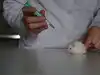
In 2014, NASA sent young and older mice into space; within 9 to 11 days, the younger ones began running group laps in zero gravity
In 2014, NASA launched a group of twenty mice to the International Space Station for groundbreaking research. Remarkably, the young mice exhibited coordinated circling behavior just two weeks after their arrival. In contrast, older mice showed little interest in this peculiar behavior, a mystery that intrigued scientists. This phenomenon could be connected to factors like stress, motivation, or the vestibular system.
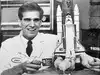
In 1989, the space shuttle Discovery carried 32 fertilized chicken eggs for 5 days; all 16 early embryos died, while 8 older embryos later hatched without anatomical malformations
In 1989, the space shuttle Discovery transported thirty-two fertilized chicken eggs into microgravity. Although younger embryos did not endure the five-day trip, the older ones hatched successfully, exhibiting slight alterations in their inner ear development. Initiated by a student's curiosity, this experiment provides valuable insights for future space endeavors, highlighting the necessity for the vestibular system to adapt to varying gravitational environments.

In 2013, a special medical research facility was started in Cologne, Germany to understand how humans adapt to extreme environments: How :envihab helps prepare astronauts?
In 2013, a special medical research facility was started in Cologne, Germany to understand how humans adapt to extreme environments. The facility studies how the human body responds to microgravity-like conditions. Its bedrest studies help researchers examine changes in bones, muscles, balance, vision and coordination and test measures that could protect astronauts during space missions.
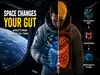
52 astronauts left Earth for months in orbit, and within weeks their gut bacteria changed how they processed food, revealing why spaceflight can trigger constipation and potentially affect brain health
Constipation in space is more than an uncomfortable side effect. Astronauts often face it during long missions, but scientists have not fully understood why. Now, blood tests from 52 astronauts reveal a possible clue. Their gut bacteria began fermenting more protein within weeks of reaching the International Space Station. The finding links microgravity, slower intestinal movement and gut microbiome changes, offering new clues for future Moon and Mars missions.
In 1969, Apollo 11 astronauts saw mysterious flashes with their eyes closed. Scientists later found the cause
During the Apollo missions, astronauts noted peculiar flashes of light occurring inside their spacecraft. These experiences were later attributed to energetic cosmic rays penetrating their vision. NASA played a pivotal role in investigating these occurrences, establishing a firm link between the light flashes and cosmic radiation. This foundational work is vital for preparing future astronauts against the hazards of long-duration space exploration.
On the ISS, astronauts see 16 sunrises every day as the station circles Earth, but their bodies refuse to follow the 90-minute cycle, forcing crews to stick to a familiar 24-hour routine despite living through multiple days and nights
Astronauts on the International Space Station experience sixteen sunrises daily. They follow a strict twenty-four-hour schedule, ignoring the rapid orbital cycles. Internal body clocks can mismatch with the external environment, affecting sleep patterns. Artificial lighting helps regulate astronauts' sleep and wakefulness cycles.
Key Largo used a sealed underwater habitat 22 feet below the surface to test prolonged human immersion; the result revealed a startling effect as a professor emerged after 100 days with his spine compressed and his height reduced by half an inch
Joseph Dituri spent 100 days underwater in a 100-square-foot habitat near Key Largo, Florida. The extreme experiment changed more than his routine. He reported being about half an inch shorter after resurfacing. His spine had adapted to prolonged pressure and confinement. The finding offers a striking lesson about the human body. Height is not always fixed. Pressure, gravity, movement and rest can all reshape how we measure ourselves.

SpaceX Falcon 9 rocket launch today: Meet Sophie Adenot - Only 2nd French woman to visit space, mother of teen to celebrate birthday at International Space Station
SpaceX Falcon 9 rocket launch: Sophie Adenot is one of four astronauts now heading towards the International Space Station to replace a crew that was evacuated last month because of an unidentified medical issue.

Astronauts age slower in space: How much time did Sunita Williams and Barry Wilmore ‘gain’ in 9 months off-earth? The answer may surprise you
Astronauts Sunita Williams and Barry Wilmore spent 10 months on the International Space Station and aged slower than those on Earth. This effect is explained by Einstein's theory of relativity. Their high-speed movement in space makes time pass slower for them compared to people on Earth. Over six months, the difference is just 0.005 seconds.

'Lifting a pencil will feel like workout': How gravity will 'punish' Sunita Williams on return from space
NASA astronauts Sunita Williams and Butch Wilmore have been stranded in space for over eight months abroad the International Space Station (ISS). Upon their return, the two are will experience significant physical changes, as gravity begins to "punish" their body after months of living in weightlessness. This sudden shift is likely to cause will lead to discomfort and a feeling of heaviness as the body readjusts to gravitational forces.
Explained: Earth has its own time then why is US working on a lunar standard time
Unlike Earth, where time progresses uniformly, lunar environment has unique challenges. So to develop a standard time, it may be required to install atomic clocks on Moon
White House directs NASA to create time standard for the moon
The White House directs NASA to establish a unified lunar time standard to set international space norms. The goal is to ensure precise time-keeping for lunar missions, which is crucial for future Mars missions and commercial activities on the moon.

NASA astronaut Mark Vande Hei breaks single longest spaceflight record
Kudos to NASA Astronaut Mark Vande Hei! On Tuesday, 15th March 2022, Mark successfully broke the record of longest single spaceflight by an American explorer.
ISS sets its research scope on longer space missions
The latest arrival of four more astronauts to the ISS, due to blast off aboard a SpaceX rocket from Florida on Thursday, will open the door for new experiments aimed at priming humans for long-distance space travel.
Sleep to get rich: NASA & ESA project will give people Rs 13 lakh to lie in bed for 60 days
The scientists want to study how weightlessness affects the human body.

Size matters: NASA's historic all-women spacewalk scrapped due to lack of fitting spacesuits
214 spacewalks have taken place since 1998, all of which had at least one male astronaut.
Cheaper and lighter: 'Made in Gujarat' spacesuits to be used in Gaganyaan
The firm gave the first glimpse of the space suit at the Futuristic Technology Exhibition inaugurated on Thursday at the Science City.
Japanese astronaut 'exaggerated' his height growth in space
Washington, Jan 10 (IANS) A day after a Japanese astronaut living on the International Space Station (ISS) claimed that he had grown nine cm in space, he has apologised for the mistake, the media reported.

New 'SkinSuit' trialled in space
An innovative 'SkinSuit' designed to reduce the debilitating physical effects of space flight has been trialled for the first time on the International Space Station by a ESA astronaut.

International Space Station astronauts use airlock to test lungs
Inside the cylindrical Quest airlock, ESA astronaut Samantha Cristoforetti and NASA's Terry Virts monitored their breathing.
Load More

