
ARTHUR SCHOPENHAUER

Einstein and divinity
Albert Einstein delved into the fascinating blend of science and spirituality, presenting a perspective on divinity that diverged from orthodox beliefs. He viewed God as a manifestation found in nature, shaped by his interactions with various thinkers. His vision of a 'cosmic religion' invites people to appreciate the interconnectedness of all existence, urging a deeper understanding of the universe and our place within it.
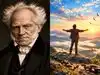
Quote of the day by Arthur Schopenhauer: 'He who has lost all hope has also lost all fear' - German philosopher’s powerful words explain why those who have nothing to lose have nothing to fear in life
Quote of the Day by Arthur Schopenhauer: “He who has lost all hope has also lost all fear” offers a striking reflection on the connection between hope, fear and human nature. The German philosopher’s words suggest that fear often comes from having something to lose, while complete hopelessness can remove that fear. The quote also reflects Schopenhauer’s wider philosophy, which examined suffering, desire and the struggle to find freedom from the pressures of human existence.

Quote of the day by Friedrich Nietzsche: ‘The most intelligent men, find their happiness where others would find only disaster; their delight is…’ German philosopher’s powerful life lesson on finding joy where others see failure
Friedrich Nietzsche’s widely attributed quote suggests that intelligent and strong people may find happiness where others see disaster, because they embrace effort, discipline and self-mastery. Rather than seeking constant comfort, Nietzsche’s philosophy encourages confronting challenges and using them for personal growth. The German philosopher connected fulfilment with developing inner strength and making discipline a natural part of life, offering a thought-provoking perspective on resilience, struggle and happiness.

Are you really intelligent? Philosopher says these 2 behavioural habits can reveal your smartness level
A philosopher has pointed to two everyday behavioural habits that may reveal something about a person's intelligence. Taking responsibility for mistakes instead of constantly blaming others and being comfortable spending time alone may reflect qualities such as self-awareness, introspection and independent thinking. While these habits are not a definite test of intelligence, they offer an interesting perspective on how smart people may approach themselves, others and the world around them.

Quote of the day by Friedrich Nietzsche: 'We have to be careful that in throwing out the devil, we don’t throw out the best part of ourselves...' What the German philosopher teaches about embracing your true self
Friedrich Nietzsche’s quote about “throwing out the devil” highlights the complexity of human nature and the importance of self-acceptance. It suggests that suppressing our darker or uncomfortable traits entirely could mean losing qualities linked to courage, creativity, ambition and individuality. Nietzsche’s wider philosophy challenged conventional ideas about morality, truth and human behaviour, encouraging people to examine their instincts rather than simply rejecting them.
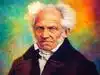
Quote of the day by Arthur Schopenhauer: ‘A high degree of intellect makes a man unsocial. The more a man has in himself, the less…’ — German philosopher on the power of solitude
Arthur Schopenhauer quote of the day: German philosopher Arthur Schopenhauer believed that people with exceptional intellect often find greater fulfilment in solitude because their inner lives provide ample stimulation. He argued that society frequently mistakes a preference for being alone as loneliness or detachment. Today, psychological research suggests that healthy solitude can strengthen self-awareness, improve critical thinking and enhance emotional resilience. Choosing time alone, when balanced, can also foster independence and encourage richer, more authentic relationships over superficial social bonds.
- Go To Page 1

Psychology says people who laugh during serious situations aren't heartless or insensitive, they may be trying to manage intense emotions differently
Psychology suggests that people who laugh during serious situations are not necessarily being insensitive or disrespectful. In many cases, the laughter reflects an emotional response to stress, discomfort, or tension. Understanding the context and the reason behind the reaction is often more meaningful than judging the behavior on its own.

Quote of the Day by Arthur Schopenhauer: “I have long held the opinion that the amount of noise that anyone can bear...” - Timeless life lessons on psychology, emotional intelligence, deep thinking, mental clarity, and the power of silence from the philosopher who inspired Nietzsche and Freud
Quote of the day today by Arthur Schopenhauer: Some people can work through constant noise without a second thought. Others lose focus the moment distractions begin. More than 150 years ago, Arthur Schopenhauer offered a bold explanation for this difference. His striking observation about noise, attention, and the human mind still sparks debate today, while revealing timeless lessons about psychology, emotional intelligence, and the surprising power of silence.

Quote of the day by Arthur Schopenhauer: 'All truth passes through three stages. First, it is ridiculed. Second, it is...' - German philosopher and The World as Will and Representation writer teaches life lesson on handling rejection, facing criticism and why truth always wins in the end
Arthur Schopenhauer quote today: German philosopher Arthur Schopenhauer's observation reveals how groundbreaking ideas often face ridicule and fierce opposition before becoming universally accepted. His three-stage theory highlights that what is initially dismissed as outlandish can, with time and resilience, eventually be embraced as self-evident.

Quote of the day by Arthur Schopenhauer: "Talent hits a target no one else can hit; genius hits a target no one else can..."
Quote of the day by Arthur Schopenhauer continues to spark conversations because it challenges one of our biggest assumptions: Is talent enough to change the world? His famous insight suggests that true genius is not about doing something better but about seeing possibilities others cannot. Learn what separates genius from talent and why this timeless idea still shapes innovation, creativity, and extraordinary success today.

Quote of the day by philosopher Arthur Schopenhauer: 'Five minutes after birth, they decide your name, nationality and sect. Then you spend the rest of your life defending what you did not choose...' How much of your identity did you actually choose? Father of philosophical pessimism asks
German philosopher Arthur Schopenhauer's quote of the day encourages reflection on the identities people inherit rather than select for themselves. The quote highlights how many beliefs and labels are assigned at birth and invites individuals to think critically about them. Explore the meaning behind the statement and looks at Schopenhauer’s life, philosophy, major works, and lasting influence on modern thought.

Quote of the day by Arthur Schopenhauer: 'The greatest legacy I will leave my children is that they will never exist...' The German philosopher questions the purpose of bringing new life into this world
Arthur Schopenhauer is remembered as one of history's most influential pessimistic philosophers. The quote, “The greatest legacy I will leave my children that they will never exist,” reflects his belief that life is filled with unavoidable suffering and endless desire. While not considered a direct quote from his writings, it closely mirrors his philosophy explored in The World as Will and Representation. Examine the meaning behind the statement, Schopenhauer's life, major ideas, and his lasting influence on thinkers, writers and artists around the world.

7 books recommended by Elon Musk that helped shape his thoughts, from childhood to trillion-dollar success
Elon Musk's intellectual journey is shaped by a diverse reading list, from existential sci-fi like 'The Hitchhiker's Guide to the Galaxy' to engineering principles in 'Structures.' Biographies of Benjamin Franklin and Einstein, alongside cautionary tales on AI like 'Superintelligence' and 'Life 3.0,' reveal the inspirations behind his ambitious, world-changing goals.

Quote of the day by Arthur Schopenhauer: “Wealth is like seawater: the more we drink, the...” — A timeless wisdom lesson on money, success, happiness, human desire, and the hidden trap of never feeling enough
Quote of the day by Arthur Schopenhauer reveals a powerful truth about wealth, success, and happiness. Modern research shows rising income often fails to create lasting satisfaction. Human desire keeps expanding. That is why many achievers still feel empty. His timeless wisdom challenges the endless pursuit of more and redefines true prosperity through contentment, purpose, and self-awareness.

Quote of the day by Arthur Schopenhauer: 'A man's face as a rule says more, and more interesting things, than his mouth, for it is...' - inspiring life lessons on human expression, emotions and how to understand people beyond what they say by philosopher of pessimism
Quote of the day by Arthur Schopenhauer: He believed a person's face reveals more than their words. He argued expressions, not just speech, offer a deeper understanding of thoughts and aspirations. This insight highlights the profound significance of non-verbal communication in truly knowing someone, suggesting our inner world is often etched on our features.

Quote of the Day by Friedrich Nietzsche: 'If married couples did not live together, happy marriages would be more frequent...' Famous philosopher explains why living apart could make relationships seem happier
Friedrich Nietzsche's Quote of the Day, "If married couples did not live together, happy marriages would be more frequent," offers a thought-provoking perspective on relationships and personal independence. First published in his 1878 book Human, All Too Human, the quote suggests that constant proximity can sometimes create tensions that affect marital happiness.

Quote of the Day by Arthur Schopenhauer: ‘The doctor sees all the weakness of mankind; the lawyer all the…’ The hidden truth behind human weakness, wickedness, and stupidity reveals why the German philosopher's warning still feels uncomfortably accurate today
Quote of the Day: The quote serves as a call for greater self-awareness. People often devote considerable energy to judging others without recognizing how their own experiences, beliefs and circumstances shape their perspective. Arthur Schopenhauer reminds us that our view of the world is rarely objective; it is deeply influenced by the position from which we observe it.

Quote of the day by Friedrich Nietzsche: 'A good marriage is built on the ability to be friends, hence the best friend will probably have the best wife...' - what makes a happy marriage truly last, explained through Nietzsche’s philosophy of friendship
Friedrich Nietzsche, a major figure in Western philosophy known for his sharp and aphoristic style, explored human relationships through a realistic lens in his 1878 work Human, All Too Human. In his quote of the day, he emphasizes that marriage is fundamentally built on friendship rather than romance alone. Nietzsche suggests that emotional compatibility, trust, and the ability to form genuine human connections are more important for a lasting relationship than passion by itself.

Quote of the day by Arthur Schopenhauer: 'A man can be himself only so long as he is alone; and if he does not love solitude, he will not love freedom...' - Why the German philosopher believed true freedom sometimes begins with loneliness
German philosopher Arthur Schopenhauer is still remembered for his deep thoughts on human life, individuality and freedom. One of his most widely discussed quotes continues to connect with readers even today. The quote reflects Schopenhauer’s belief that people often lose their true identity while trying to fit into society and that solitude allows individuals to think freely without outside pressure.

Quote of the day by famous philosopher Friedrich Nietzsche: ‘When entering marriage, one should ask - do you think you will be able to have good conversations with this woman into…’; German writer on a lasting marriage
Friedrich Nietzsche, a renowned German philosopher, believed marriage thrives on continuous, meaningful conversation. His insights, drawn from his book 'Human, All Too Human', highlight that intellectual and emotional connection sustains relationships beyond fleeting attraction. Despite personal health struggles, Nietzsche's profound ideas continue to shape modern thought and offer timeless wisdom on human connection.

Quote of the Day by philosopher Arthur Schopenhauer: 'The safest way of not being very miserable is…'—Inspiring quotes by the 'philosopher of pessimism'
German philosopher Arthur Schopenhauer's profound quote offers a timeless perspective on happiness and misery. He believed that excessive expectations lead to disappointment. By moderating our hopes, we can safeguard ourselves from deep emotional pain. Schopenhauer's ideas, though often seen as pessimistic, continue to resonate, guiding us toward emotional realism and a more balanced approach to life's inevitable challenges.

Quote of the Day by Baltasar Gracián: 'A synonym is a word you use when...'- The renowned Spanish writer and philosopher's witty take on language, intelligence and the fear of being wrong
Spanish philosopher Baltasar Gracián's witty observation about synonyms reveals a timeless human fear of appearing ignorant. The quote highlights how people often use simpler words to avoid admitting uncertainty, a behavior that remains relevant despite technological advancements. Gracián's concise style and sharp wit continue to resonate centuries later.

Quote of the day by Arthur Schopenhauer: 'Man can do what he wills, but he cannot will what he wills.' Life advice from German philosopher who admired Indian texts like Upanishads & Bhagavad Gita
Arthur Schopenhauer, a 19th-century German philosopher, posited that while individuals can act on their desires, they cannot choose those desires themselves. This concept, central to his work "The World as Will and Representation," highlights the unconscious will's influence on human motivation and the illusory nature of free will at the level of desire.

Quote of the day by Arthur Schopenhauer: 'Only a philosopher can be happy in marriage, and philosophers do not marry.' Why being married does not promise love and happiness in life, explained by the German philosopher
The 'Quote of the day' by Arthur Schopenhauer reflects his belief that love is driven more by nature than true emotion, and that marriage often leads to disillusionment over time. The widely known line, popularised by Will Durant in The Story of Philosophy, suggests that only a detached, rational thinker could find happiness in marriage, yet such a person would likely avoid it altogether. The quote continues to spark debate today for its blunt and thought-provoking take on relationships.

India's Pharma 2.0: How policy and entrepreneurs built the pharmacy of the world
India's pharmaceutical industry has emerged as a formidable force on the world stage, contributing significantly to global health by producing a substantial share of essential medicines. This success story is driven by innovative government initiatives and the fearless spirit of Indian business leaders.

February 22, today in world history: From NASCAR milestone to iconic birthdays that shaped the world
February 22nd boasts a rich history, from George Washington's 1732 birth and the first US trade with China in 1784, to the Adams-Onís Treaty ceding Florida in 1819. The date also marks scientific milestones like the Brønsted-Lowry theory (1879) and Dolly the sheep's cloning (1997), alongside sporting legends like the Daytona 500's debut (1959) and the 'Miracle on Ice' (1980).

Quote of the day by Friedrich Nietzsche: 'Whoever fights monsters should see to it that in the process he does not become a monster'
Friedrich Nietzsche’s quote of the day warns how the act of fighting evil can itself reshape a person’s character if done without self-awareness. Written in Beyond Good and Evil in 1886, the line reflects his concern that prolonged confrontation with wrongdoing may erode moral boundaries and lead individuals to adopt the very traits they oppose.
No relation is irreconcilable
No relation is irreconcilable and implacable. The heart knows that the person, once close, will eventually come back. Love defies all to be with its object of affection and adoration.

As court reasons with rhyme, all is fair in love at last
Justice Chandrachud referred to Oscar Wilde's arrest in 1895 for "committing gross indecency with male persons".
Load More

