
ARCTIC CANADA RESEARCH
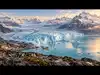
Did humans cancel the next ice age? Ancient moss reveals an ice cap growing for centuries and global warming may have reversed it, here's what scientists found
Plants uncovered by melting Arctic ice have revealed a surprising change in its history. Scientists believe that the findings could alter how we identify the beginning of an ice age.

Denmark emerges smiling from Trump-Greenland deal, experts say
Danish commentators on Saturday cast a deal announced by US President Donald Trump to give Washington control over Greenland's security as a diplomatic win for Copenhagen. Trump on Friday said the US, Denmark and Greenland had struck a deal giving Washington permanent control over Greenland's security and barring Russia and China from setting up bases in the Arctic territory.

In 1845, two British ships entered the Arctic with 129 men searching for the Northwest Passage; both vessels and every member of the expedition disappeared
The collaboration between Inuit wisdom and Western scientific approaches facilitated the remarkable finding of two elusive ships from the Franklin Expedition. This ill-fated journey, led by Sir John Franklin with 129 crew members, sought the Northwest Passage in the Arctic. After an extensive search, the wrecks of HMS Erebus and HMS Terror were discovered, underscoring the invaluable insights provided by Inuit oral traditions in unraveling historical enigmas.

Trump's pressure on NATO is reshaping Europe's defences. Will it break the alliance?
European nations are increasing defence spending and exploring alternatives to American military technology. This shift is happening as doubts grow about the durability of United States support for NATO. While allies have met spending demands, uncertainty about future US troop presence has persisted. Further, Russia's actions have tested NATO unity and European defence capabilities.

Ancient DNA reveals how farming, wildlife and human activity transformed a Canadian lake's ecosystem over 1,000 years
Ancient DNA from Crawford Lake sediment reveals a millennium of ecological history. Scientists tracked changes in plants, animals, and human activity over time. Indigenous farming left a genetic footprint, influencing the local ecosystem significantly. Wildlife patterns shifted, showing ecosystem responses to human presence and absence. This research offers a new perspective on long-term human environmental influence.
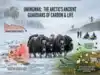
In 2011, Swedish and Danish researchers fenced muskoxen out of test areas in Greenland. 3 years later, plants there absorbed only half as much carbon in summer
Muskoxen, ancient Arctic survivors, maintain healthy grasslands which store vital carbon. These large herbivores face threats from climate change and increased predation. Historically, overhunting pushed muskoxen populations toward extinction in many regions. International efforts have aided recovery, but enforcement remains a serious concern.
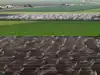
Since 2014, US farmers have been deliberately flooding their fields to create habitat for migratory birds; a decade later, 180,000 acres of farmland have become temporary wetlands serving as vital habitat for millions of birds
BirdReturns pays farmers to flood fields, creating vital temporary wetlands for migrating birds. This initiative helps birds and also replenishes groundwater supplies in California. The program uses technology to identify optimal times and locations for habitat creation. Similar managed flooding projects are being studied in the Mississippi Delta region. These efforts aim to support bird populations and improve environmental conditions.
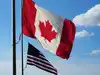
Canada is bolstering its defense industry as US relations fray. A boom is on for local contractors
Canada is strengthening its economic self-sufficiency by reducing reliance on American military suppliers. New defense funding is driving innovation and job creation across various Canadian companies. These firms are developing advanced technologies for the nation's vast Arctic region. European allies and Canadian startups are also finding new opportunities in this evolving sector. This strategic shift aims to bolster domestic defense capabilities and foster global partnerships.
Arctic holds 1.3 trillion tonnes of ancient carbon, scientists find what warming does to it
A study of Arctic seabed sediments has offered new clues about the fate of ancient carbon released from thawing permafrost. Researchers found that microorganisms processed only a small fraction of the carbon into gases, while most remained buried offshore. The findings could refine estimates of permafrost’s climate impact, although scientists caution that some carbon may decompose before reaching the seabed.
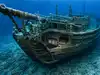
In 1848, Franklin's crew abandoned HMS Terror in the Canadian Arctic; 168 years later, researchers found plates and bottles still resting on its shelves
After 167 years, the HMS Terror has been found in Terror Bay, unveiling a treasure trove of well-preserved artifacts such as plates and glasses. These remarkable discoveries shed light on the crew's last moments and the mysteries surrounding their fate. Furthermore, recent research challenges the previous assumption regarding lead poisoning as the cause of the expedition's demise, suggesting that more secrets from this historic Arctic journey remain to be uncovered.
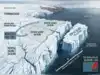
In 2019, an international team began monitoring Greenland's Petermann Glacier's floating ice tongue from space. 7 years later, 76.4 sq km broke away, creating a Manhattan-sized ice island, while two more could reduce the tongue by 254 sq km
Greenland's Petermann Glacier lost a large iceberg, its biggest since 2012. Scientists have monitored this glacier's floating ice tongue for seven years. Two more large ice islands are expected to break away soon. This calving event offers a rare chance to study Arctic ice formations. The detached ice mass could also create hazards for shipping operations.

Canada deepens Arctic defense ties with Nordics after Trump threats
Canada is forging new alliances with Nordic nations to secure its vast Arctic region. This move comes as the United States' commitment wavers and Russia and China increase their military activities. Canada aims to reduce its reliance on the U.S. for defense, focusing on collaboration with trusted partners like Denmark, Finland, Iceland, Norway, and Sweden.

Beijing at US' doorsteps: Tensions flare as China’s Xue Long 2 moves into US waters — here’s what happened next
Chinese icebreaker Xue Long 2 entered a sensitive U.S. Arctic zone, triggering a fast response from the U.S. Coast Guard near Alaska. The vessel was seen operating inside America’s Extended Continental Shelf, about 290 nautical miles north of Utqiagvik. U.S. officials deployed an aircraft under Operation Frontier Sentinel to monitor its activity. While China claims it was conducting scientific research, the U.S. sees it as a strategic move. The incident highlights growing Arctic tensions, where control over resources and influence is becoming a global power contest.
The mysterious black dust speeding up Arctic ice melt: What’s behind it?
Arctic faces a new threat. Soot from Canada's massive wildfires darkens ice and snow. This speeds up melting. The albedo effect worsens warming. Scientists warn of rising sea levels. Weather patterns are disrupted. Extreme events may increase. Action is needed to cut emissions. Wildfire management is crucial. International cooperation is essential for protecting the Arctic.

NATO head warns about Russian, Chinese interest in Arctic
NATO Secretary General Jens Stoltenberg on Friday warned about Russia's military buildup in the Arctic and China's increasing interest in that part of the world. During a visit to Canada's north, Stoltenberg said the shortest path to North America for Russian missiles and bombers is over the North Pole.
Melting may cause more abrupt changes in Arctic
The study, published in ‘Nature Climate Change’, suggests that the severity of wildfires could double from one year to the next, and remain at the new higher rate for several regions in Canada, including Yukon, as the permafrost across the territories degrade.
Arctic regions getting greener due to climate change: Nasa
Due to changing climate, Arctic regions of North America are getting greener, with almost a third of land cover looking more like landscapes found in warmer ecosystems, according to a Nasa study. Researchers found that western Alaska, Quebec and other regions became greener between 1984 and 2012.
Russia to urgently evacuate Arctic post as ice melts
Russia has ordered the urgent evacuation of the 16-strong crew of a drifting Arctic research station after ice floe that hosts the floating laboratory began to disintegrate, officials said on Thursday.
Ice melt may allow ships to sail across Arctic by 2050
Global warming will make these frigid routes much more accessible than ever imagined by melting an unprecedented amount of sea ice during the late summer, a University of California — Los Angeles (UCLA) research shows.
Load More

