
ARCHAEOLOGICAL SURVEY

The much awaited Noida-Greater Noida West metro link, a mega museum and more: Inside the Cabinet's Rs 77,101 crore package
On Wednesday, the Union Cabinet approved significant proposals for infrastructure and business support across India. The government will allocate ₹3,230 crores for the Yuge Yugeen Bharat Museum in New Delhi. A metro rail project linking Noida and Greater Noida will receive ₹2,390 crores for development. Additionally, ₹62,370 crores will be set aside for NBS rates on fertilizers for the Rabi 2026-27 season.

4,700-year-old shipwreck near Kekova island offers insights into ancient seafaring
Archaeological discoveries beneath the sea can provide valuable insights regarding ancient trade, technology and daily life. Amphorae recovered from a shipwreck located near Kekova Island off Antalya, Turkey, are offering researchers with hints regarding maritime connections in the eastern Mediterranean decades ago.

America’s first people survived a world in flux: 23,000-year-old footprints reveal how climate change reshaped their lives during the Ice Age
Research at White Sands National Park indicates that the ancient environment dramatically changed over thousands of years. This study provides new insights into how climatic shifts impacted early human inhabitants in the region. Lake Otero diminished and vegetation transformed, which may have altered available resources for early Americans. Scientists analyzed sediments and ancient pollen to reconstruct the past environmental conditions.

Amelia Earhart disappeared in 1937. Nearly a century later, why are scientists now investigating a possible clue beneath the water?
A research team has reached Nikumaroro to investigate the Taraia Object, which may relate to Amelia Earhart's disappearance. They will employ various methods, including sonar and magnetometers, to examine the submerged object. The expedition faces challenges from changing ocean conditions and local wildlife, particularly giant coconut crabs. Previous theories suggested Earhart may have crashed near the island or survived as a castaway after her disappearance.

No order issued by ASI to close Jantar Mantar heritage site on October 10: Sources
Jantar Mantar's historic observatory, constructed in 1724, remained open despite heavy police restrictions during a protest. The security measures involved over 30,000 personnel and closure of multiple access points in central Delhi. The Archaeological Survey of India did not issue orders to close the site. Visitors were allowed in small groups, subject to police guidelines. Many individuals experienced difficulties moving freely due to the tight security around the area.

Archaeologists discover rare bronze ring engraved with the lighthouse of Alexandria at Egypt’s sunken royal palace
Underwater archaeologists have found a bronze signet ring engraved with an image believed to feature the Lighthouse of Alexandria, one of antiquity's most celebrated monuments. The discovery was made at Antirhodos, a submerged island that once held a royal palace in Alexandria’s Great Harbor, the European Institute for Underwater Archeology said. The engraving looks like pictures of lighthouses on coins from the second century AD, so the ring could be from that period.
- Go To Page 1

10,000 people combed Mongolia for Genghis Khan’s grave in a 30,000-hour search in 2010; 800 years later, it’s still missing - and a tiny tribe may hold the clue
Genghis Khan’s grave: For 800 years, Genghis Khan's final resting place has remained a mystery, despite countless expeditions and tales. Over 10,000 volunteers have utilized satellite imagery to comb through Mongolia in search of answers. It's believed that Khan's soldiers may have hidden his tomb intentionally following his death. The isolated Burkhan Khaldun site is difficult for archaeologists to access due to political restrictions.

Pandharpur Vitthal-Rukmini idols get protective coating: Why is it being done and what's the Vajralepan process
Conservation work on the ancient Vitthal and Rukmini idols commenced this week under ASI supervision. The idols are undergoing scientific cleaning and protective coating to preserve their integrity for future generations. Digital documentation of the idols has been completed to aid future preservation efforts. The temple will reopen for devotees on September 26 after the conservation is finished.

In 2007, satellite images, radar, and ground surveys revealed Angkor as the world’s largest preindustrial settlement complex
In 2007, a dedicated archaeological team successfully mapped Angkor, employing cutting-edge technology and techniques. Their discoveries illustrated that Angkor sprawled over roughly 1,000 square kilometers, featuring a sophisticated irrigation network. These revelations transformed perspectives on urban growth and population density in historical societies, offering a stark contrast to contemporary suburbs. This technology has also led to the unearthing of many other concealed ancient towns globally.

In 2023, a satellite-image model led archaeologists to 13 previously unknown Amazon geoglyphs, including one 444 metres across
In 2023, a groundbreaking AI model trained by researchers unveiled the locations of ancient geoglyphs hidden in the Amazon rainforest. This cutting-edge technology confirmed the presence of previously undiscovered civilizations, revealing complex human settlements that predate European colonization. Historical sites have emerged due to past deforestation, showcasing how human actions can impact archaeological findings. Researchers aim to investigate these sites further while using non-invasive techniques to safeguard the forest ecosystem.

In 2018, researchers used satellite imagery to identify 81 ancient earthwork sites in the Amazon, providing evidence of pre-Columbian settlements
Recent archaeological discoveries in the Amazon rainforest reveal that advanced civilizations flourished in this region long before European contact. Evidence of geometric constructions and the use of terra preta highlights the sophisticated urban planning of these cultures. Furthermore, numerous earthworks hidden beneath the dense foliage challenge the long-held belief that the Amazon was merely an untouched wilderness.
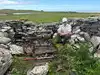
King Charles’ alma mater students uncover possible 10th-century church, live without electricity and pump water from 1,000-year-old well
Students from King Charles’ alma mater, Gordonstoun, have uncovered the remains of a possible 10th-century church on the remote Scottish island of Swona. The students found the foundations of an altar and step, strengthening the belief that the long-known ruins were once a Viking-era church. The group also spent a week on the isolated island without electricity and pumped fresh water from a well believed to be 1,000 years old.

How a 133-year-old tree signed for Yellowstone Forest Reserve stalled a helicopter mission
Plans to helicopter a historic inscribed tree from Wyoming's wilderness are paused. Public opposition arose after land managers failed to consult advocacy groups. The Shoshone National Forest is now exploring a 3D scan and replica option. This alternative aims to preserve the tree's history without removal. The original plan involved significant helicopter use within the protected area.

Hauz Khas, Jantar Mantar restrict entry as 10 monuments undergo repair
Due to necessary renovation and conservation work, entry to several monuments in Delhi is temporarily restricted. Hauz Khas, Jantar Mantar, and Agrasen ki Baoli are experiencing visitor access limitations. Emergency structural work is taking place at Hauz Khas and Kotla Firoz Shah, while refurbishments are underway at Tughlaqabad Fort and Safdarjung Tomb, led by the Archaeological Survey of India.

1,200-year-old coffins hanging from sheer cliffs reveal Asia’s mysterious sky graveyards, and the surprising reason separate ancient cultures chose to place their dead above the earth
In ancient times, certain communities engaged in the unique practice of suspending coffins on cliffs and within caves. This fascinating burial custom was prevalent in southern China and Southeast Asia, believed to be inspired by protection and spiritual beliefs. Similar rituals emerged in Thailand and the Philippines, indicating a shared cultural heritage.
The Pompeii of Madhya Pradesh: Unlocking the secrets of Ujjain's 42 skeletons
Forty-two skeletons discovered at Kumhar Tekri in Ujjain remain an archaeological mystery. These ancient remains were found in diverse positions, with some buried and others cremated. Shell jewelry and urns were unearthed alongside the human remains from the 3rd century BC. Excavating the nearby Vaishya Tekri stupa could provide vital clues about these ancient people.

A PhD student stumbled upon a lost Maya City while searching on Google; It was hidden under Mexican forest for 100 year
A graduate student made an astounding discovery of the ancient Maya city of Valeriana through online environmental data. This hidden city boasts intricate pyramids and expansive plazas, along with countless structures veiled under dense forest. Utilising LiDAR technology, researchers unveiled vital urban and agricultural infrastructure elements, hinting at the potential for numerous other ancient sites within existing datasets waiting to be uncovered.

414 protected monuments and areas witnessed encroachments; government says appropriate action taken in such cases
India has declared 3,688 ancient monuments as national importance sites. Of these, 414 protected sites have reported encroachments by individuals. The government is taking action under the AMASR Act for their protection. Surveys and geo-referencing of monument boundaries are now complete. This data is uploaded to the Bhuvan Portal for better management.

Nearby encroachments will be cleared to trace out ancient stepwell: Officials in UP's Sambhal
In Sambhal district, officials will clear encroachments to uncover an ancient stepwell. Using manual labor to preserve the structure, the Archaeological Survey of India is guiding the excavation. Nearby buildings will be vacated to maintain the archaeological relic. Past violence over a mosque survey in the area led to injuries and detentions.
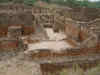
Haryana Govt initiates ground penetrating radar survey at Agroha archaeological site
Haryana Vidhan Sabha speaker Gian Chand Gupta and urban local bodies minister Kamal Gupta inaugurated a ground penetrating radar (GPR) survey at the Agroha archaeological site in Hisar. This initiative is part of a collaboration between the Archaeological Survey of India (ASI) and the Haryana archaeology and museum department to develop the site. The last excavation at Agroha revealed evidence of an ancient civilization, and the GPR survey aims to identify underground structures.

Several monuments, archaeological sites under encroachment, govt tells Parliament
The government has informed the Lok Sabha that several old monuments and archaeological sites in the country are facing encroachment. There are 3,697 ancient monuments and archaeological sites of national importance, with the Archaeological Survey of India periodically assessing their condition. Complaints are filed and actions taken against encroachers and those causing damage to protected monuments.

Varanasi court gives another week to ASI to submit Gyanvapi survey report
The Varanasi district court has granted an additional week to the Archaeological Survey of India (ASI) to submit a scientific survey report for the Gyanvapi mosque complex. District Judge A K Vishvesh set December 18 as the next hearing date, extending the deadline after the ASI informed the court on November 2 that the survey was completed but required more time to compile the report.

ASI seeks 15 more days to submit report on survey of Varanasi's Gyanvapi Mosque
The Archaeological Survey of India (ASI) has requested an additional 15 days from a Varanasi court to submit a scientific survey report on the Gyanvapi mosque complex. Currently, the ASI is conducting a survey, excluding the wazookhana, to determine if the 17th-century mosque was built over a pre-existing Hindu temple structure.

Gyanvapi mosque complex: Varanasi court grants four more weeks to ASI to complete survey
Varanasi court on Thursday granted four more weeks to The Archaeological Survey of India (ASI) to complete survey of Gyanvapi mosque complex and submit the report.

Court rejects Gyanvapi mosque management committee's plea to stop ASI survey
A court in Varanasi, Uttar Pradesh, has rejected a plea by the Gyanvapi mosque management committee to stop the ongoing scientific survey of the complex by the Archaeological Survey of India (ASI). The court stated that the survey had already been approved by the Allahabad High Court and the Supreme Court, so it could not pass any order to stop it.

Varanasi court grants additional 4 weeks to ASI to complete Gyanvapi survey
A Varanasi court on Friday granted additional four weeks to the Archaeological Survey of India (ASI) for completing the scientific survey on the Gyanvapi mosque that stands next to the Kashi Vishwanath temple here. Hearing a plea by the ASI, District Judge A K Vishvesha allowed it the additional time.

Varanasi court reserves order for July 21 on plea seeking scientific survey of Gyanvapi mosque
A court in Varanasi on Friday reserved its order for July 21 on a petition seeking a scientific survey of the Gyanvapi mosque located next to the Kashi Vishwanath temple. The Archaeological Survey of India (ASI) was asked in the petition submitted by the Hindu side of the case to survey the entire Gyanvapi mosque complex.

ASI dials Isro to locate 24 'missing' monuments
Archaeological Survey of India (ASI) has signed an MoU with ISRO to locate the untraceable monuments using satellite technology.

Archaeological Survey of India documents 732 unprotected monuments
The Archaeological Survey of India has documented 732 unprotected monuments across the country, some dating back to the Iron Age.
Load More

