
AIRLINE FUEL COSTS
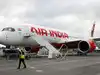
Air India losses narrow, but Singapore Airlines’ profit falls 44% as fuel costs rise
In its latest financial report, Singapore Airlines announced a net profit of S$134 million for the first half, down from S$239 million in the same period last year. The airline faced a more than 20% rise in expenses, driven by higher jet fuel prices that reached US$171 per barrel, marking an 86.7% increase. Nevertheless, revenue saw a boost of 16.8% to S$11.

In a first since Covid, Diwali flight numbers fall as high fares, disruptions take a toll
Airlines scheduled about 6% fewer flights across October and November than a year earlier, according to data from aviation analytics firm Cirium. That marks the first capacity decline since 2020, when carriers slashed service capacity by nearly 45% amid the pandemic-induced collapse in travel demand.

Air India shortlists former Singapore Airlines executive Balagopal Kunduvara for CFO role
Air India has shortlisted former Singapore Airlines executive Balagopal Kunduvara for the CFO role as the airline steps up efforts to cut costs and improve financial performance. Kunduvara, who recently left his position as finance chief at Garuda Indonesia, has over two decades of experience at Singapore Airlines. The carrier reported losses of more than Rs 22,000 crore in the last financial year.
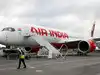
Air India considers departed Garuda CFO for top finance position
Most recently, Kunduvara was finance chief for Garuda Indonesia, a position he recently left after holding the job for little more than a year. Prior to that, he spent more than two decades at Singapore Airlines, which is a partial owner of Air India alongside conglomerate Tata Group.
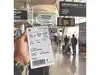
Don't let fare caps clip airlines' wings
Recently, airline price surges during festival seasons have raised concerns about imposing fare caps. While there is public demand for such measures, they may disrupt airlines' pricing flexibility. Regulations on airfares are more effective when they account for market demand and emergencies like natural disasters. Airlines might resort to add-on charges if their revenue is impacted by fare restrictions.

Airlines go premium as demand for business-class seats outpaces economy
Since 2020, airlines have increased the number of premium seats significantly to meet growing consumer demand. Airlines are adopting strategies to enhance premium offerings, including gourmet meals and exclusive lounges. This focus has resulted in premium products generating substantial ticket revenue. Various airlines are implementing new options, such as Economy Plus and first-class services.
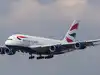
British Airways parent profit drops on higher fuel costs
IAG, the owner of British Airways and Iberia, said Friday that its net profit dropped more than 12 percent in the third quarter on soaring fuel costs and flight disruptions caused by the Middle East conflict. The group said its overall flight capacity had been hit "by cancellations due to the conflict in the Middle East, together with aircraft availability linked to engine issues and disruption related to air traffic control disruption".
Iran war, doubling fuel prices knock 66% off Emirates' first-half profit
Emirates Group's first-half net profit plunged 66% to $1 billion as the Iran war disrupted flights across the Gulf and doubled jet fuel prices. Passenger numbers at Emirates airline fell 22%, while cargo revenue rose 52%. The Dubai-based group is relying on cash reserves as geopolitical uncertainty clouds its outlook.

India proposes 1% mandatory blending of green jet fuel from January
India has introduced a draft policy for the mandatory blending of sustainable aviation fuel for international flights. The initial blending requirement is set at 1%, increasing to 5% by 2030, and 20% by 2040. Airlines must source approximately 90% of their aviation turbine fuel from international airports to curb economic tankering. Non-compliance may lead to penalties for airlines and oil marketing companies in this proposal.

Government prepares draft sustainable aviation fuels policy; moots mandatory blending in ATF from 2027
The civil aviation ministry has circulated the draft National Policy on Sustainable Aviation Fuels which mandates use of only indigenously manufactured SAF to be blended with Aviation Turbine Fuel (ATF).

Star Air cuts weekly flights on high fuel costs, says airline official
Star Air has reduced its weekly flights by 15-20%, largely due to soaring Aviation Turbine Fuel prices. The airline is calling for a special fuel pricing strategy to support regional operators. This change is in response to increasing operational expenses caused by volatile fuel costs amid geopolitical tensions. Although the government had previously set up a Price Stabilisation Fund for airlines, it has since expired.

FLY91 plans to expand fleet to 60 aircraft in five years, targets 350 weekly flights: CEO Manoj Chacko
Regional airline FLY91 plans to expand its fleet from six to around 60 aircraft over five years, backed by an order for 40 planes scheduled for delivery between 2027 and 2032. The airline also aims to operate nearly 350 weekly flights this winter, prioritising domestic expansion before exploring international routes.

Parliamentary panel raises concerns over high airfares; IndiGo, Air India flag rising fuel costs, Pakistan airspace closure
A parliamentary panel raised concerns over high airfares during discussions with IndiGo and Air India officials. Rising Aviation Turbine Fuel prices and the closure of Pakistan airspace were cited as major factors. IndiGo reported significant losses in the September quarter due to these issues, alongside challenges faced by Air India. The meeting also reviewed aircraft security and global aviation practices in India.
IndiGo to consider hedging fuel as it ventures on long haul routes
IndiGo is evaluating the possibility of hedging fuel costs as it plans for long-haul international operations. The airline's planned introduction of the Airbus A350 aircraft will enhance its overseas expansion strategy. Despite previously avoiding fuel hedging, management is now reassessing this approach in light of market competition. IndiGo's dominant position in the domestic aviation market facilitates its long-term growth aspirations.
IndiGo to introduce business, premium economy and economy cabins on A350 aircraft from 2028
IndiGo Airlines will introduce business class, premium economy, and economy cabins with its Airbus A350-900 aircraft. The first A350-900s are expected to join IndiGo's fleet in the second quarter of 2028. This marks a significant expansion in IndiGo's long-haul international operations, offering passengers more travel options. The airline currently operates in the domestic market and aims to strengthen its international presence.

IndiGo expects first Airbus A350 delivery in second quarter of 2028, CEO Willie Walsh says
The anticipated delivery of IndiGo's first Airbus A350 wide-body aircraft is scheduled for the second quarter of 2028, according to CEO Willie Walsh. The airline is focused on expanding its long-haul routes despite the hurdles of increasing fuel costs and a falling rupee. To better manage its operations, IndiGo has cut back on its Saudi Arabia routes.

Government notifies new airfare rules, allows intervention in extraordinary situations
The government has notified new rules allowing it to intervene in airline ticket prices in extraordinary situations and in the public interest, amid concerns over high airfares in the backdrop of elevated crude oil and Aviation Turbine Fuel (ATF) prices.

IndiGo may hike ticket prices to offset soaring fuel bills, says CEO Willie Walsh
Amidst escalating fuel prices that heavily strain profitability, IndiGo is looking at the possibility of raising ticket prices. The airline reported a significant net loss of Rs 1,879.1 crore for the September quarter, with fuel costs surging by 67.2% compared to last year. CEO Willie Walsh highlighted the challenges in reducing costs due to the airline's efficiency.

IndiGo Q2 Results: Loss narrows YoY to Rs 1,879 crore; revenue rises 26%
IndiGo Q2 Results: Budget airline IndiGo reported narrowing of its consolidated loss to Rs 1,879 crore in the second quarter of FY27, compared with Rs 2,582 crore in the year-ago quarter. However, the loss widened from Rs 237 crore posted in the preceding June quarter.
Load More


