
AI SUPREMACY

Investors in other markets would be envious of India multiples: Rich Handler, chief executive of Jefferies
Jefferies CEO Rich Handler believes Indian equities remain reasonably valued despite the market correction and says easing long-term capital gains taxes could attract foreign investors. He sees opportunities in India's AI and data centre sectors, argues that global capital outflows reflect external pressures, and believes concerns about an AI bubble warrant a healthy pause rather than alarm.

Japan’s $21 billion US chip bet raises questions over its own semiconductor revival
Japan has committed to investing $21 billion to establish two semiconductor factories in New York. This deal comes as Japan seeks to support US semiconductor industry growth and strengthen bilateral relations. Experts indicate that these investments may yield limited advantages for Japan's domestic chip manufacturing capabilities. As Japan's debt concerns mount, it plans further investments across various strategic sectors, including AI and chips.

Japan’s $21 billion US chip bet raises questions over its own semiconductor revival
Japan will invest up to $21 billion to build two chip factories in New York state, under a deal announced last week by GlobalFoundries, which is majority-owned by Abu Dhabi's sovereign wealth fund, Mubadala Investment Co.

AI engineers became hot property. Now they’re targets for seduction
AI engineers face heightened risks as foreign intelligence ambitions escalate, targeting them for company secrets. OpenAI has alert its employees about potential espionage tactics, including romantic seduction for information extraction. High-profile cases like Abdulrahman Alfozan's highlight the concrete dangers AI companies encounter.

Skyroot eyes funding boost; MDR deferment cheers D2C brands
Happy Thursday! Skyroot is eyeing a big funding round as it gears up to scale rocket production. This and more in today’s ETtech Morning Dispatch.

Après le Déluge, a case study: France’s debt crisis is exposing deeper cracks in the global economy
Amidst a backdrop of economic turmoil, France is confronted with stagnant growth and high deficits, which are eroding investor confidence. While the euro serves as a buffer, entanglements with taxation and government expenditure present additional hurdles as elections approach. A growing reluctance among foreign investors sparks fears of a potential ripple effect on European bonds, reminiscent of past crises marked by a lack of coordination.
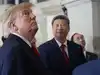
Trump has just fired the starting gun on a new Cold War with China
The US-China AI race is increasingly taking on the character of a Cold War-style strategic contest, with artificial intelligence becoming linked to economic power, military capability, national security and technological leadership.

How fast can China's EVs charge? Inside the race to 5-minute top-ups
Chinese electric vehicle manufacturers, including Geely and BYD, are advancing ultra-fast charging technologies to enhance consumer confidence. These innovations aim to provide charging times comparable to traditional gasoline refueling, which is currently being pursued aggressively. To manage safety concerns and prevent battery degradation, companies are implementing advanced cooling systems and AI technologies. As competition heats up, infrastructure developments for fast charging stations are also gaining momentum.
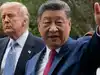
Europe’s dangerous dependence puts it on Xi and Trump’s menu
Mark Carney's warning emphasizes the need for middle powers like the European Union to assert themselves. Europe faces significant challenges in technology dependence and military capabilities compared to the US and China. Supply-chain resilience and trade imbalances require urgent action for the EU to enhance its bargaining power. Collaboration with Canada and Ukraine presents opportunities for a stronger geopolitical stance.

Why Xi & He are really meeting
Trump and Xi will meet in Washington to address AI regulation and trade negotiations, which both leaders prioritize. China aims to boost its economy while Trump seeks to maintain consumer satisfaction ahead of the midterms. Their discussions may revolve around lifting tariffs and rare earth supply strategies, similar to previous talks. This meeting will also highlight a broader competition for global influence involving multiple regions.
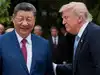
AI may transform economies, but US-China rivalry makes slowing it down unlikely
AI's rapid advancement poses challenges, as concerns from key stakeholders highlight potential risks to humanity. Political leaders in the US and China control the direction of AI development despite differing perspectives. Both countries rely on AI to sustain economic growth amid demographic challenges and competitive pressures. The AI race reflects broader geopolitical rivalries, making coordinated regulation difficult.

ET Under 40 2026: As AI races ahead, leaders urged to put purpose above success
Sivakumar Sundaram highlighted the importance of collective purpose at The Economic Times awards, urging awardees to utilize recognition as a foundation for ongoing contributions. He addressed the swift evolution of AI and stressed the necessity for aligning human values with technology. Cautioning against becoming overly reliant on devices, he emphasized that maintaining relevance demands a continual showcase of one's value and capability.
US to urge hands-off AI regulation at G-20, official says
Leaders are convening at a key moment in the AI sector's development and the global debate over how to govern it, and as the US faces an increasing threat from China for AI supremacy.

AI agents can catch ‘mind viruses’ from each other
Unlike a traditional computer virus, this does not involve malicious software or hacking and can spread through normal conversation. One AI agent persuades another and that agent can then pass the idea on.

QpiAI opens quantum processor manufacturing facility in Bengaluru, targets 10,000 physical qubits
Bengaluru-based quantum computing startup QpiAI has opened an 8-inch quantum foundry to scale production of quantum processors, with plans to reach 10,000 physical qubits. The facility forms part of its 70,000 sq ft R&D centre and will support the development of quantum-AI solutions.

Google names Amin Vahdat as new chief of AI infrastructure buildout: Semafor reports
Google has named veteran leader Amin Vahdat as chief technologist for AI infrastructure as it massively expands data centre and hardware spending. The company is betting on its custom TPUs and scale to stay competitive in the race for computing power. Rival tech giants are also investing heavily in a high-stakes contest for AI supremacy.
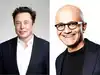
Elon Musk vs Satya Nadella: Billionaire mocks Microsoft after GPT-5 launch
The AI race intensifies as OpenAI launches GPT-5, integrated across Microsoft platforms, hailed by Satya Nadella as a major advancement. Elon Musk dismisses it, asserting his Grok 4 surpasses it, sparking a public exchange. Nadella responds with competitive enthusiasm, welcoming Grok 4 on Azure and anticipating future innovations in the ongoing AI quest.

DeepSeek rattled employees at ChatGPT maker OpenAI so deeply that it's causing a major rift among the company's staff, says report
OpenAI employees have voiced their frustrations over leadership’s priorities, especially as OpenAI’s experimental models fall behind more competitors like DeepSeek.

ETtech Explainer: Behind Trump’s $500-billion ‘Stargate’ bid for AI supremacy
'The Stargate Project' is a $500 billion initiative to build AI infrastructure across the US, with Masayoshi Son taking the role of chairman. This project is not only aimed at supporting the re-industrialisation of the United States but also to provide a strategic capability to protect the national security of America and its allies, OpenAI said.
Load More

