
AI RACE US CHINA
Raghuram Rajan sees silver lining in data centre slowdown, questions AI investment race
Raghuram Rajan points out the slow adoption of artificial intelligence by mainstream businesses despite rapid advancements. He questions heavy spending by AI companies on sophisticated models that few users can fully utilize. The capability race may not yield lasting advantages for first movers, as competitors can catch up quickly. Rajan illustrates the gap between AI's promise and utility with a personal banking example.
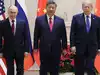
China's nuclear buildup is 'hot and heavy,' Trump says a day after meeting with Xi
Trump stated that China's nuclear weapons development is progressing quickly, potentially outpacing the U.S. and Russia. During a recent meeting, Trump, Xi Jinping, and Vladimir Putin agreed to engage in nuclear risk reduction talks. While previously resistant, China showed willingness to discuss nuclear arms controls. Additionally, the leaders discussed establishing guidelines on artificial intelligence to ensure safety and mutual trust.
Trump threatens 'tremendous tax' on US companies that build AI data centers abroad
President Trump emphasized the importance of building AI data centers within the United States for economic growth. He indicated that companies involved in foreign data center development would face heavy taxation. Amid public skepticism regarding data centers, Trump's proposal may influence community negotiations with tech firms. Technology companies are making commitments to transparency and reducing environmental impacts in building data centers.

The Spy Games: There's a secret world of corporate espionage and power plays
In the AI era, the espionage battlefield may have moved from factory floors and corporate offices to digital networks and cloud infrastructure. But its underlying fundamentals remain unchanged. Companies and countries still deploy spies to secure undue advantage in business and other areas.
Trump says he and China's Xi want moderate AI rules
Donald Trump and Xi Jinping discussed the importance of AI regulations during their recent meeting in Shenzhen. Both leaders expressed a desire to ensure AI is regulated for safety and security purposes. They emphasized the need for strong communication between the United States and China to prevent AI-related security risks. Additionally, concerns were raised about Nvidia's role in AI development within the context of national security.
- Go To Page 1
Trump admin cleared 9 lakh Nvidia, AMD chips for China in six months, House committee says
The US Commerce Department has authorized the shipment of nearly 900,000 advanced AI chips to Chinese firms. This approval is part of a larger request involving 3.4 million AI chips to China. Several Chinese Military Companies, including Alibaba and Tencent, are among those receiving these shipments. Investigations reveal potential chip-smuggling fronts for NVIDIA's sales to these companies.

'We will not bend': Anthropic CEO Dario Amodei puts AI safety ahead of business pressure
Speaking in his first public statement after ringing the Nasdaq opening bell on Anthropic's first day of trading, Amodei said the company believes the risks associated with powerful AI systems can be avoided through the right decisions by those building the technology.

US lawmakers seek Microsoft briefing on reported AI deal talks with ByteDance
Washington has stressed the need for the United States to be ahead of China in the race for AI advancements. In recent weeks media reports about former Nvidia CEO Jensen Huang's affair with a suspected Chinese spy has increased scrutiny on technology business ties.

China has the AI models, India has the AI services edge: Business Sweden’s Jaani Heinonen
Heinonen expects Swedish investment in India to rise as companies rethink China. He sees Indian firms helping Sweden's industries adopt AI, and India becoming the market where Swedish innovation scales.
Trump administration weighs forcing US firms to disclose Chinese AI use
The Treasury Department and the White House Office of Science and Technology Policy (OSTP) have discussed the plan, which would apply to companies such as Airbnb, the people said. The company uses Qwen, an AI model made by China's Alibaba , to power its AI customer service agent.
China seeks advanced Nvidia chips for AI weapons despite US curbs, report says
The US-China Economic and Security Review Commission said Beijing was seeking to circumvent US export controls to obtain advanced semiconductors critical to its push for "intelligentized warfare," the People's Liberation Army's term for integrating artificial intelligence into weapons, command and control, kill chains and logistics.

Pax Silica moment: What India must build for its ambitions
November has become a critical month for the AI industry, marked by regulatory changes from the U.S. Commerce Department. These new restrictions affect China's access to advanced computing power and create opportunities for international cooperation. India has signed the San Francisco Declaration to engage in AI policy and supply chain efforts, despite existing tensions.
Trump administration weighs forcing US firms to disclose Chinese AI use
The Trump administration is exploring a plan to require companies to disclose their use of Chinese AI models. This initiative intends to discourage reliance on Chinese technology by increasing transparency without imposing harsh regulations. Such disclosure could apply to companies utilizing models like Qwen from Alibaba. Congressional investigations have also been launched to scrutinize American companies adopting Chinese AI.

AI firms race for Indian talent: IT margins under pressure
Happy Wednesday! Global AI startups are expanding their India teams to tap the country's engineering talent. This and more in today’s ETtech Morning Dispatch.
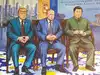
Heigh-ho, a-summitting he will go! Trump faces an Asia trip full of uneasy alliances
Geopolitical stakes are emphasized as world leaders gather in Asia to address various pressing issues. Experts highlight the ongoing US-China AI race and its implications for global technology access. The Quad summit is significant as member nations work to protect AI supply chains from Chinese influence. A trilateral meeting involving Russia, China, and the US raises concerns about future alliances and negotiations.

How Alice Huang's husband built China's $9 billion data centre network: Report
While Alice Huang was using her romantic relationship with Jensen Huang to enable export of restricted Nvidia chips to China, her husband was developing a network of data centres across the country with the help of the communist government, according to the report, which reviewed Chinese public records.
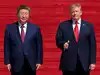
US AI chip curbs threaten Southeast Asia data centre boom, shares slump
The new rule restricts shipments of advanced chips to the region's major economies such as Malaysia, Singapore and Thailand, which some Chinese companies have used to access computing power to train AI models. It also imposes new requirements on overseas data centres that supply "significant volumes of computing power" to firms headquartered in China.

Building dragon-proof wall US, allies team up to protect AI
A coalition of ten countries, including the US and nine allies, aims to secure critical technologies associated with artificial intelligence. The San Francisco Declaration emphasizes the importance of economic security for national security across the signatory nations. Plans for working groups on various aspects of AI include policy, supply chains, and resilience. In the context of competition with China, the US is promoting a strategy called Pax Silica.
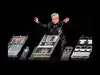
Jensen Huang plans shocking comeback as Nvidia CEO, claim reports as AI giant set to report quarterly earnings
Jensen Huang stepped down after revelations of extramarital affairs, including one involving a suspected Chinese spy that raised questions over exports of the company's advanced AI chips to China, as per reports.
US Treasury chief wants answers soon from Nvidia
Megaspeed is suspected by the United States of helping Chinese firms get around US export controls by buying Nvidia chips for its data centers in Southeast Asia and routing them to China.

As Trump prepares to meet Xi, the Nvidia controversy threatens to complicate the AI truce
Jensen Huang, the former CEO of Nvidia, is involved in a scandal concerning a suspected Chinese spy. This affair heightens existing tensions between the U.S. and China over technology exports, particularly in artificial intelligence. Lawmakers are now demanding stricter controls on advanced AI chip sales amid security concerns. The situation may impact ongoing discussions about AI safety between the nations.

Nvidia scandal puts China chip curbs back in focus as US lawmakers push tougher export restrictions
US lawmakers from both parties are pushing tougher restrictions on China's access to advanced AI chips following reports about former Nvidia CEO Jensen Huang's affair with a suspected Chinese spy. Congress is weighing measures to tighten export oversight, track advanced processors, pressure US allies and close remote-access loopholes.
US Congress steps up scrutiny of Trump, Nvidia after Huang exit
US lawmakers have demanded answers from the Trump administration over what it knew about former Nvidia CEO Jensen Huang's alleged affair with a woman suspected of spying for China. The controversy has renewed scrutiny of US chip exports to Beijing, national security risks and alleged links between Nvidia and the administration.

China is the biggest loser from Jensen Huang’s downfall
Jensen Huang’s reported links to a suspected Chinese spy and concerns over Nvidia chips reaching Chinese companies could trigger tighter US export controls, putting further pressure on China’s AI industry.
Nvidia CEO Jensen Huang resigns, Colette Kress appointed interim CEO
The company has appointed Colette Kress as interim CEO, who will continue as EVP and CFO of the company. Harvey C Jones has been appointed as the chair of the board.

Why China needs to look within
China's trade surplus should start stabilising next year over restrictions and plateauing AI investment. Beijing will have to double down on stimulating domestic consumption to take up the slack from an eventual export slowdown. It has the fiscal firepower to provide consumers income support they need to counteract savings lost in the property market.
How China gets the Nvidia chips it needs to develop AI
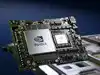
Nvidia's dominance in the global AI chip market has come under scrutiny as US export restrictions fail to fully prevent China from accessing advanced processors. Chinese firms are reportedly obtaining Nvidia chips through smuggling and overseas data centres, while domestic players such as Huawei race to develop competitive alternatives.
US-China AI race could face financial setbacks, mass layoffs over next three years: Report
The report highlighted, the global artificial intelligence (AI) race is increasingly becoming a contest between China's state-led approach and the US market-driven model.
Load More

