
AI PERSONAL AGENTS

Building the Future of AI-Powered Healthcare Beyond Apps and Traditional Boundaries
Divaker Bhalla underscores the vital role of health and fitness in achieving entrepreneurial triumph and nurturing personal wellness. He advocates for technology enabling proactive health management and well-informed life choices. Bhalla stresses the importance of perseverance and consistency in health and profession. He encourages leaders to balance their well-being with their career goals, envisioning a future where innovative solutions bridge the gap between patients and healthcare providers.

Sundar Pichai pens welcome note to Mark Zuckerberg, says 'excited to serve Google Cloud customers'
Google CEO Sundar Pichai welcomed Meta CEO Mark Zuckerberg's announcement that three of the company's AI models are now available on Google Cloud's Model Garden. The models feature multimodal capabilities and context windows of up to 1 million tokens, marking a collaboration between the two tech giants.

Alleged spy plot targeting CEO Jensen Huang raises questions about Nvidia's future
Jensen Huang has been synonymous with Nvidia since he co-founded it more than 30 years ago. The company now faces potential damage to its reputation and stock price, uncertainty over a possible successor and new scrutiny from shareholders and elected officials.

Google agrees to addition privacy protections in Spirit Airlines data sale
The agreement clears the way next week for approval of Google's $10 million deal to acquire Spirit data to train AI models. The union said it had won a more rigorous de-identification process than previously planned and added significant employee data will be excluded from the sale, including health and medical information.

UPI sees Diwali boom; AI cracks Captcha
Diwali spending fuelled a surge in UPI transactions, with both payment volumes and values rising. This and more in today’s ETtech Top 5.

Meta unveils India pricing for AI agent Muse ahead of local launch
Meta has announced the pricing details for its AI companion, Muse, in India. The subscription options are set at ₹1,799 for the 'Power' tier and ₹8,999 for the 'Maximum' tier. Users currently outside supported markets can register via a VPN. Muse aims to enhance user experience by integrating with various Meta services, positioning itself against local competitors like Instinct, available worldwide.
- Go To Page 1

How intelligent commerce is shaping the next frontier of merchant payments
For a decade, the task in India’s merchant payments was to get every shop and website to accept digital money. The value, leaders argued, at GFF 2026, is now moving to identity, risk, credit and growth, and to preparing the checkout for AI agents that may soon shop on consumers’ behalf.
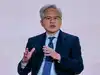
Nvidia's 700,000% return faces a succession test amid Huang's China spy affair
Nvidia's CEO Jensen Huang maintains a unique office structure that reflects his hands-on management style. With around 60 direct reports, he closely oversees company operations and decisions, even involving himself in employee compensation. Amid recent controversy over personal allegations, questions about Nvidia’s leadership succession have emerged. Huang, who co-founded the company, hopes a suitable successor will arise from within its ranks.

BPO jobs on a seesaw as bots call the shots
Voice AI is driving call centres even as hiring grows, but the shift towards complex tasks leaves freshers scrambling for a new career ladder.

Indian organisations on edge as sites fail to Captcha AI intruders
Personal AI agents such as Instinct, Muse, Grokbot and OpenClaw have taken over the consumer internet in the US. But last month, major US banks, including JPMorgan Chase, Bank of America, Wells Fargo and Morgan Stanley, reportedly flagged AI agents such as Meta’s Muse accessing customer accounts using login credentials voluntarily shared by users laying bare the risks of handing AI agents the keys to consumers’ digital lives.

Nvidia scandal: The AI arms race puts human spies back into the game
The Nvidia controversy involving CEO Jensen Huang and a woman suspected by US intelligence of having links to Beijing has renewed concerns over corporate espionage in the AI industry. Recent cases involving OpenAI and Google have also highlighted risks from insiders and traditional spying methods.

Delhi HC orders removal of AI-generated videos targeting Rekha Gupta, says political satire cannot trample on dignity
Delhi High Court ruled for the removal of defamatory AI-generated videos and images aimed at Chief Minister Rekha Gupta. The court emphasized that political satire should not undermine an individual's dignity or character. Gupta filed a suit against the Aam Aadmi Party (AAP) for spreading content that portrayed her in a degrading manner. The impugned media allegedly depicted her engaged in inappropriate activities related to liquor.

Cashfree opens checkout to AI agents, leaves final say with shoppers
Cashfree has introduced Checkout for Agents, allowing AI agents to assist with online payments. This feature utilises WebMCP technology to simplify the checkout process for AI shopping assistants. Customers still maintain control over final payment authorisation and sensitive information is protected. While AI agents currently represent less than 1% of checkout traffic, Cashfree aims to enhance their efficiency. The company limits agent access to sensitive payment steps to ensure security.

Ex-Ultrahuman executive launches AI ring startup Aina for agentic interactions
The startup said it is positioning the device as an alternative interface to smartphones for everyday interactions with AI systems. It has spent the past 15 months developing the product and is now opening pre-orders globally, with prices starting at $399 (about Rs 36,000), the startup said in a statement.

Carl Pei teases Nothing’s first AI-native product; says it 'couldn't have been an app'
Nothing will launch its first AI-native product in December with a focus on productivity. The chief executive, Carl Pei, provided limited details about the product’s functions. It is suggested that the product may help users capture conversations and take notes. Other companies are also exploring wearable AI devices that focus on companionship or productivity.

Ripik.ai in talks to raise Rs 150 crore from Gaja Capital
The startup deploys its hardware and software systems at large manufacturing and industrial units, including cement and steel plants, using cameras, sensors and proprietary AI models to monitor equipment, materials and production processes. It counts Accel and Venture Highway (now merged with General Catalyst) among its existing investors.

AI turns cyber threat into boardroom crisis
In India, State Bank of India disclosed that 375,000 customer records had been leaked on the dark web, while vulnerabilities in eMudhra’s digital certificate keys exposed websites to potential attacks.

U.S. and Japanese Companies Struggle with Different Parts of AI Adoption—and Offer Different Lessons for Making It Work
Companies in both the U.S. and Japan are struggling to deploy AI, but often in very different ways. In the U.S., deployment is wide but shallow, meaning companies struggle to create real value with AI. In Japan, deployment has moved slowly, but where it has happened, it’s often deep and fruitful. Understanding what’s happening in both contexts offers important lessons for companies trying to develop an AI strategy and demonstrate ROI on their AI investments.

Decoded: Will AI agents outlast the hype?
Krish Ramineni, founder of AI note-taking company Fireflies.ai, said consumers were experimenting with applications ranging from shopping and price comparisons to booking flights and hotels, making restaurant reservations, managing bills and subscriptions, and seeking refunds.

Instinct's WhatsApp scare: Glitch that cried wolf
The incident has also brought attention to Meta’s restrictions on competing AI assistants and the challenges facing companies building personal AI agents. Tanya Pandey explains what happened and why it matters.

Fireside Ventures cofounder and partner Vinay Singh to exit firm
“Cobuilding Fireside gave me the opportunity to shape the firm from its early days and work alongside exceptional founders and teams,” Singh said. “As AI reshapes commerce faster than most of us expected, I want to spend more time exploring the frontiers of agentic commerce and its implications for the future of consumption.”

India’s small companies need to see AI as more than an artificial promise
India MSME news: India's micro, small and medium enterprises are exploring the adoption of artificial intelligence to enhance productivity. AI is expected to generate significant economic value for these enterprises in manufacturing and services sectors. Various challenges remain regarding the integration of AI into existing workflows and overcoming cost barriers. Collaborative efforts among industry bodies, technology providers, and the government are essential for facilitating this transition.

AI agent Instinct back on WhatsApp after technical issues: Here’s what we know
Instinct, a leading AI firm, faced a brief disruption in its WhatsApp services due to a technical glitch linked to its configuration. This led to confusion among users and sparked rumors regarding Meta's restrictions. Following the resolution of the billing issue, founder Noah Shinn reassured everyone that the services were once again operational. To mitigate future disruptions, Instinct is implementing proactive measures to enhance service reliability.

Accountability tames AI autonomy as DSCI outlines its liability framework
In the framework titled AI Liability: Industry Guidance for Agentic AI, DSCI said assigning liability solely to the organisation deploying an AI system or to an upstream technology provider would be legally flawed. Agentic AI systems involve multiple layers of models, instructions, integrations, tool calls and human decisions, making it difficult to isolate where responsibility lies when something goes wrong.

Digital payments firms race to fortify defences as cyberattacks intensify
At Bengaluru-based Cashfree, attempted attacks have been taking place repeatedly over the past three weeks, occurring at least 10 times as frequently as a year ago, chief technology officer Ramkumar Venkatesan told ET. Attackers are increasingly combining multiple vulnerabilities to attack systems, he said.

When my AI bargains with your AI: The next great bazaar may be where our agents haggle for milliseconds
AI agents are evolving from simple task execution to negotiating on behalf of users in commerce. These agents can analyze data efficiently, enabling faster negotiations and potentially better deals. Businesses are already preparing for AI-to-AI negotiations, which may reshape the landscape of commerce. While this could benefit consumers, it may also create disparities based on the sophistication of agents.

Pope Leo warns AI agents are 'tools, not persons'
The debate over the risks of the technology has intensified in recent months, fuelled by several incidents of systems taking unauthorized actions and apocalyptic warnings from industry professionals.

ET AI Business Transformation Masterclass & Awards: Inside the future of agentic payments
Synopsis: AI tools are all set to perform tasks that go beyond answering questions or making recommendations. A live demonstration at the ET AI Business Transformation Masterclass and Awards 2026 will show how AI agents can make UPI payments through P3P without manual intervention, and what this could mean for the way people make digital payments and business transactions in the future.

Research: How AI Agents Broaden the Scope of Knowledge Work
AI agents don’t just speed up knowledge work; they change its nature. In a field study of Perplexity’s conversational assistant and autonomous agent, researchers found that not only did the agent perform more autonomous work, cut task time, lowered cost, and left users more satisfied, but it also expanded the scope of work people attempted—crossing occupational boundaries, tackling more complex, multi-step projects, and generating tasks that rarely appeared with a standard assistant. As workers shift from operators to supervisors, leaders must redesign roles, workflows, and oversight to harness agents’ potential while governing their expanded autonomy.
Load More

