
AI CHIP SMUGGLING
US Secretary of State Rubio warned Trump of Jensen Huang's ties to alleged Chinese spy: Report
Amid rising concerns, Nvidia's board is scrutinizing CEO Jensen Huang due to alleged espionage tied to his connection with Alice Huang, a businesswoman from China. US Secretary of State Marco Rubio previously cautioned about the implications of their association. It has come to light that Alice Huang's firm could be involved in unlawful smuggling of Nvidia products. However, Nvidia reassured that its operations will remain unaffected during this inquiry.

Chinese AI firms rush to secure Nvidia chip capacity as spy scandal stirs fear of US curbs
Chinese artificial intelligence companies are actively seeking to rent Nvidia-powered computing capacity from overseas data centres. They are motivated by fears of stricter US export controls and political controversies surrounding Nvidia's CEO. Major cloud providers and smaller AI labs are exploring international options to maintain access to advanced processors.
Nvidia working with outside firm to identify CEO candidates
The board is weighing the idea of naming a temporary chief while searching for a permanent one, the person said, asking not to be identified because the information isn’t public.

Could Huang, Nvidia and company's board be held liable over affair scandal?
Nvidia CEO Jensen Huang is under scrutiny due to rumored connections with a suspected Chinese intelligence asset. An independent committee of directors is investigating potential implications for Nvidia and its stakeholders. Various legal actions, including a proposed class action lawsuit, are being explored by investors. Federal securities regulators may also investigate for possible violations of disclosure laws. The outcome of these investigations could impact the company's future and stock value.

Jensen Huang case: Nvidia CEO love affair scandal revives push for tougher US line on China
Huang, who co-founded Nvidia and turned it into the world's leading supplier of the processors that power artificial intelligence, admitted on Sunday to an affair with Alice Huang, a former executive at Singapore-based Megaspeed whom US intelligence officials believe was working for Chinese intelligence.
- Go To Page 1
How China gets the Nvidia chips it needs to develop AI
Nvidia's dominance in the global AI chip market has come under scrutiny as US export restrictions fail to fully prevent China from accessing advanced processors. Chinese firms are reportedly obtaining Nvidia chips through smuggling and overseas data centres, while domestic players such as Huawei race to develop competitive alternatives.

Jensen Huang row gives US lawmakers fresh ammo on chip controls
Members of the US Congress have urged for for tighter congressional oversight of advanced chip exports to China and legislations mandating companies to track chips to tackle smuggling.

Moonshot AI rents Nvidia’s top AI chips in China, documents show
Documents indicate that Moonshot AI possibly accessed advanced Nvidia chips despite US export restrictions and related investigations. The servers were reportedly rented from Super Micro Computer Inc. with significant financial backing from Lingmeixin Technology Co.
Nvidia intervened in US probe of Megaspeed chip smuggling
In a notable move, Nvidia's general counsel communicated with US officials about the ongoing inquiry into Megaspeed International's suspected chip smuggling. The detention of Megaspeed's executive, Alice Huang, has cast a shadow over Nvidia's involvement. Teter's interactions prompted restrictions on the Bureau of Industry and Security's measures against Megaspeed. As questions around chip sales arose, Megaspeed has steadfastly rejected the allegations, continuing to proudly uphold its partnership with Nvidia.
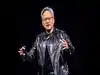
Who could replace Jensen Huang at Nvidia? Affair with Alice Huang and her alleged China spy links raise questions over CEO’s future
Nvidia’s investigation into an alleged foreign intelligence effort involving CEO Jensen Huang has raised fresh questions about the company’s leadership future. With no publicly identified successor and around 60 executives reporting directly to Huang, investors are facing the possibility that the chipmaker may struggle to replace its most influential leader.
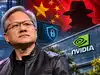
Alice in Nvidia CEO's secret world: Jensen Huang's personal affair matters far beyond than what meets the eye
Concerns about national security have emerged regarding Nvidia CEO Jensen Huang and a Chinese businesswoman, Alice Huang. US intelligence suggests Alice may have gathered information for Beijing after forming a close relationship with Jensen. Nvidia's advanced processors play a crucial role in AI and military applications, making them strategically significant in US-China relations. Congressional inquiries are seeking clarity on Nvidia's security protocols regarding foreign espionage risks.
Who is Alice Huang, Chinese exec accused of spying on Nvidia CEO?
Alice Huang, a citizen of China, stands accused of espionage for Beijing through her romantic connection with Nvidia's Jensen Huang. Reports suggest she played a pivotal role at Megaspeed International, a data center firm, allegedly gathering intelligence on Jensen following the disclosure of their relationship. US authorities are scrutinizing Megaspeed for possibly violating chip export regulations. Both Alice and Megaspeed firmly reject these allegations as investigations continue.
Nvidia CEO Jensen Huang seen as target of China spy plot; Trump briefed but took no action: Report
A Chinese businesswoman suspected of passing intelligence to Beijing developed a close relationship with Nvidia CEO Jensen Huang, according to a New York Times exclusive report. US President Donald Trump was briefed on the intelligence findings roughly a year ago but took no action, reportedly wary of disrupting Nvidia's chip sales and US-China trade relations.

AI chips worth $12.1 million seized at Malaysia airport, customs authority says
Malaysian customs said on Wednesday that it had seized about 49.5 million ringgit ($12.11 million) worth of advanced artificial intelligence chips this month, as
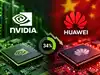
Nvidia’s share of China AI chip market falls to 34% as Huawei gains ground
Nvidia's share of China's AI chip market dropped to 34% in the first half of 2026 due to US export restrictions. Domestic competitors like Huawei increased their market presence significantly during this period. The total AI accelerator shipments in China reached over 2 million units, with non-GPU shipments surpassing GPU sales for the first time.
Nvidia's China AI-chip share falls as Huawei closes gap, report finds
Nvidia's share of China's market for data-centre AI chips fell to 34% in the first half of 2026, as US export controls restricted supplies of its products and domestic rivals led by Huawei gained ground, according to an IDC report seen by Reuters.

What we know about Greg Lui? California tech owner accused of routing $300 million in high-end servers with US-made AI chips to China
Greg Lui, the head of Earthmade Computer Inc., has been arrested on serious federal charges related to technology smuggling. Authorities claim that he exported computer servers worth over $300 million to China. He faces charges of conspiracy to breach export regulations and money laundering. FBI agents detained him while he was driving to work. If found guilty, he could face up to 50 years behind bars.

Anthropic CEO Dario Amodei calls for slower AI progress, warns of 'catastrophic' risks
Anthropic CEO Dario Amodei advocates for a more measured pace in AI development. He warns that rapid progress could outpace our understanding and control of advanced systems. Amodei proposes a three-step framework to manage frontier AI development responsibly. This includes embedded safety evaluators and international coordination on standards.

DeepSeek plans big Huawei AI chip order to power new data centre
The startup doesn’t currently plan to use the 950DT chips for training, one of the people said, even though Huawei designed and marketed these processors to serve that more demanding function. While DeepSeek tried to train its previous models on Huawei chips, it has so far relied on Nvidia accelerators for this crucial step.

US investigates alleged diversion of Nvidia AI chips through Thailand
OBON Corp, a prominent player in Thailand's tech landscape, is embroiled in controversy over accusations of smuggling Super Micro servers packed with advanced Nvidia technology to China, with Alibaba Group rumored to be a interested buyer. U.S. prosecutors are diving deep into the matter, which has sent shockwaves across the tech industry, directly impacting Super Micro's stock performance.

US panel advances chip security act to curb smuggling of AI semiconductors to China
A US House committee has advanced a bipartisan bill to stop advanced American chips from reaching foreign adversaries. This move follows concerns about China using restricted technology for AI development. The proposed Chip Security Act aims to strengthen US industry and limit rivals' access to critical computing power.

China has not yet received any Nvidia H200 chips, US official says
None of Nvidia's second-most advanced AI chips, known as the H200, have been sold yet to Chinese customers, a U.S. Commerce Department official said on Tuesday.
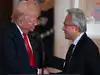
Trump praises Nvidia CEO Jensen Huang after discussion about export controls
President Trump met with Nvidia CEO Jensen Huang, stating Huang understands the administration's stance on export controls to China. Huang also met with lawmakers, arguing that state-by-state AI regulations would hinder development. He later downplayed concerns about Nvidia chips being smuggled, highlighting their size and cost.
Spy twist? US allegedly bugged AI chips of Nvidia and AMD bound for China with hidden trackers
US government AI chip tracking to China: The United States government is trying to stop advanced Artificial Intelligence chips from reaching China. Federal authorities are secretly placing trackers in shipments suspected of illegal diversion. These trackers are hidden in containers and server packaging. Smugglers are aware of the tracking efforts. Nvidia's CEO denies advanced chips are reaching China.
Nvidia AI chips worth $1 billion entered China despite US curbs: FT
These Nvidia AI chips were reportedly smuggled to China in the three months following tighter US export controls, including high-end B200 processors banned in China, Financial Times reported. Nvidia stated that using smuggled products available on the Chinese black market for data centres is technically and financially inefficient.

US lawmakers introduce bill to address AI chip smuggling
A bipartisan US bill seeks to require AI chipmakers like Nvidia to add location verification tech before exports, aiming to prevent chips from reaching China illegally. Lawmakers stress the need to safeguard US technological advantages amid concerns of export control circumvention and recent controversial AI chip deals abroad.

US senator introduces bill calling for location-tracking on AI chips to limit China access
The proposed "Chip Security Act" would require AI chips under US export controls to include location-tracking to prevent unauthorised use, particularly by China. Introduced by Senator Tom Cotton, the bill aims to enhance national security and detect smuggling. It follows ongoing efforts to limit China's access to advanced semiconductor technology amid rising concerns over diversion and misuse.

US lawmaker targets Nvidia chip smuggling to China with new bill
A US lawmaker plans to propose legislation requiring location tracking of AI chips like Nvidia’s to curb smuggling into China, violating export controls. The bill seeks to mandate chip verification and restrict unauthorised use, with bipartisan backing. Experts say the technology exists but is not yet widely implemented.
Load More

