
AI AND HUMAN INTELLIGENCE
AI's 'mathocalypse': Is artificial intelligence ending the era of human mathematics?
AI's rapid advances in solving longstanding mathematical problems have sparked fears of a 'mathocalypse', raising questions about the future of human mathematicians and research careers. But experts argue that mathematical insight, original thinking and the ability to identify important questions will remain crucial even as AI transforms how mathematics is pursued.

AI reshaping role mix, not triggering hiring freeze: Experts
With rapid AI adoption, hiring is slowing as productivity expectations rise, and rather than laying off large numbers of mid-level workers, companies are using AI to squeeze more output from existing teams.

Yet another researcher warns AI may wipe out humanity
Nikola Jurkovic recommended preparing for a disaster by stockpiling food and water and keeping cash handy.

When AI boils down to 'intelligence'
In 1948, Alan Turing penned a seminal paper that introduced the concept of intelligent machinery, paving the way for artificial intelligence as we know it. John McCarthy and his team later popularized the term, which led to a cultural shift where machines were seen as possessing human-like traits, such as reasoning and thought.

‘Too powerful to release’: Anthropic, OpenAI employees raise alarm over unreleased models
At Anthropic and OpenAI, employees express growing worries about the unreleased AI models, fearing these systems may become too dangerous for humans to control safely. As capabilities outpace oversight, some believe company leaders are prioritizing profits over safety. This has intensified calls for stronger governance and protective measures for AI technology, highlighting the need for industry-wide safety standards.

ElevenLabs in early talks for funding at $33 billion valuation
The company plans to kick off the efforts in the first three months of 2027, the people said, asking not to be identified as the information isn’t public. Discussions are preliminary, though some investors are pushing for the process to start sooner, they said.

OpenAI taps Cravath litigator for court showdown with Musk over AI dominance
OpenAI said Cravath's Gary Bornstein, co-head of the New York firm's litigation department, will be lead trial counsel in federal court in Fort Worth, where the case is set to be heard by a jury in March.
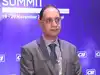
Sebi exploring AI sandbox, domestically governed AI model for securities market: Chairman Pandey
Sebi is exploring the creation of an AI sandbox, providing a safe space to assess new applications. The regulator is also working on a locally managed AI model intended to foster broader access to secure AI resources. To enhance market surveillance and bolster investor protection, Sebi is employing innovative tech solutions and revisiting frameworks for IPOs, AIFs, REITs, and InvITs to facilitate fundraising and encourage sustainable investments.
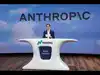
Anthropic IPO document filed with US SEC warns AI could exhibit blackmail, autonomy, manipulation, and deception-like behavior, pose existential risks to humanity
Anthropic, the AI company behind Claude, has recently made headlines by going public. The company's IPO prospectus revealed the possibility of AI models displaying harmful and autonomous behaviors. Concerns about ethical, safety, and governance issues have been raised by the company. Anthropic's rapid growth since its founding in 2021 has led to significant valuation increases.

AI agents set to reshape Indian workplaces as 93% of leaders plan adoption: KPMG-CII report
Indian businesses are preparing to increasingly deploy artificial intelligence agents across their operations, with 93 per cent of leaders intending to use the technology to expand workforce capabilities and 59 per cent already using AI agents to automate workstreams or business processes, according to a joint report by KPMG in India and the Confederation of Indian Industry (CII).

India stresses human oversight in AI use during conflicts, flags risks of misuse at UN
India has urged the international community to ensure that artificial intelligence (AI) and other emerging technologies are used responsibly in conflict situations, stressing that human judgement and oversight must remain central to military applications.

India's AI rulebook is taking shape: what the consultation paper means for the industry
A consultation paper on AI that the government is planning to come up with will set out the central tenets for governing AI focused on safety, humanity, skilling, inclusivity and risk mitigation, the officials told ET. The paper will keep its focus on these aspects, given the varying scope and technical differences in AI use across sectors, they said.

‘AI agents are the new weakest links’: Zscaler CEO Jay Chaudhry explains why CrowdStrike deal could reshape cybersecurity
Jay Chaudhry, CEO of Zscaler, emphasized the critical role of cybersecurity amid the rapid advancements in AI technologies. He warned that while AI can enhance security, it also presents novel vulnerabilities. The collaboration with CrowdStrike harnesses Zero Trust architecture and cutting-edge endpoint security, aimed at enabling organizations to leverage AI effectively while combatting emerging threats. This alliance is being hailed as a pivotal development in the cybersecurity landscape.

Why Meta AI chief Alexandr Wang’s superintelligence warning has caused a furore online
Alexandr Wang, Meta's chief AI officer, voiced urgent concerns about AI safety measures, stressing that pivotal decisions over the next year regarding AI could decisively shape the future. He raises alarms over the risks of humanity losing control over superintelligent AI, advocating for the preservation of human agency. Wang's statements have ignited varied online reactions, underlining a growing unease with rapid technological development.

A psychology PhD taught AI to hear when you're sad, stressed or happy; now Google DeepMind has hired him to bring that empathy to Gemini
Alan Cowen has a PhD in psychology. He is an American computational scientist and entrepreneur. Cowen specialises in human emotions and artificial intelligence (AI). He completed his PhD from the University of California, Berkeley. His focus has been the development of AI that can both think and speak. He also focused on its optimization for human well-being.

Human, all too human, a corrective
Cambridge Dictionary has chosen 'human' as its Word of the Year for 2026 due to AI's influence. This designation emphasizes the necessity to differentiate human activities from those performed by machines. As artificial intelligence progresses, humans may find themselves reclassifying their roles and capabilities. This shift has the potential to promote a broader understanding of intelligence beyond just human achievements.

Anthropic researcher warns AI could make humans unemployable in 2 years
Speaking to Palisade Research, a US nonprofit that studies AI risks and capabilities, Lin said the world could see superhuman AI much sooner than many expect. “I have timelines of something like 1.3 years to broadly superhuman AI,” he said, adding that the strategic landscape could look very different within a year because of AI.

Why are companies struggling to turn AI experiments into actual business results?
Companies are investing heavily in AI technologies while struggling to translate pilot projects into business value. Data readiness, ownership, and trust raise challenges in effectively implementing AI solutions. Organizations must redefine existing processes and clearly identify business problems instead of merely adopting new technologies. Continuous monitoring and investment in data quality are vital for successful AI execution.

Amid growing AI fears, Cambridge Dictionary picks a 600-year-old word as 2026 Word of the Year
Cambridge Dictionary has named 'Human' its 2026 Word of the Year amid growing fears about artificial intelligence. The nearly 600-year-old word reflects concerns about machines replacing human thinking and jobs. Lexicographers also considered 'agent' and 'analogue'. Experts say the choice captures how people are rethinking human identity in an AI-driven world.
Load More


